


Landscaping a new construction home is a big job, but a bare yard can become a healthy one. Work in this order: grading and drainage first, then soil, hardscape, lawn and planting. Hardscape means patios, walkways, retaining walls and steps.
The finish grade is the final shape and slope of the soil. It forms once the builder and grading crew are done, and it decides where water goes.
Expect a bare yard after the new home is finished, and it can look like a mess. Most new construction yards are packed, uneven and stripped of topsoil after heavy equipment has worked the lot.
Western Massachusetts yards face frost, freeze-thaw cycles and heavy clay. Get the slope right first, and the lawn and plants have a better chance through New England winters. Plan sleeves early if your lawn needs an automatic irrigation system.
Key Takeaways
- Grading and drainage come before soil, hardscape, lawn and plants.
- The finish grade decides where rain and snowmelt flow.
- A bare new construction yard is normal and can be fixed.
- Frost and clay make the order of work matter in Western Massachusetts.
- Check the slope before any sod or shrubs go in.
Plan the whole yard once, even if you build it in phases, so early work does not get dug up later.
How Much Does Good Landscaping Add to a House Value?
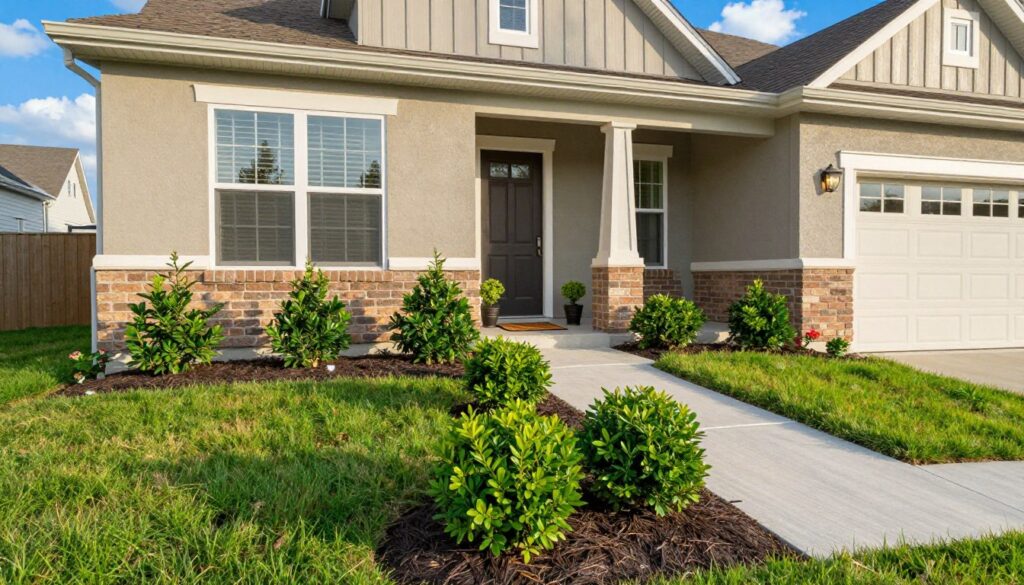
Thoughtful landscaping can add value to a new home by boosting curb appeal, with manicured shrubs and a tidy lawn creating a welcoming entrance.
Good landscaping raises how a home looks and how it is valued, mostly through curb appeal at the entrance. Visitors and buyers see the front yard before anything else about the property.
Landscaping a new house pays off most when the front yard looks planned. Foundation beds, the front walk and the edge of the lawn all count.
A new construction yard starts out bare, so it does little for how the home shows yet. Once it is finished, the yard helps the house stand out when it is time to sell.
A tidy, finished yard supports property value because people see the upkeep from the street. A finished landscape also shows that the house was cared for, not just built.
A few shrubs at the corners, a clean mulch bed and a straight walk can change the whole look. Buyers rarely notice one plant. They notice whether the yard looks finished, planned and kept up.
Low-upkeep plants keep the entrance sharp, and you can plan them with low maintenance front yard landscaping. A yard left neglected for a year after move-in loses this benefit quickly.
Weeds, bare patches and dying shrubs at the entrance undo the work fast. Start the front of the property first, since that is the part most people see first.
Grading and Drainage Come Before Anything Else
After the first heavy rain, walk the yard and look at where the water stands. Standing water beside the house is the sign that the grade is wrong.
Plan on grading yard after new construction before any sod or shrubs go in. If the soil slopes toward the house, water will settle against the foundation no matter what you plant. Compare hydroseeding vs. seed vs. sod before you choose a lawn.
The Massachusetts residential code requires the lot to drain surface water away from foundation walls. It sets a minimum fall of 6 inches within the first 10 feet.
Checking the Slope Away From the Foundation
Use this quick walk-around test on a rainy day, or right after the rain stops.
- Look for water that stands within 10 feet of the foundation walls.
- Check for a dip, a flat spot or any slope that runs toward the house.
- Watch where downspouts empty and whether the water runs back toward the wall.
- Mark each puddle with a stake and check it again after the next storm.
A builder’s grade often looks flat to the eye but drains toward the house. A few inches of fall are hard to see, so measure with a level and a straight board.
Add a swale or a drain instead of more topsoil when a patio, wall or path blocks the fall. Topsoil alone cannot push water uphill around a hard barrier.
Fixing Low Spots and Clay Pooling
Clay under topsoil slows water from soaking in, so low spots stay wet. Western Massachusetts yards often have clay, and settled soil beside foundations and low lawns holds water.
Fill low spots only after the grade is correct, or the water will still pool. Till compost into the top 10 to 12 inches of soil before planting, so water moves through the root zone.
Pooling can also come from snowmelt over frozen soil or from heavy rain on settled grading. Re-check the slope after the first winter, since freeze-thaw can settle soil beside the foundation.
When Should You Plant After the House Is Built?
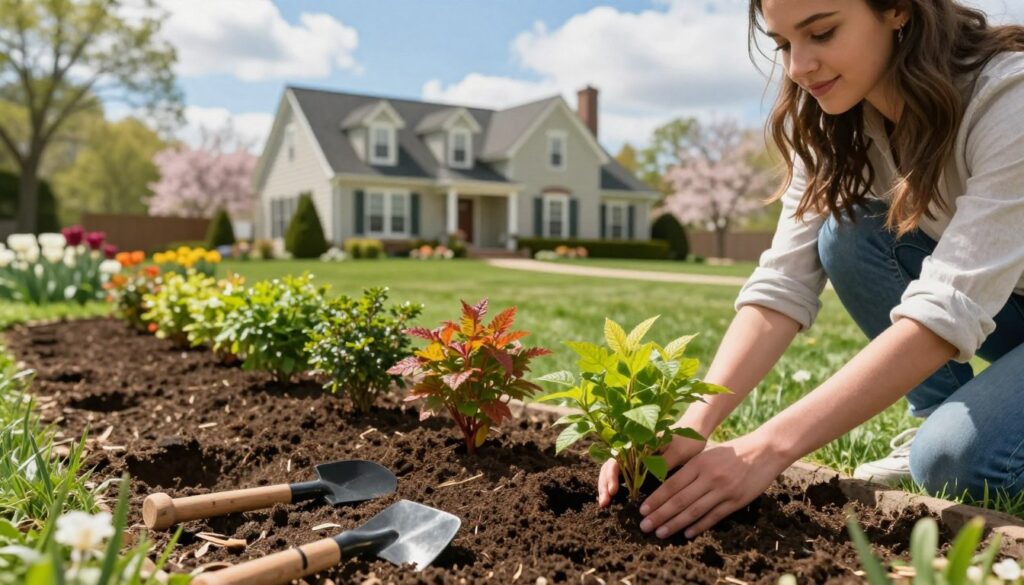
Plant shrubs once the home is built and the soil is ready, giving new landscaping a strong start beside the lawn and flowers.
Plant trees and shrubs in spring or early fall, when the soil is cool and moist. Planting timing matters in a new home because the ground around it is still settling.
Roots need time to establish before summer heat or winter cold arrives. A plant set in spring or early fall has a full growing season to take hold.
Frost depth matters in Western Massachusetts, where the frost line is about 48 inches deep. That depth affects shallow planting, since roots near the surface feel the cold sooner.
Container plants have less soil around their roots, so they can freeze faster than plants set in the ground. Check the frost depth before you leave any young plant exposed through winter.
Freeze-thaw cycles repeat through the winter and can settle soil beside foundations, patios, utility trenches and low lawns. Those shifts change grades and water flow, so the yard can look different in spring.
Spring and fall also bring cooler temperatures and better moisture, which helps trees, shrubs and lawn establishment. Wait until the soil has settled after the first winter before setting shrubs right against the foundation.
What Mistakes Do New-Build Owners Make With Plants?
The most common mistake is planting for how big a shrub looks on planting day. The most common landscaping mistakes to avoid come down to size and spacing.
Plant placement matters because a young tree or shrub can grow for a decade or more before reaching its mature size. Space each plant for the size it will reach in 10 to 20 years.
Planting for Size Today Instead of Size at Maturity
Do not buy plants only because they look good on planting day. Check the mature height and width on the tag or in a plant guide before you buy.
Use the mature size to plan the planting beds before you dig. Crowded beds mean you will need to move shrubs later, which costs time and money.
Placing Shrubs and Trees Too Close to the House
A small shrub beside the house can grow over a window within several years. Compare three common placements before you choose a spot.
| Placement | Typical mature height | Typical mature width | Main problem to avoid |
|---|---|---|---|
| Foundation shrub | 4-6 feet | 4-6 feet | Grows over windows, steps and siding |
| Shade tree near walkway | 40-50 feet | 30-40 feet | Roots and branches crowd the walkway |
| Privacy hedge | 6-8 feet | 3-4 feet | Gaps when spaced too wide, crowding when too tight |
These sizes set how far each plant belongs from the house, walk and fence. Plant mistakes like these can waste money, as five fatal landscaping mistakes explains in detail.
Mark the mature width on the ground with a hose before you dig.
Lawn, Sod or Seed: How to Establish a New Lawn
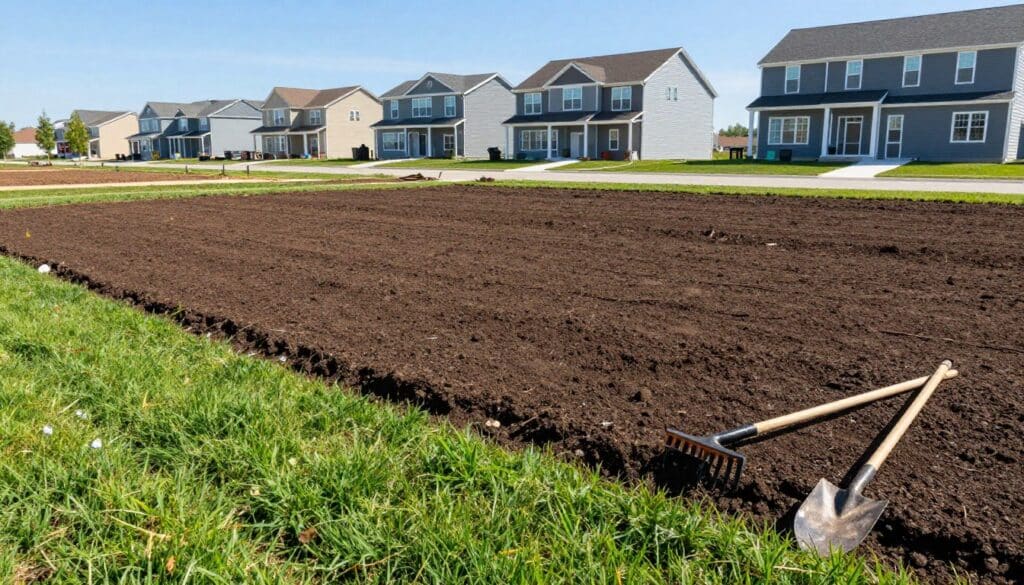
A smooth, graded base helps establish a new lawn, whether you choose sod or seed. Fresh sod turns bare construction soil into a green yard.
Sod gives you a lawn in a day, while seed takes weeks to fill in. A new construction lawn can start from sod, grass seed or hydroseeding.
Lawn establishment is the first year or so while new grass takes root. Expect the lawn to need steady care through that establishment period.
Choosing Between Sod and Seed
Choose one of three options based on your budget and how fast you want a full lawn.
- Sod: instant cover, but it costs more than seed.
- Grass seed: the lowest cost, but it needs weeks to fill in and steady moisture.
- Hydroseeding: spreads seed, mulch, fertilizer and water evenly over large areas, but the lawn still needs weeks to fill in.
Uneven grade after construction shows up as bare patches in a new lawn. Fix the grade first, or thin spots will appear wherever the soil sits low.
Watering and Mowing the First Season
Keep new seed moist but not soggy until it roots. Water lightly and often, so the top layer never dries out.
Do not mow until the grass reaches 2 to 4 inches. Stay off the new lawn until the roots take hold.
Test the rooting by gently pulling a blade of new sod after two weeks.
Do You Need a Permit to Change the Yard in Massachusetts?
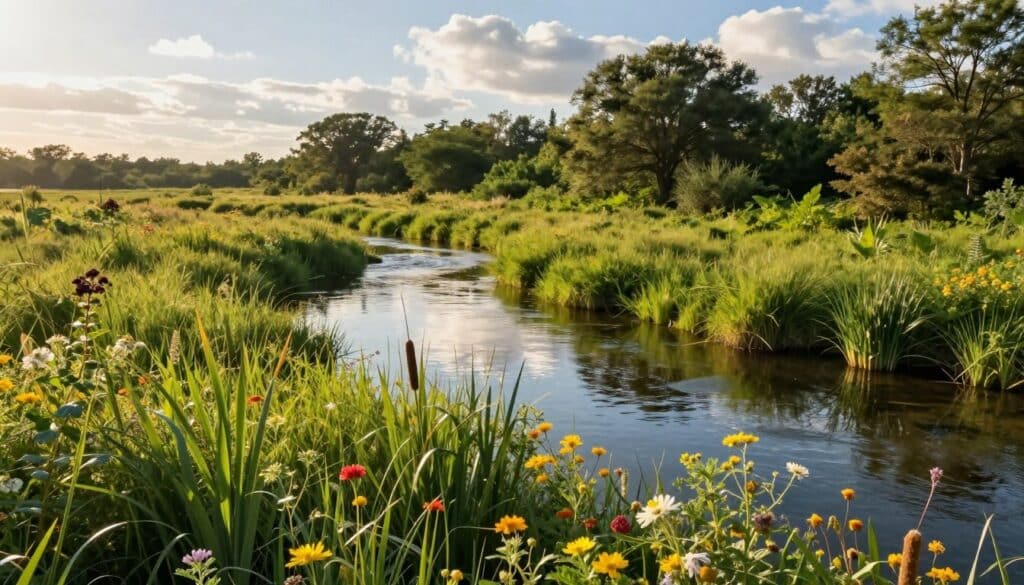
Landscaping near wetlands in Massachusetts may require a permit. Protect streams, native plants, and other wetland resources when planning yard changes.
Filling or grading inside a wetland resource area or its 100-foot buffer zone needs a state permit. The Wetlands Protection Act sets that rule, and local standards can be stricter.
A wetland resource area can include streams, ponds and low, wet ground near your lot. Check the map before you move any soil.
A Determination of Applicability may be enough for minimal work in the 100-foot buffer zone. Ask the conservation staff which path fits your project.
Local rules can be stricter than the state rule, so check both. A Massachusetts permit may be needed before you move soil near a wet area.
Fill brought in to raise a low spot can trigger these rules, even if the spot looks small. Ask the building department whether a grading permit applies to your yard work.
Start the permit check early in your planning, since wetland rules can change the timing of the whole project. Call the local conservation commission before moving any soil near a wet low spot.
What Does a New Construction Landscape Cost?
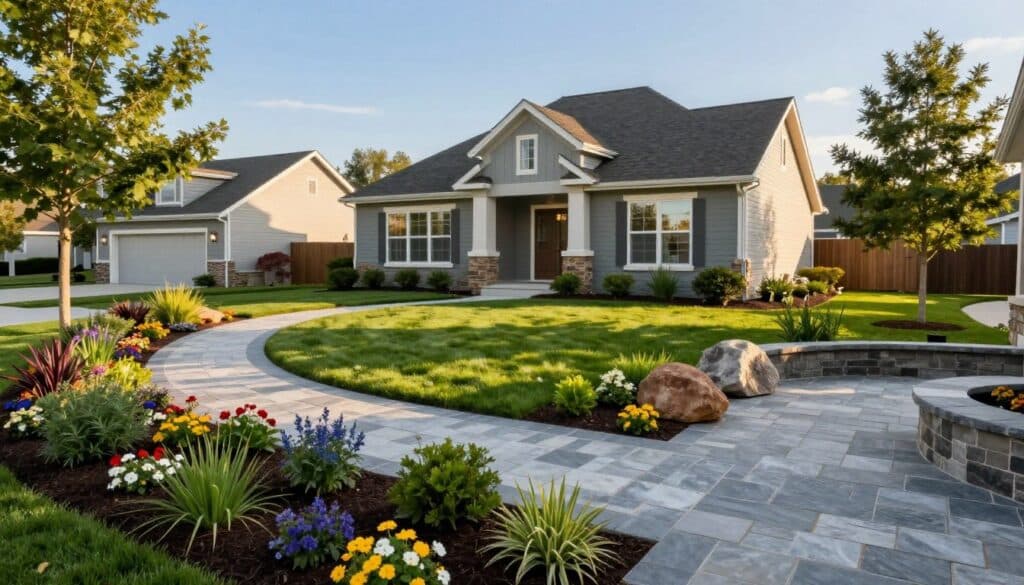
New construction landscaping costs depend on balancing lawn, planting beds, trees, and hardscape features such as a stone walkway and patio.
Cost depends mostly on how much grading, hardscape and lawn area the yard needs. A new construction landscaping cost rises with lot size, grading work and the number of mature plants.
Lot size sets the base, and each square foot of lawn or sod adds to the total. The work that sits underground, such as grading and drainage, is often the hardest to see and the easiest to skip.
| Cost factor | Why it raises cost | When it matters most |
|---|---|---|
| Grading | Moves soil to set the finish grade and slope | At the start, before any other work |
| Drainage | Swales, drains and pipes move water away from the house | When the lot is flat or holds water |
| Soil | Topsoil and compost fix compacted or stripped ground | When the builder left hard, thin soil |
| Hardscape | Patios, walkways, retaining walls and steps need base work | When you want a patio or wall near the house |
| Irrigation | Pipes, sprinkler heads and a controller | Before lawn and beds go in |
| Plants | Larger trees and shrubs cost more than small starts | When you want instant size |
Hardscape costs rise with patio size, base preparation and site access. The page on what goes into the cost of a paver patio covers those details for Western Massachusetts.
Set a budget for each phase, and start with the front yard grading and drainage. Ask for each phase to be priced separately so you can compare the work you need now with the work you can add later.
Conclusion
Put grading and drainage first, then soil, then hardscape, lawn, planting and mulch. That order protects your early work and keeps the yard from being dug up later.
A good plan for landscaping a new construction home starts with the finish grade and the water flow. Plants and lawn then have a stable base to grow in.
St. Clair Landscaping and Irrigation in Ludlow, MA, offers a free on-site estimate for Western Massachusetts and northern CT yards. Call (413) 566-8866 for a free on-site estimate before you start the next phase.