


Before you plan a fix, learn how to regrade yard away from house the right way. Grade the yard so it drops about 1 inch per foot for the first 5 to 10 feet from the foundation. That is roughly a 6-inch drop over 10 feet, and the ground must never slope back toward the house.
Grade is the slope of the ground measured as a drop over a set distance, used to move rain and snowmelt away from the foundation. A yard grade is the gentle slope that carries water off the house. Standing water is a real problem in Hampden and Hampshire Counties. See our guide to fixing a muddy yard if water already sits on the lawn.
Clay soil in this region holds water and settles over time. Freeze-thaw cycles then push water into cracks near the foundation. Test the slope after your first heavy rain, because a slow low spot shows only then. Grading works best alongside basement waterproofing when water already reaches the walls.
Key Takeaways
- Aim for about 1 inch of drop per foot for the first 5 to 10 feet.
- Keep at least 6 inches of foundation showing below the siding.
- Never let the ground slope back toward the house.
- Clay soil holds water, so check drainage with extra care.
- Test the slope after your first heavy rain.
How Much Does It Cost to Regrade a Yard?
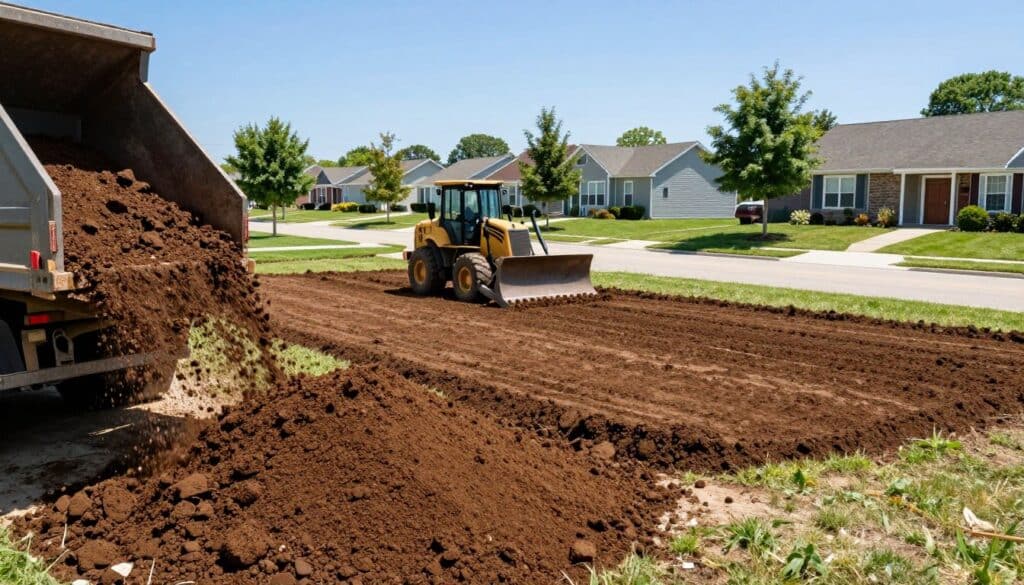
Regrading costs depend on the amount of fill dirt and labor needed. A dump truck and small bulldozer can help spread and level soil across a yard.
A 20 by 20 foot area is one of the smaller jobs, and its cost comes down to how much soil must move. How much it costs to regrade a yard away from a house depends on the slope length, the fill dirt, and the hauling. Having a backyard leveled costs more as the volume of soil grows.
Yard grading costs depend on five main factors. The length of the slope comes first, then the volume of fill dirt, which is the soil added to build up low areas. Hauling away extra soil adds trips and labor. A French drain, a buried perforated pipe that carries water away, or a retaining wall adds materials to the bill.
Labor hours grow with the amount of soil moved. How much it costs to level a 20×20 yard depends on how much soil must move. A short lot-line slope costs less than a whole-yard reshape, since you grade yard only where water runs. Reshaping a lawn costs more than a small spot because more soil must move. Prices to regrade yard space rise with every truckload of fill. Ask for an on-site look before pricing, since the drainage path changes the scope.
How Do You Regrade a Yard Step by Step?
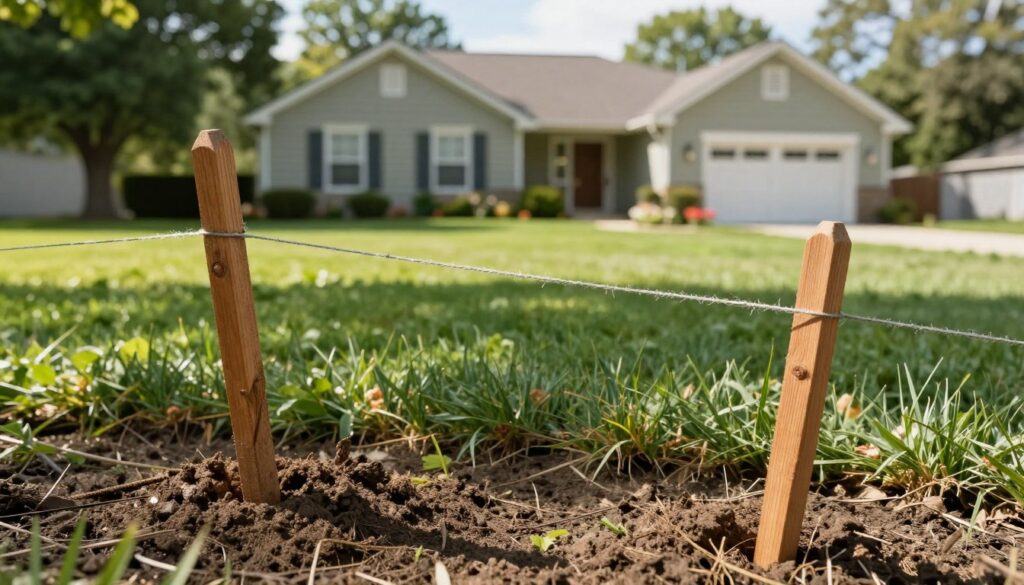
Use stakes and a taut string to check the yard’s slope before regrading, helping guide the ground away from the house.
Start by measuring the current slope so you know how much soil to add. You regrade a yard by adding fill in thin layers until the drop is about 1 inch per foot for the first 5 to 10 feet from the house. Knowing how to regrade yard away from house takes only a few basic tools.
You can regrade a yard without equipment by using a shovel, a rake and a sheet of plywood. Work one low spot at a time so the soil stays under control.
Measuring the Current Slope
Drive one stake at the house and one about 10 to 12 feet out. Tie string between them, set a line level on it, and read how far the ground falls. A lawn slope steeper than 12 inches in 4 feet needs a retaining wall or ground cover to prevent erosion.
Shaping and Compacting the Fill
Add fill dirt in layers of about 4 inches and pack each one before the next. Walk on a sheet of plywood to press small areas firm. Loose soil settles later and undoes the work.
Checking the Finished Grade
Stretch the string across the new surface and check the drop again. Keep at least 6 inches of foundation showing below the siding line.
| Phase | Tools | Measurement | Check |
|---|---|---|---|
| Measuring | Two stakes, string, line level | About 1 inch of drop per foot for 5 to 10 feet | String falls away from the house |
| Shaping | Shovel, landscape rake | Layers about 4 inches deep | Each layer firm before the next |
| Compacting | Sheet of plywood | Walk the whole area | No footprints sink in |
| Foundation clearance | Tape measure | At least 6 inches showing below siding | Soil stays below the siding line |
If the string reads flat near the house, add soil before you shape anything else.
What Is the Cheapest Way to Level a Yard?
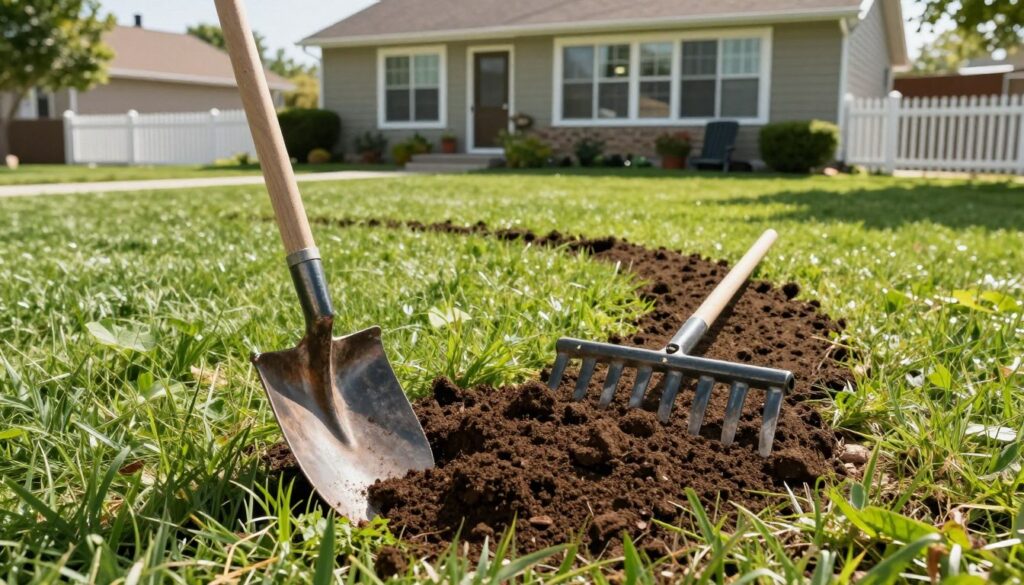
Filling low spots with topsoil and smoothing it into a gentle slope is a simple, low-cost way to level a yard away from the house.
For a few low spots, hand tools cost little beyond your time. The cheapest way to level a yard is to fill small dips by hand with a shovel, rake and wheelbarrow.
You can level a yard without equipment by filling small dips and tamping them firm. Yard grading on a small lot rarely needs more than a few hours for each low spot.
- Remove 3 to 4 inches of topsoil from the low spot and stack it aside.
- Shovel fill dirt into a wheelbarrow and spread it in a layer about 4 inches deep.
- Rake the layer smooth so it meets the grade around it.
- Tamp the layer with a sheet of plywood, stepping on it until it feels firm.
- Spread the saved topsoil over the top, rake it level, and sow grass seed.
Use a rented compactor only when the low area is large or too deep to pack by foot. A compactor costs more than hand tools, so it pays off only on bigger spots. Replace the topsoil over the fill so the grass can root. Recheck the spot after the first rain, since a fill pile settles.
When Do You Need a Permit or a Soil Survey for Grading?
Check with your town building department before large fill or drainage work. A grading permit question often turns on how much fill you add and where drainage water goes.
Massachusetts Permit Questions
Call the town building department first for any large job. Small fill on your own lot raises fewer questions.
| Situation | Check before you start | Who to call |
|---|---|---|
| Small local fill on your own lot | Fill stays on your property and does not block a drain | Town building department |
| Large volume of fill | Total fill amount and the finished grade at the house | Town building department |
| Drainage work such as a French drain | Where the pipe outlets and whether it crosses a boundary | Town building department |
| Work near a neighbor’s lot line | Property pin locations and the drop toward the neighbor | Town building department and your neighbor |
Drainage problems often start at a drain outlet near a boundary. Clay soil in the region holds water, so check the water path first.
Using Soil Survey Data
A soil survey built on the SSURGO-certified soils dataset for Massachusetts is meant for planning. The dataset is not a primary regulatory tool for permits or siting. The map lists map units and special features such as wet areas, gravel pits and bedrock escarpments. Onsite sampling and testing may still be needed for intensive uses. Treat a soil map as a starting point and test the ground where you dig.
How Deep Does Frost Go and Why Does It Matter for Grading?
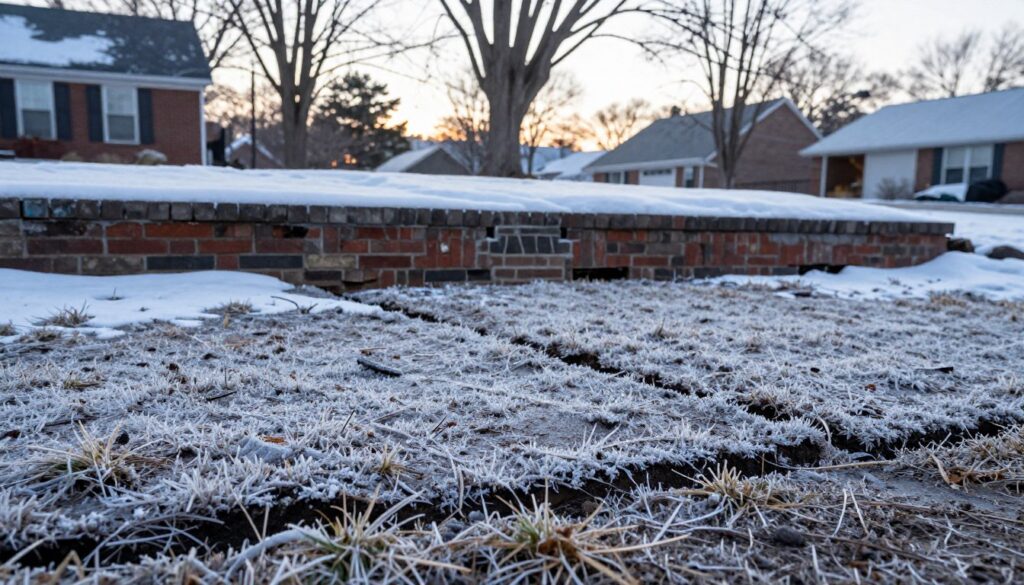
Frost can penetrate soil beside a foundation, so account for local frost depth when grading your yard to direct water away from the house.
Massachusetts sets residential footing frost depth at 48 inches below finished grade across the state. The figure comes from 780 CMR Table R301.2(1) of the Massachusetts State Building Code.
Freeze-thaw cycles push water into cracks and heave low spots. A dip that holds water freezes, swells, and thaws, so it gets deeper each winter.
Clay soil holds water and settles, so drainage near the house gets worse over time. Spread topsoil 3 to 4 inches deep once the rough grade is set. Fix low spots before winter, since frozen water in a dip widens it.
Is Leveling a Yard Worth It?
Yes, when water sits against your foundation, grading is worth the effort. Grading usually pays off when water collects against the house or pools for more than a day after rain. Standing water next to a foundation invites damage over time.
Look for these signs before you commit:
- Water runs toward the house or sits against the siding.
- Puddles last more than a day after a rain.
- Soft spots sink under foot in the lawn.
- Grass dies in the same low area every year.
A French drain is the better fix when water comes from a roof or a hill upslope. Grading alone cannot move that water far enough. Some yards add permeable pavers to help with drainage problems. Watch where water goes during the next storm before you commit.
Next Steps for Yard Grading in Western Massachusetts
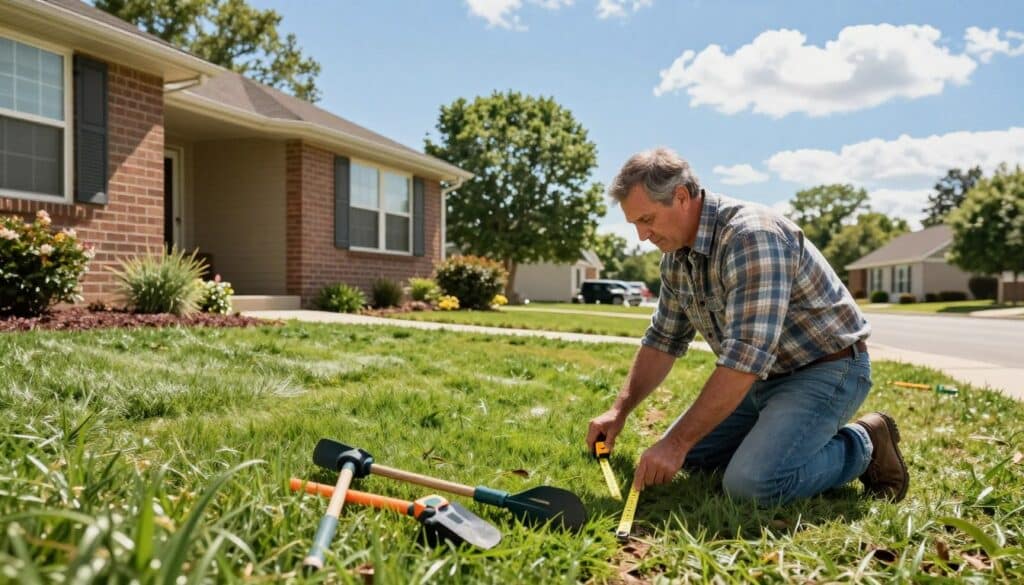
In Western Massachusetts, check the yard’s slope near the foundation before regrading to direct water away from the house.
Start with a measurement of your slope this weekend, and note any spot where water sits near the foundation. That quick check shows whether a yard grading job is small or large.
St. Clair Landscaping and Irrigation in Ludlow, MA serves Hampden and Hampshire Counties and northern CT. A crew can check the drainage path on your lot first. Call (413) 566-8866 for a free on-site estimate.
Conclusion
Water should always move away from your house. Aim for about 1 inch of drop per foot over the first 5 to 10 feet from the foundation.
Soil piled against the siding holds moisture against the wall, so check it each spring. Small fixes made now are easier than repairs to a wet foundation.
Measure your slope before the next storm.