

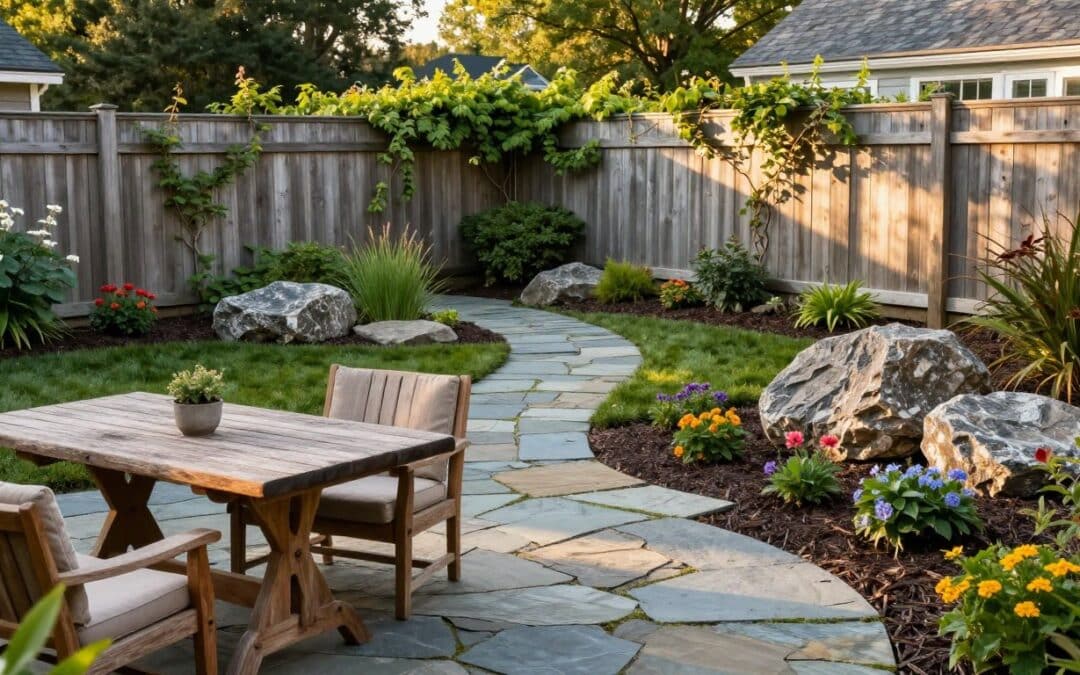
Hardscaping uses permanent, nonliving materials to shape an outdoor space. Stone, brick, concrete, wood, and pavers create durable surfaces that support daily use. In Wilbraham, Massachusetts, each project should also withstand rain, snow, and repeated freeze-thaw cycles.
Picture a backyard after a summer storm. A well-built patio stays level, walkways guide guests safely, and a retaining wall helps control runoff. These hardscape elements form the structure of the yard, while plants, grass, and trees bring natural color and seasonal change.
This guide explains the difference between a hardscape and a landscape. You will see how thoughtful design can extend living space for dining, relaxing, and entertaining. Examples include patios, paths, fire pits, walls, and other hardscape features.
Whether you’re planning a small patio or a complete landscape design, material choice and water flow matter. Learn more about the benefits of hardscaping and discover how the right plan can improve property value, curb appeal, safety, and maintenance.
Key Takeaways
- Built features create structure and function.
- Plants and grass form the living landscape.
- Drainage helps protect surfaces and planting beds.
- Durable materials suit local weather conditions.
- Good planning expands usable living space.
What is Hardscaping? Definition, Purpose, and Common Elements
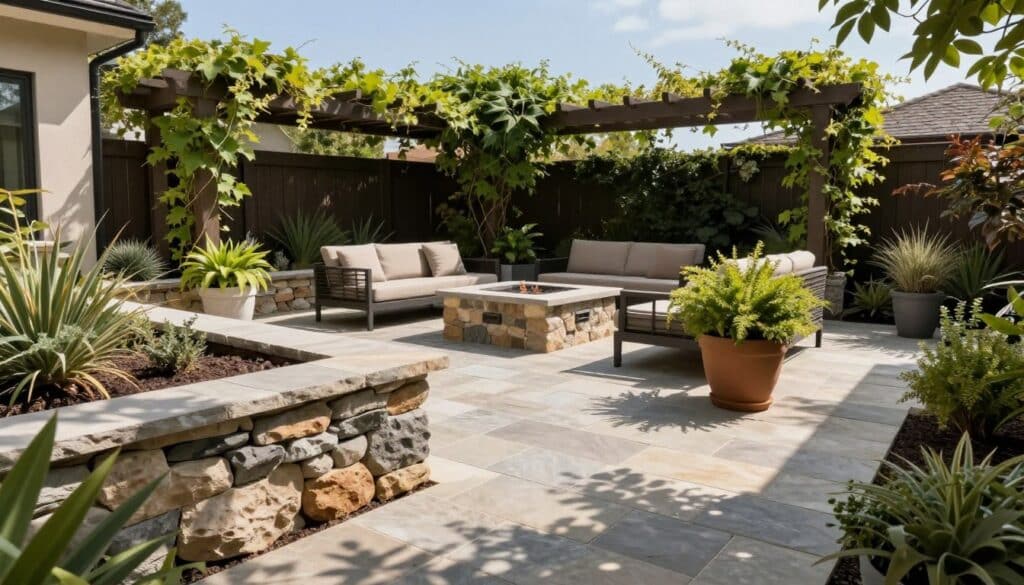
Hardscaping means using constructed, nonliving features to shape an outdoor space. The term emerged in the early 1970s, when landscape professionals began separating built features from plants. Explore the hardscape definition for added background.
These elements guide movement, manage water, and create useful areas around a home. Natural stone, tile, brick, wood, asphalt, and concrete pavers suit different needs, from driveways to seating zones.
Hardscape Features That Add Structure and Function
Patios, decks, fences, walkways, garden walls, and retaining walls organize the yard. They can define an activity area, support a grade change, or connect the house with the garden. Good design makes each area easier to use.
- Patios support dining and gatherings.
- Walkways improve circulation and access.
- Walls create borders or stabilize slopes.
- Benches add simple seating.
How Patios, Walkways, Walls, and Fire Features Extend Outdoor Living Space
Outdoor kitchens and patios extend living space beyond the interior. Fire pits and fireplaces add warmth, while fountains, waterfalls, and ponds bring sound and movement. Together, these hardscape features add comfort, function, and visual value.
| Feature | Main purpose | Common material |
|---|---|---|
| Patio | Dining and relaxing | Concrete pavers |
| Walkway | Safe circulation | Brick or stone |
| Fire pit | Warmth and gathering | Natural stone |
Hardscape vs. Landscape: Understanding the Key Differences
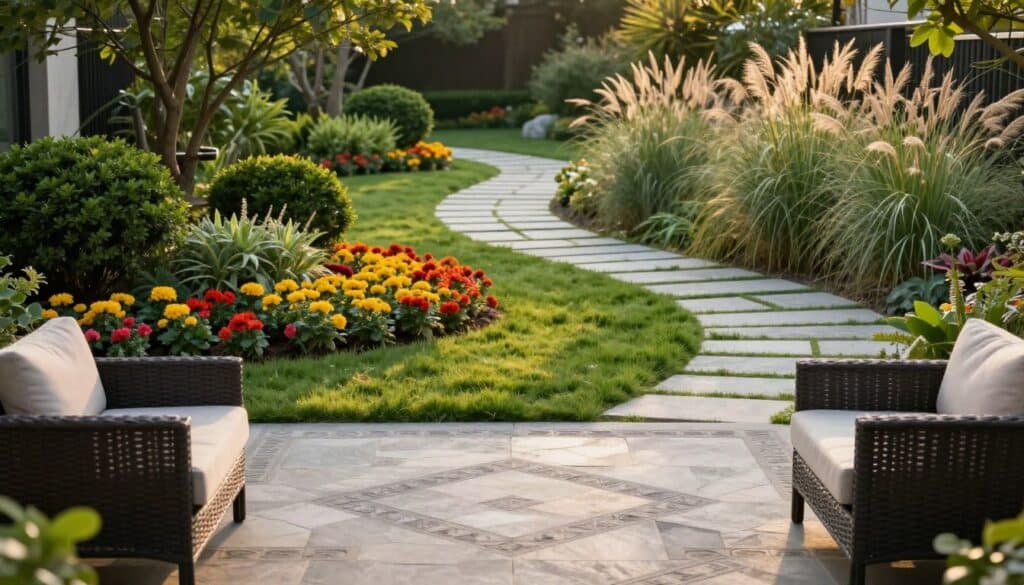
A well-planned yard pairs solid construction with natural growth. The hardscape and landscape serve different roles, yet each helps create a useful, attractive space.
Nonliving Hardscape Materials and Structures
Hardscape refers to nonliving construction, including pavers, concrete, brick, stone, gravel, wood, fences, and walls. These materials retain their form and define paths, patios, steps, and seating areas. Their main strengths include stability, access, and long-term function.
Living Landscape Elements Such as Plants, Trees, and Grass
Landscape includes living growth such as plants, shrubs, flowers, vines, hedges, foliage, and grass. Trees can provide shade, privacy, cleaner air, and support for natural runoff. Unlike built surfaces, plants change with seasons and allow easier adjustments.
Strong landscape design blends both types. Plants soften hardscape elements, add color, and support wildlife. For more ideas, explore this guide to front yard landscape design.
| Topic | Hardscape | Landscape |
|---|---|---|
| Materials | Stone, brick, wood, and concrete | Plants, shrubs, flowers, and trees |
| Change | Retains its shape | Grows and changes by season |
| Care | Cleaning and repairs | Watering, pruning, and mowing |
| Drainage | Guides or slows runoff | Roots absorb water and reduce erosion |
| Primary role | Access, structure, and gathering | Shade, beauty, privacy, and habitat |
Popular Hardscaping Ideas for Wilbraham, MA Properties
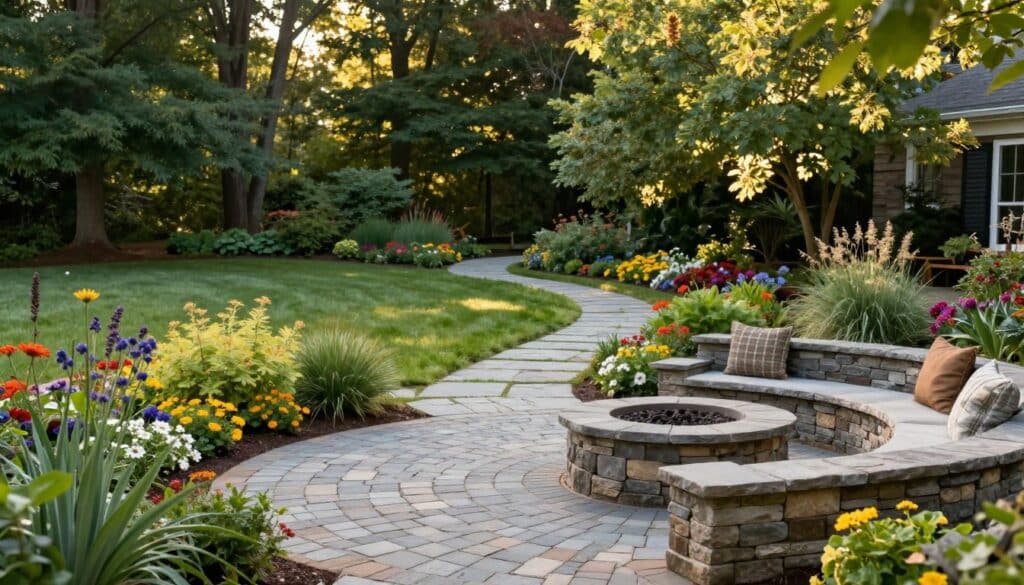
Wilbraham yards often reveal their best potential through clear zones for arrival, dining, and relaxation. Smart hardscaping helps each outdoor space serve a purpose while supporting drainage and seasonal use. A local contractor can match materials to the property, slope, and home style.
Patios, Walkways, Driveways, and Outdoor Entertainment Areas
Paver patios create a durable setting for meals and guests. Walkways can link the house, backyard, garden, driveway, and other outdoor spaces without awkward turns. Concrete pavers also add texture and curb appeal to an entry area.
An outdoor kitchen, pool deck, or seating zone can extend living space. Place walkways near natural travel routes, then use planting beds to soften edges. This design approach keeps the backyard organized and easy to enjoy.
Retaining Walls, Fire Features, and Water Elements
On sloped lots, retaining walls hold soil, limit erosion, and form level areas. Additional retaining walls can define beds or separate activity zones. Fire pits and fireplaces create gathering features, but safe clearances and heat-rated materials remain essential.
Fountains, waterfalls, and ponds introduce gentle water sounds and movement. Coordinated walls, plants, and lighting can strengthen the landscape and support long-term property appeal.
| Feature | Primary benefit | Planning focus |
|---|---|---|
| Patios and pavers | Dining and entertaining | Level base and drainage |
| Walkways | Easy circulation | Safe routes and lighting |
| Retaining walls | Soil support | Grading and erosion control |
| Fire and water features | Ambiance and gathering | Clearances and maintenance |
Hardscaping Materials Built for Massachusetts Weather
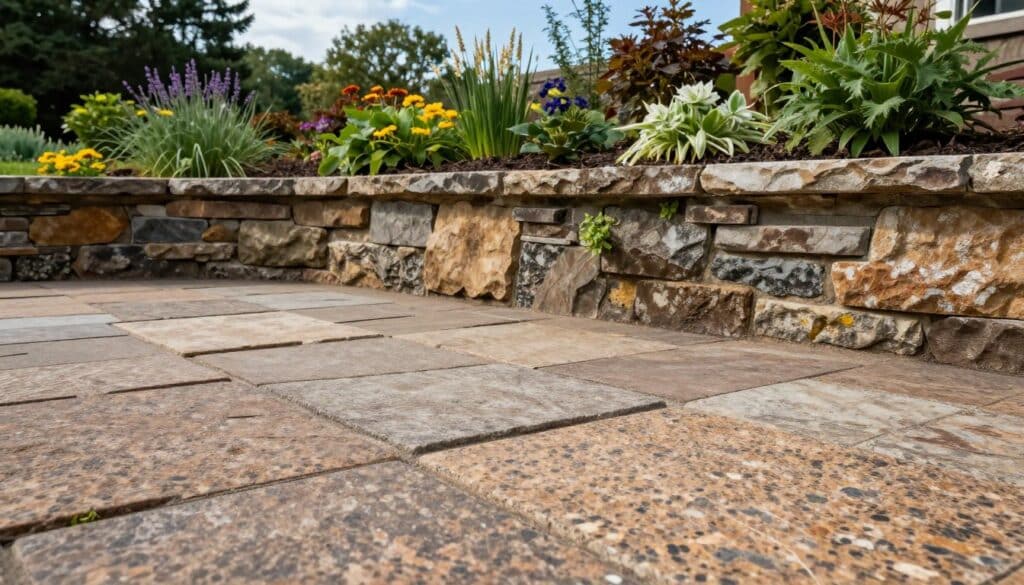
Winter weather can test every surface around a Massachusetts home. The right materials should resist moisture, freeze-thaw cycles, impact, and daily wear. Review this guide to durable hardscape materials before choosing a finish.
Concrete Pavers, Natural Stone, Brick, and Poured Concrete
Natural stone offers low water absorption, strong flexural strength, and reliable freeze-thaw performance. Brick adds classic color, while wood creates warmth for decks and entry areas. Asphalt suits driveways, but it offers less design flexibility than stone, brick, or concrete.
Poured concrete often costs less at installation. However, it may fade, wear, and crack over time. Concrete pavers provide a practical alternative for a patio. If one unit breaks, crews can remove and replace it without rebuilding the full surface.
These materials support durable outdoor features and can add value when selected for the site.
Permeable Pavers and Gravel for Durable Stormwater Management
Permeable pavers let rainwater enter the subsoil, helping reduce runoff and pollutant movement. Gravel offers an affordable, semi-permeable surface for paths and low-use areas. Dirt may puddle, shift, or freeze, making it less dependable for regular use and long-term space planning.
Drainage, Grading, and Soil Considerations in Wilbraham
Water control should guide every outdoor project in Wilbraham. A sound plan protects the home, improves the landscape, and helps each yard area remain usable through changing seasons.
Managing Rain, Snowmelt, Runoff, and Freeze-Thaw Conditions
Rain and snowmelt can move quickly across a sloped yard. Proper grading directs runoff away from the home and lowers risks such as pooling, basement leaks, frost movement, and cracked surfaces. Poor drainage may damage a patio, walkway, driveway, or retaining-wall structure over time.
Use swales, drains, and open flow paths to spread water safely. Permeable pavers allow excess rain to enter the subsoil instead of collecting beside the foundation. Regular checks each spring can reveal shifting, blocked outlets, or new wet areas.
Preparing Local Soil for Stable Patios and Retaining Walls
Begin by excavating soft dirt and organic material. Add compacted aggregate in layers, then place stable bedding before installing concrete, pavers, or walls. Proper backfill also limits movement during freeze-thaw cycles.
Large or sloped projects need professional grading and structural review. Hydrostatic pressure can weaken walls and create costly repairs. Check local rules, since walls above 4 feet may need permits in some jurisdictions.
| Site concern | Recommended step | Result over time |
|---|---|---|
| Heavy rain | Grade away from the home | Fewer leaks and wet areas |
| Freeze-thaw cycles | Compact base and bedding | Less shifting |
| Sloped areas | Use engineered drainage | Stronger walls and safer space |
Benefits of Hardscaping for Function, Maintenance, and Property Value
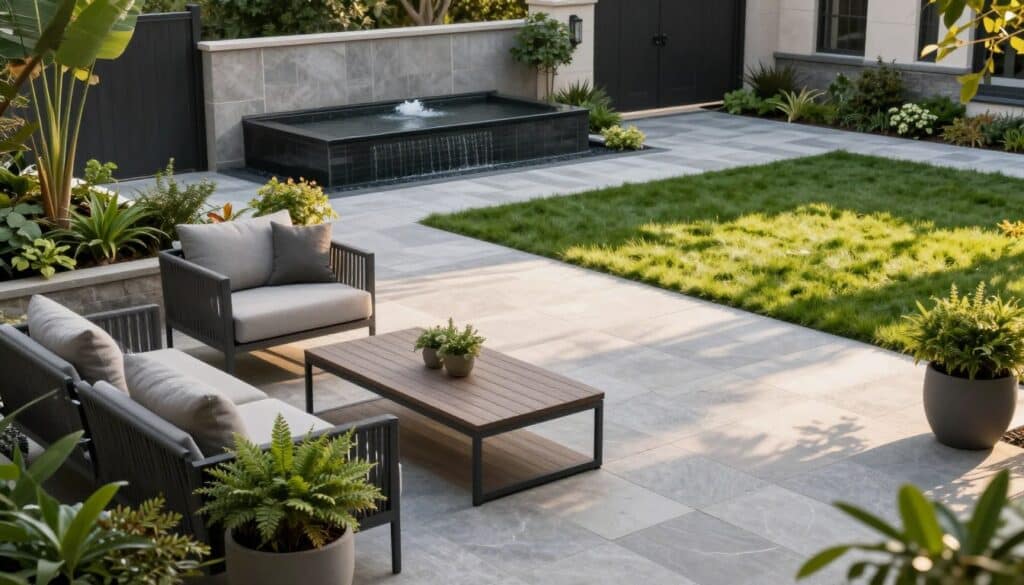
A thoughtful outdoor plan can make daily routines easier while adding lasting appeal. The benefits hardscaping brings include safer access, simpler care, stronger function, and greater property value. Good design also helps a yard support dining, rest, and family gatherings.
Creating Accessible, Low-Maintenance Outdoor Living Spaces
A level, well-graded patio and walkway can support people with mobility needs. Smooth pavers, gentle slopes, and clear paths improve movement between key areas. These choices create useful living spaces without adding barriers.
Built features need no watering, mowing, or pruning. Still, owners should sweep surfaces, check drainage, and remove weeds. Replenish polymeric sand every two to four years. Optional paver sealing may occur every three to five years.
Improving Curb Appeal and Long-Term Durability
An entry walk, driveway border, retaining wall, or planting area can lift curb appeal. Proper base preparation helps a project resist shifting and freeze-thaw stress. With basic care, quality construction may last 20 to 50 years or longer.
One industry estimate places the return from a well-designed patio or outdoor living project at 60% to 80% of its value. Material selection, drainage, and skilled installation help protect that investment.
| Maintenance task | Suggested timing | Primary benefit |
|---|---|---|
| Clean surfaces | Seasonally | Safer, brighter areas |
| Renew joint sand | Every 2–4 years | Firmer paver joints |
| Seal pavers | Every 3–5 years, optional | Added stain protection |
Planning a Hardscape Project with Quality and Local Expertise
Outdoor success starts with a clear plan that connects comfort, access, and lasting value. Local knowledge helps each space respond to Wilbraham soil, slopes, drainage, and seasonal weather.
Designing Hardscape and Landscape Elements to Work Together
Good hardscaping brings patios, walls, walkways, and water features into one cohesive layout. Concrete and stone can define activity zones, while trees, shrubs, grass, and plants soften the structure.
Hedges and bushes add shade and privacy near a backyard patio. Planting beds can guide walkways and create a natural transition between the home and yard. This balanced landscape design keeps the elements useful, attractive, and easy to enjoy.
Why Forty-Plus Years of Family-Owned Experience and a Commitment to Excellence Matter
A qualified contractor reviews grading, drainage, soil, access, property lines, and structural needs before construction. Expertise matters most for sloped yards, retaining walls, and drainage-sensitive projects. Walls taller than four feet may require permits in some jurisdictions.
More than 40 years of family-owned experience supports clear communication and careful workmanship. A “Committed to Excellence” standard also reflects durable installation, close attention to detail, and respect for each homeowner’s property. Explore local hardscaping expertise for guidance.
| Planning focus | Professional review | Result |
|---|---|---|
| Sloped yard | Grading and wall support | Safer, more stable space |
| Outdoor living area | Patio, plants, and access | Cohesive backyard design |
| Drainage-sensitive site | Runoff paths and soil | Fewer water problems |
Conclusion
Hardscaping creates useful outdoor areas, while plants add shade, privacy, color, and habitat. Wilbraham projects need freeze-thaw-resistant materials, accurate grading, drainage, and a compacted soil base.
Pavers, stone, brick, gravel, and permeable systems offer varied looks, upkeep, repairs, and stormwater benefits. A family-owned contractor with 40-plus years of experience can coordinate permits, materials, and installation.
The right plan improves access, curb appeal, outdoor living, and property value. Over time, routine care helps quality work last 20 to 50 years or longer.
FAQ: Define hardscaping. Hardscaping uses permanent, nonliving features such as patios, paths, walls, pavers, fire pits, and water elements.
FAQ: How does hardscape differ from landscape? Hardscape uses built materials; landscape includes living plants, grass, shrubs, and trees.
FAQ: Which materials suit Massachusetts weather? Natural stone, concrete pavers, brick, and well-installed permeable pavers perform well with proper drainage and base preparation.
FAQ: How long can an installation last? Quality materials, skilled work, and routine care often support a 20- to 50-year lifespan or longer.