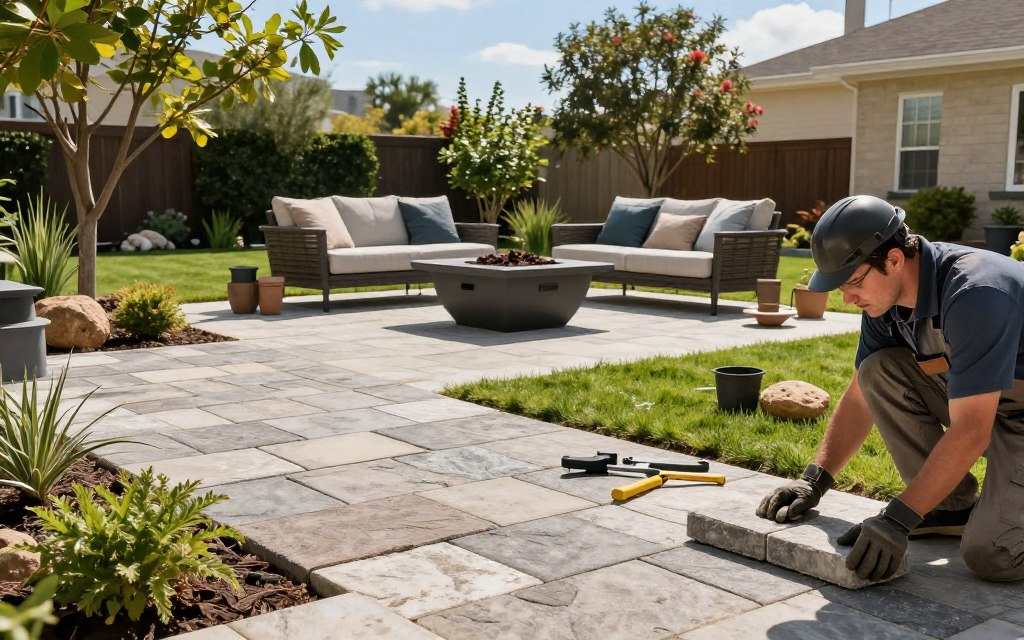
What if a few smart choices could transform your yard into a beautiful, low-maintenance outdoor living space that also increases your property’s value? Hardscaping services focus on installing durable, non-living elements—such as stone, pavers, concrete, gravel, and wood—to create functional features like patios, walkways, retaining walls, fire pits, and more. While many people group these elements under landscaping, they are actually hardscape features that define outdoor living areas, improve structure and design, and significantly reduce long-term yard maintenance.
A typical project starts with your vision, a site assessment, and a realistic budget. Then comes design and installation, where material choices affect durability, maintenance, and the finished look.
Well-planned hardscape work improves drainage, creates gathering zones, and makes underused areas usable for dining and the living outdoors. Experienced planning and craftsmanship matter; small grading mistakes can cause long-term water issues.
If you are a homeowner or property manager seeking dependable hardscape design and installation solutions, a consultation and estimate today will clarify next steps without pressure.
Key Takeaways
- Hardscaping uses non-living materials to build patios, walls, walkways, and fire features.
- These built elements create functional outdoor living zones and lower long-term upkeep.
- Projects follow a clear path: vision, assess space, confirm budget, design, then install.
- Material choice affects durability, maintenance, and overall beauty.
- Proper planning prevents drainage and settling problems and adds property value.
- Homeowners and managers can request a consultation and estimate to explore solutions.
What Hardscaping Is And How It Fits Into Landscaping
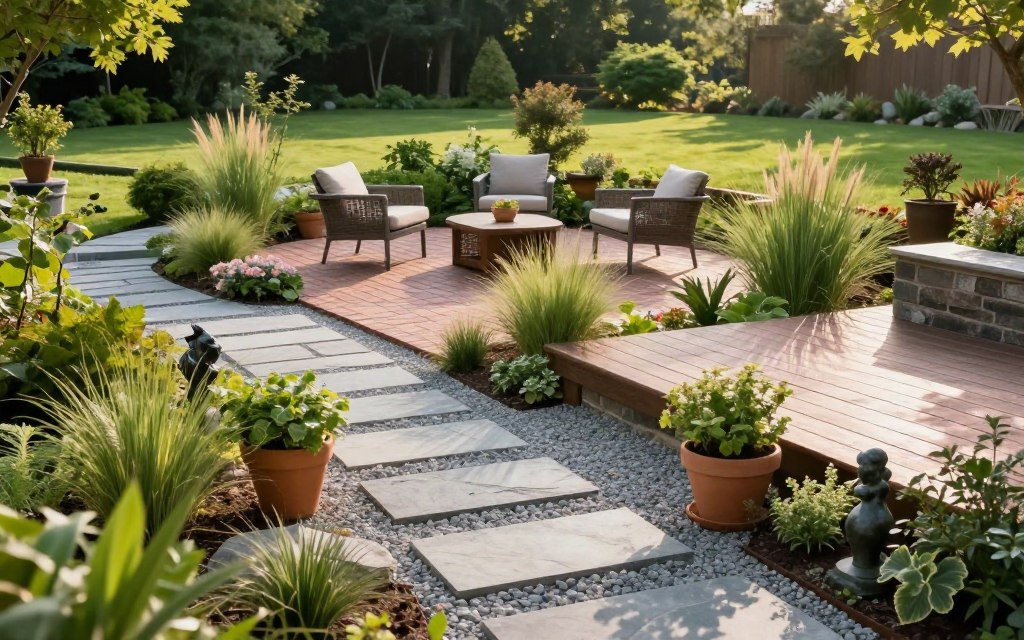
A well-planned mix of built surfaces and plants creates comfortable outdoor rooms for daily use. This balance lets you enjoy a yard that looks good and works well for cooking, seating, and play.
Hardscape Vs. Softscape: Non-living Materials vs. Living Elements
Non-living elements include stone, brick, pavers, concrete, gravel, and wood. These form patios, walkways, walls, and other features that shape the garden.
Living elements are plants, trees, shrubs, and grass. They add color, shade, and seasonal change and soften built edges.
Common Hardscape Materials and Where To Use Them
Stone and paver surfaces suit patios and pathways. Concrete and brick are strong for driveways and structural walls. Gravel works for drainage paths and informal borders. Wood can form decks or accents.
| Material | Best for | Style notes |
|---|---|---|
| Stone | Patios, steps | Natural, rustic |
| Pavers | Paths, patios | Versatile, permeable options |
| Concrete | Driveways, walls | Durable, modern finish |
Why Design Matters for Outdoor Living and Durability
Good design addresses grading, base prep, and water flow. Proper layout reduces runoff, protects walls and beds, and limits erosion on slopes.
Choosing the right materials affects slip resistance, heat retention, and longevity. Experienced teams turn these ideas into buildable projects that support lasting outdoor living.
Hardscaping Services We Provide For Homes And Businesses
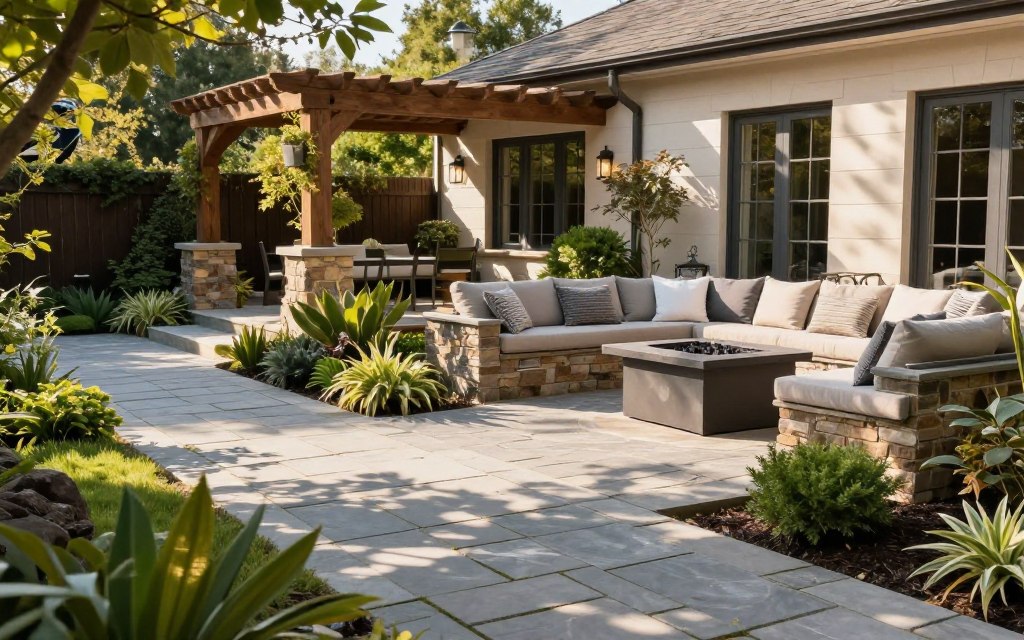
A clear menu of build options helps homeowners and businesses picture a finished outdoor area that fits daily use and budget.
Hardscape design and on-site consultation to match your vision, space, and budget
Many projects begin with an on-site consultation to assess grade, existing surfaces, drainage, and how you plan to use the space.
Our team translates that vision into buildable designs and a realistic budget for installation and project timelines.
Patio design and installation: creating usable outdoor living space
Patio planning focuses on dining, lounging, and circulation. Proper base, edging, and compaction extend longevity and reduce repairs.
Pavers and stone options
Choices include flagstone, limestone, bluestone, travertine, porcelain pavers, and concrete pavers. Select materials by style, performance, and upkeep needs.
Retaining walls, steps, walkways, and functional features
Retaining walls and outdoor steps handle slopes and elevation changes while improving safety. Walkways connect driveways, entries, patios, and pools for better flow and curb appeal.
Outdoor kitchens, fire pits, drainage, and enhancements
Outdoor kitchens and custom grill islands add storage and counters for easy entertaining. Fire pits and outdoor fireplaces extend patio use into cooler months.
French drains, permeable pavers, and runoff control protect bases and keep water from pooling. Pergolas, water features, and boulders finish the look.
| Feature | Best for | Maintenance |
|---|---|---|
| Flagstone / Bluestone | Natural patios, steps | Low to moderate |
| Porcelain pavers | Modern patios, low absorption | Low |
| Concrete pavers | Driveways, high-traffic paths | Moderate |
| Retaining walls | Slopes, terraces, raised beds | Low, inspect drainage |
Benefits Of Professional Hardscaping Design And Installation
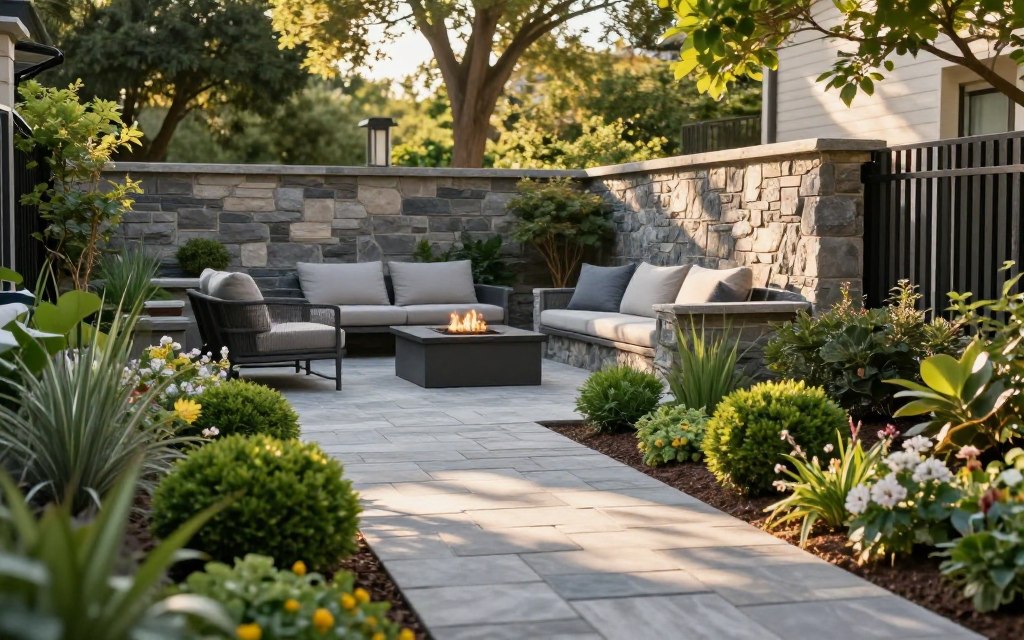
Hiring a pro creates a clear roadmap for projects that improve usability, drainage, and long-term value.
Boosting property value and curb appeal
Cohesive hardscape features give a strong first impression and make a property feel finished. A defined patio or entry walk lifts curb appeal and can improve resale attention.
Low-maintenance outdoor spaces
Replacing high-upkeep lawn with durable patios or gravel beds cuts routine yard work. Outdoor kitchens and fire pits extend use without extra weekly care.
Erosion control and water management
Retaining walls stabilize slopes and reduce erosion. Permeable pavers and proper grading move water away from foundations and protect planting beds.
Versatile, accessible designs
Design choices match modern, traditional, or natural looks for backyard or commercial landscape. Stable surfaces improve accessibility and support long-lasting performance when installed correctly.
| Benefit | How it helps | Example |
|---|---|---|
| Value & curb appeal | Stronger first impression, resale edge | Defined entry walk, cohesive materials |
| Low maintenance | Less mowing and trimming | Patios, gravel beds, permeable pavers |
| Erosion control | Stable slopes, reduced runoff | Retaining walls, drainage solutions |
| Accessibility | Safer movement for guests | Smooth walkways, level patios |
Conclusion
Durable built elements can reshape how you use and enjoy your outdoor space every day. Hardscaping uses non‑living materials to create patios, walkways, retaining walls, fire features, outdoor kitchens, and drainage that cut maintenance and boost living value.
Your project can include design and installation from a local team that balances materials, layout, and how the hardscape ties into the broader landscape. Options cover patios, retaining walls, fire pits, outdoor kitchens, and practical drainage solutions.
Decide how you want to use the space, set a budget, and pick materials that match style and upkeep needs. Request a site consultation today to validate feasibility and get a clear plan. Contact today to discuss your vision and start a project that makes your property more usable and enjoyable year‑round.