
Have you ever wondered how to care for hydrangeas outdoors so they produce stunning blooms year after year? With the right care, these beautiful flowering shrubs can reward you with large, vibrant clusters of white, pink, blue, or purple blossoms that instantly enhance your landscape. Understanding how to care for hydrangeas outdoors—from choosing the right planting location to proper watering, pruning, and soil care—will help your plants thrive in every season. Whether you’re adding hydrangeas to a new garden or maintaining established plants, a little attention goes a long way toward creating a colorful, eye-catching outdoor space.
Hydrangeas are cherished by many American gardeners for their hardiness and long blooming season. They are surprisingly easy to grow, making them an ideal choice for both beginners and seasoned horticulturists alike. With the right knowledge, anyone can cultivate these magnificent flowers that can be the envy of the neighborhood.
In this guide, you will discover a complete roadmap for mastering the art of hydrangea care throughout the seasons. From choosing the right varieties to planting at the perfect time, pruning with confidence, and nurturing your plants, you’ll be well on your way to achieving the lush blooms you’ve always admired.
Interestingly, the name “hydrangea” comes from the Greek words for water and vessel, hinting at their need for moisture. This article will delve into practical watering tips and much more. So, keep reading to unlock the secrets of these beautiful blooms!
Key Takeaways
- Hydrangeas are known for their stunning, colorful blooms that can enhance any garden.
- These plants are hardy and easy to grow, making them perfect for all levels of gardeners.
- Proper watering and soil management are crucial for vibrant blooms.
- Understanding the different hydrangea varieties will help in choosing the right one for your garden.
- Seasonal care is essential for maintaining the health and beauty of hydrangeas.
Understanding the Basics: Why Learn How to Care for Hydrangeas Outdoors?
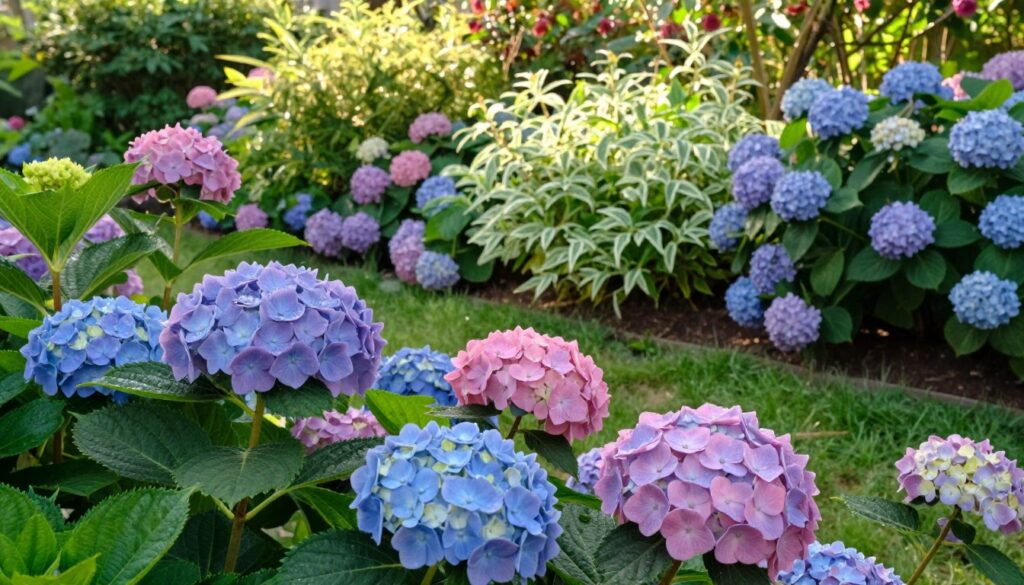
Ever noticed how some gardens dazzle with hues, while others fade into the background? Hydrangeas are a favorite among American gardeners, not just for their stunning blooms but also for the deep emotional connections they foster. Many recall childhood memories of these flowers in their grandmother’s gardens or their presence in wedding bouquets. They evoke the relaxing vibe of summer afternoons spent by the pool, making them a cherished addition to any landscape.
These remarkable plants have a rich history, originating near Buddhist temples in Japan before making their way to the presidential gardens of Mount Vernon and Monticello. Their journey across continents adds depth to their modern appeal, captivating gardeners across the United States.
When searching for guidance on caring for hydrangeas, many gardeners seek more than just basic facts. They want confidence in their gardening skills, troubleshooting advice, and a clear path to achieving the lush blooms they admire in magazines and on social media. Addressing common concerns—like when to prune or why blooms might not appear—can help alleviate gardener anxieties.
Hydrangeas thrive best in USDA hardiness zones 3 through 9. Understanding your specific growing conditions is crucial. Morning sun versus afternoon shade, soil composition, and regional climate quirks all play a role in successful hydrangea growth. This knowledge lays the foundation for a thriving garden, allowing you to enjoy the beauty of these flowers year after year.
Here’s a quick overview of the USDA hardiness zones and their suitability for hydrangeas:
| USDA Zone | Temperature Range (°F) | Hydrangea Varieties |
|---|---|---|
| 3 | -40 to -30 | Panicle, Smooth |
| 4 | -30 to -20 | Bigleaf, Oakleaf |
| 5 | -20 to -10 | Bigleaf, Panicle |
| 6 | -10 to 0 | Bigleaf, Oakleaf, Smooth |
| 7 | 0 to 10 | Bigleaf, Panicle, Climbing |
| 8 | 10 to 20 | Bigleaf, Panicle, Climbing |
| 9 | 20 to 30 | Bigleaf, Panicle, Climbing |
Hydrangeas offer major payoff without too much effort, making them ideal for busy homeowners. Each variety has unique needs, which we will explore in the next section. By understanding these basics, you unlock the joy of nurturing beautiful blooms season after season.
Popular Types of Hydrangeas and Their Outdoor Growing Preferences
In the vibrant world of gardening, hydrangeas stand out as diverse and enchanting shrubs. Each variety has its own unique personality, thriving under different conditions and offering stunning visual rewards. Understanding these distinctions can help you choose the perfect hydrangea for your garden.
Bigleaf Hydrangea (Hydrangea macrophylla)
The bigleaf hydrangea is a classic favorite among American gardeners. Thriving in USDA zones 5 to 9, this variety can grow between 6 to 10 feet tall and wide. It loves part to full shade, making it ideal for those cozy corners of your garden.
From June to October, its blooms can showcase an array of colors—whites, pinks, blues, purples, and reds. Interestingly, the flower color can shift based on soil pH, adding a magical touch to your landscape. Popular cultivars like Endless Summer are well-loved for their ability to bloom on both new and old wood, making them forgiving for those who might worry about pruning.
Panicle Hydrangea (Hydrangea paniculata)
Next up is the panicle hydrangea, a true workhorse in the hydrangea family. This hardy variety flourishes in USDA zones 3 to 8, reaching impressive heights of 8 to 15 feet and widths of 6 to 12 feet. It thrives in full sun to partial shade, making it versatile for various garden settings.
From July to September, its cone-shaped white blooms transition to lovely shades of pink and burgundy, creating a stunning visual display. Varieties like ‘Limelight’ and ‘Vanilla Strawberry’ are particularly popular, providing dramatic impact in any landscape.
Oakleaf and Smooth Hydrangea Varieties
Oakleaf hydrangea (Hydrangea quercifolia) brings unique charm with its distinctive lobed leaves that turn vibrant shades of red and purple in fall. This variety prefers full sun to partial shade and grows well in USDA zones 5 to 9. Its white to purplish-pink flowers bloom from July through September, with ‘Snowflake’ being a standout cultivar.
Smooth hydrangea (Hydrangea arborescens) is another reliable choice, especially for northern gardeners. Thriving in USDA zones 3 to 9, it grows to a height of 3 to 5 feet. This variety prefers partial shade and produces abundant white or pink blooms from June to September. The iconic ‘Annabelle’ variety is known for its large, snowball-like flower heads that can reach up to 12 inches across.
Climbing and Mountain Hydrangeas
For those looking to add vertical interest, the climbing hydrangea (Hydrangea anomala ssp. petiolaris) is perfect. This vigorous vine can climb 30 to 40 feet and thrives in part to full shade. It produces beautiful white, lacy flowers from May to July in USDA zones 4 to 8, making it an excellent choice for arbors and fences.
Lastly, mountain hydrangea (Hydrangea serrata) is compact and perfect for smaller spaces. It does best in USDA zones 6 to 9, reaching a modest height of 2 to 4 feet. With delicate lacecap blooms in pink or blue from June to August, this variety is a great option for containers or urban gardens.
Understanding whether a hydrangea blooms on old wood or new wood is crucial for proper pruning and winter care. Some modern varieties, like Endless Summer, bloom on both, offering a bit of forgiveness for those pruning mistakes.
With such a variety of options, there is a perfect hydrangea for every garden situation. Whether you have blazing full sun, deep shade, or a small urban balcony, you can find a hydrangea that fits beautifully. The next sections will guide you on how to plant and nurture these stunning flowers outdoors.
Planting Hydrangeas Outdoors: Best Time, Location, and Soil Preparation
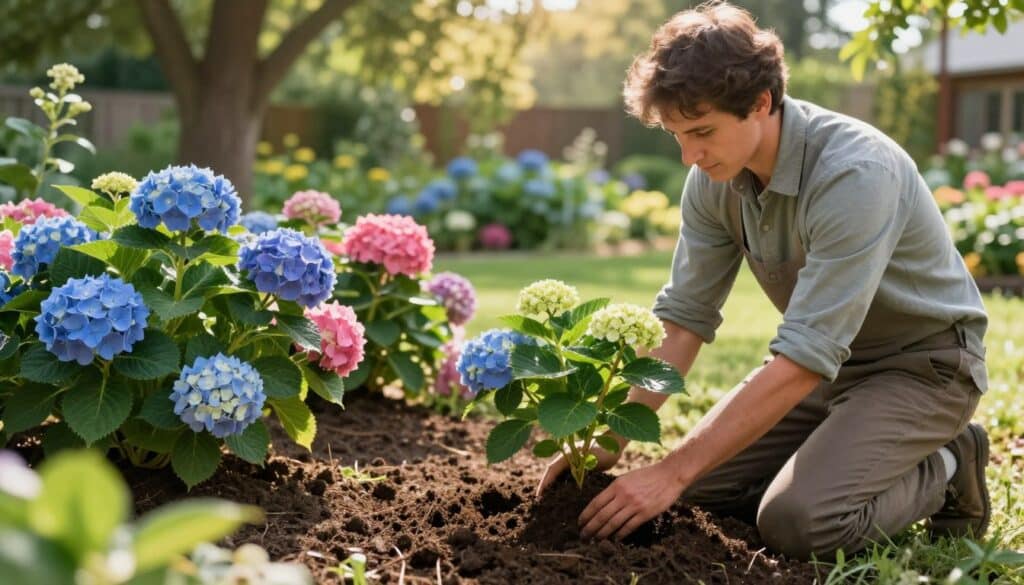
Planting hydrangeas is an exciting journey that can transform your garden into a vibrant oasis. Choosing the right time and location for planting is essential for their growth and future blooms. Let’s explore the best practices to ensure your hydrangeas thrive.
Optimal Seasons for Planting: Early Spring and Fall
Fall is the absolute best season to plant hydrangeas outdoors, closely followed by early spring. These cooler, gentler seasons give the shrub ample time to establish a robust root system before the stress of summer heat or winter cold arrives.
For optimal results, aim to plant in the early morning or late afternoon. These times offer milder temperatures, protecting young hydrangeas from heat stress and giving them the best possible start in their new outdoor home.
Selecting the Right Spot: Light, Shade, and Moisture Considerations
Also, pay attention to the space requirements indicated on the nursery tag. If a ‘Limelight’ hydrangea is labeled to grow six to eight feet tall and wide, plan for exactly that. This foresight reduces future pruning headaches and results in healthier, better-looking plants over time.
Preparing the Soil: pH Levels and Organic Matter
Soil preparation is key to success. Combine equal parts existing native soil with a high-quality garden soil amendment. This creates a rich, well-drained, consistently moist environment that hydrangeas crave without becoming waterlogged or soggy.
Understanding soil pH is fascinating, as it directly impacts the color of bigleaf hydrangea flowers. Acidic soil produces stunning blue and lavender blooms, while alkaline soil shifts the palette toward pinks and reds. This knowledge empowers you to design your garden’s color scheme actively.
For planting, dig a hole twice as wide as the nursery container. Position the root ball at the same depth it was growing previously. Backfill with the amended soil mixture and water deeply to settle the roots and eliminate air pockets.
Different hydrangea types have specific needs at planting time. Panicle hydrangeas tolerate more sun, while bigleaf varieties prefer more shade. Remember to consider their spacing requirements, as compact mountain hydrangeas grow 2 to 4 feet tall, while sprawling panicle specimens can reach up to 15 feet.
Finally, keep in mind the proximity to water sources. The name “hydrangea” literally means “water vessel,” and consistent moisture during the establishment phase is essential for long-term success.
Planting hydrangeas is an act of hope and investment. The careful choices made in this single afternoon will reward you with decades of breathtaking summer blooms and a landscape that matures in beauty with each passing year.
Seasonal Guide to Hydrangea Care Outdoors
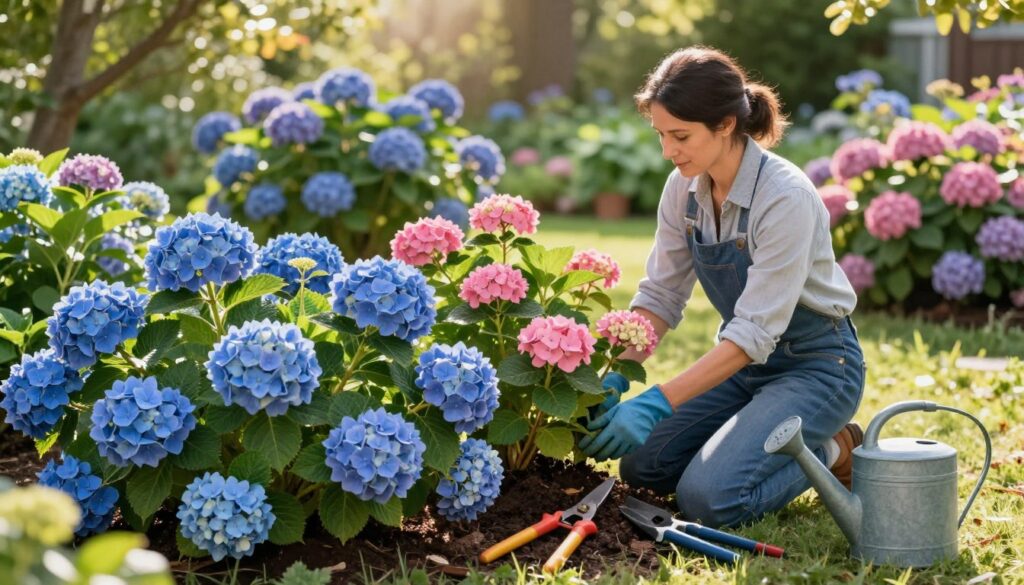
Each season brings unique opportunities to nurture hydrangeas and encourage their stunning blooms. Understanding the rhythm of the seasons helps create a vibrant garden. Let’s explore the essential care tasks for each time of year.
Spring: Watering, Mulching, and Fertilizing Tips
As spring arrives, hydrangeas awaken from their winter slumber. New green shoots emerge, and the first tender leaves unfurl. This is a critical time to set the stage for a spectacular bloom season.
Watering is essential. Aim for about one inch of water per week throughout the growing season. Bigleaf and smooth varieties tend to need more moisture, so keep an eye on them during dry spells.
Mulching is another vital spring ritual. Apply a two- to three-inch layer of organic mulch around the base of each plant. This practice locks in soil moisture, suppresses weeds, and regulates root temperature while enriching the soil as it breaks down.
When it comes to fertilizing, bigleaf hydrangeas appreciate light feedings in March, May, and June. Oakleaf and panicle varieties thrive with two applications in April and June. Always opt for a slow-release granular fertilizer to avoid burning the tender roots.
Summer: Managing Heat and Maintaining Moisture
Summer heat can be challenging, especially during July heat waves. Consistent soil moisture is crucial. Watch for drooping leaves, which signal thirst. Bigleaf and smooth hydrangeas often require extra water during hot, dry spells.
Additionally, you can influence flower color during this season. To shift blooms toward blue, lower the soil pH with peat moss or sulfur. For pink and red tones, add ground limestone to raise the pH. This transformation turns summer into a colorful chemistry experiment.
Fall: Planting and Preparing for Dormancy
Fall is an excellent time for planting new hydrangeas. Continue to water deeply until the first hard freeze to ensure the plants enter winter fully hydrated. As the season progresses, enjoy the beautiful transformation of oakleaf foliage into brilliant autumn colors.
After planting or pruning, don’t forget to apply mulch again. This will help lock in moisture as the plants prepare for dormancy.
Winter: Protecting Hydrangeas and Late-Season Pruning
In colder regions, it’s essential to protect your hydrangeas from harsh winter conditions. Consider erecting burlap screens around oakleaf and French varieties to shield their flower buds from freezing temperatures and strong winds.
During late winter or early spring, this is the ideal time to prune dead or winter-damaged wood from all varieties. This preparation sets the stage for vigorous new growth as temperatures warm.
Hydrangeas are resilient plants. Even if winter burns branch tips or a late frost nips emerging buds, most varieties will recover with proper care and still produce beautiful blooms on new wood or from secondary buds.
Ultimately, caring for hydrangeas is a year-round relationship. Observing, responding, and nurturing through each season deepens your connection to your landscape, ensuring abundant flowers with every passing year.
How to Care for Hydrangeas Outdoors with Proper Pruning Techniques
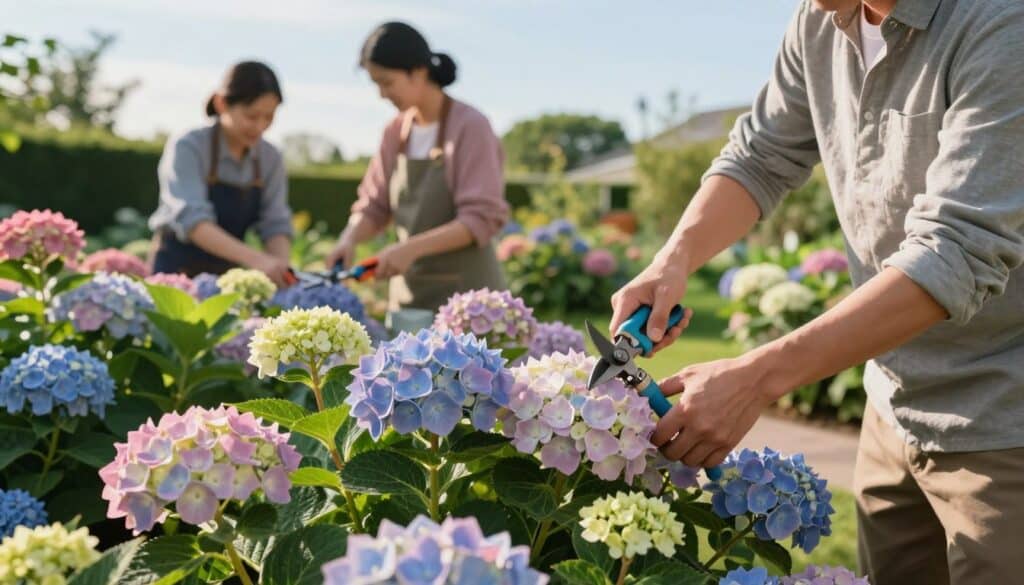
Understanding the right pruning techniques can transform your hydrangea experience from anxiety to joy. Many gardeners feel a wave of uncertainty when it comes to pruning their beloved plants. However, with some guidance, you can approach this task with confidence.
First, it’s essential to grasp the distinction between old-wood and new-wood bloomers. Old-wood bloomers, like bigleaf and oakleaf hydrangeas, form their flower buds on stems that grew the previous year. In contrast, new-wood bloomers, such as smooth and panicle hydrangeas, produce buds on fresh stems that emerge in spring.
Pruning Old-Wood Bloomers vs. New-Wood Bloomers
For old-wood bloomers, the golden rule is to prune only after flowering is complete, typically in late summer or early fall. Carefully clip spent blooms just below the flower heads. Additionally, remove any dead or dying canes at their bases. Avoid heavy cuts during fall, winter, or early spring when next year’s buds are forming on those seemingly bare stems.
On the other hand, new-wood bloomers can be pruned confidently in late winter or early spring while the plant is still dormant. Cut back all stems by one-third to encourage vigorous new growth and larger, showier flower clusters. Also, remove any crossed or crowded branches to improve airflow and plant health.
Timing Your Pruning to Maximize Flower Production
Each hydrangea variety has its ideal pruning time. Oakleaf hydrangeas only need winter-damaged stems removed in early spring. Bigleaf hydrangeas benefit from a gentle tidy-up in early spring, being careful to preserve flower buds. Climbing hydrangeas should receive light post-bloom pruning to control height and spread, while smooth hydrangeas can be cut almost to the ground in late winter for a fresh start.
For hydrangea paniculata, late winter or early spring is the best time for pruning to promote large flower clusters. If you have reblooming varieties like Endless Summer, which bloom on both old and new wood, you have more flexibility. If you miss the ideal pruning window, these forgiving hydrangeas will still produce flowers.
Step-by-Step Pruning Instructions for Different Varieties
When you’re ready to prune, remember a few practical tips. Always use clean, sharp bypass pruners for clean cuts that heal quickly. Make cuts at a 45-degree angle just above a healthy bud or leaf node. Step back frequently to assess the shrub’s overall shape instead of getting lost in individual cuts.
Proper pruning not only enhances flower production but also promotes plant health. Thinning out older, woody stems from the center of the shrub allows light and air circulation, reducing the risk of powdery mildew and other fungal diseases.
Finally, think of pruning as a satisfying act of stewardship. It connects you with each plant, helps you understand its growth patterns, and shapes the beauty of your garden for the year ahead. Remember, even imperfect pruning is rarely fatal and often educational.
Watering, Mulching, and Fertilizing Your Outdoor Hydrangeas
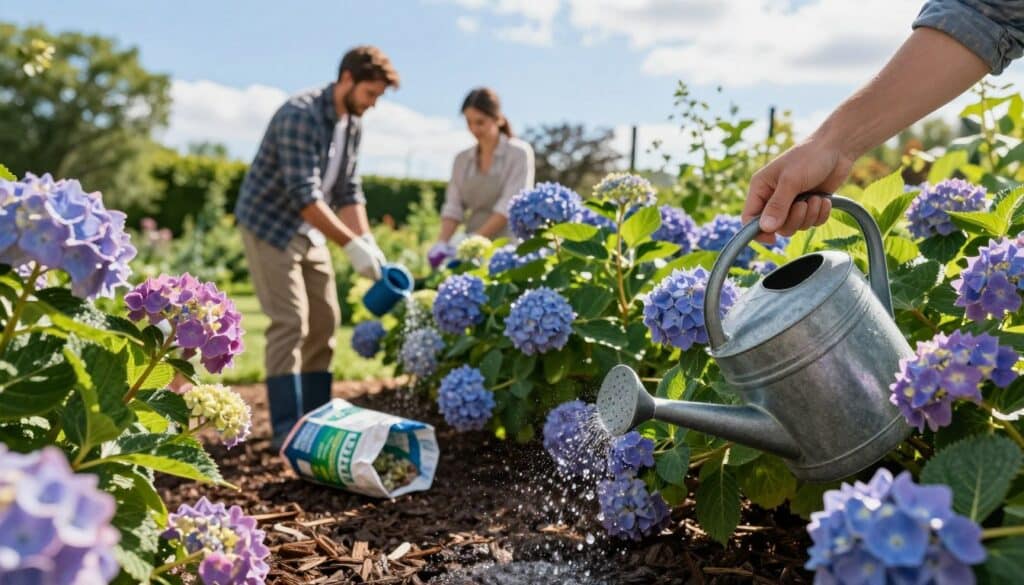
The name hydrangea, derived from the Greek words for water and vessel, reveals a vital truth about these beautiful plants. Consistent moisture is essential for their health and vibrancy, especially during the establishment phase after planting. Providing the right amount of water ensures that your hydrangeas flourish and produce those stunning blooms you desire.
Watering practices should focus on the soil rather than the foliage. Aim for about one inch of water per week, whether from rainfall or irrigation. Check the top inch of soil with your finger; if it feels dry, it’s time to water. Pour water slowly at the base of the plant, allowing it to pool and soak in instead of running off. This method promotes deep root growth, which is crucial for the plant’s stability and health.
Bigleaf and smooth hydrangeas often require more frequent watering than other varieties. Watch for drooping leaves or wilting flowers, which are signs that your plants need a drink. A deep watering will typically perk them up quickly.
Choosing and Applying Mulch to Retain Soil Moisture
Mulching is an unsung hero in hydrangea care. A two- to three-inch layer of organic mulch, such as shredded bark or pine straw, acts as a moisture-retaining blanket. It helps suppress weeds and slowly releases nutrients into the soil as it decomposes. When applying mulch, create a donut shape around the base of the plant, ensuring it does not touch the stems directly.
Maintaining your mulch layer is important throughout the seasons. In spring, apply a fresh layer as the soil warms. Check mid-summer to ensure the mulch hasn’t thinned out, and add more if necessary. A final top-up in fall will insulate the roots against winter temperature swings, helping your hydrangeas stay healthy year-round.
Fertilizer Types and Application Timing for Healthy Growth
Fertilizing your hydrangeas correctly is crucial for robust growth and vibrant blooms. Different varieties have specific needs. Bigleaf hydrangeas benefit from light feedings in March, May, and June. Oakleaf and panicle varieties thrive with two applications in April and June, while smooth hydrangeas do well with late-winter fertilization.
After August, avoid fertilizing, especially in colder regions. This prevents stimulating tender new growth that winter can damage. A slow-release granular fertilizer, like Miracle-Gro® Shake ‘n Feed® Flowering Trees & Shrubs Plant Food, is ideal for busy gardeners. It provides steady nutrition for up to three months, reducing the need for frequent applications.
Watch your plants for visual cues. Yellow-green leaves may indicate a nutrient deficiency, particularly in container-grown hydrangeas. Conversely, dark green foliage with few blooms could suggest excess nitrogen, impacting flower production. Established in-ground hydrangeas typically thrive on rainfall alone, except during droughts.
Remember, watering, mulching, and fertilizing work together to create the perfect environment for your hydrangeas. Each practice amplifies the benefits of the others, resulting in lush foliage and spectacular blooms that make hydrangeas the crown jewels of any garden.
Special Considerations: Growing Hydrangeas in Containers and Varied Outdoor Conditions
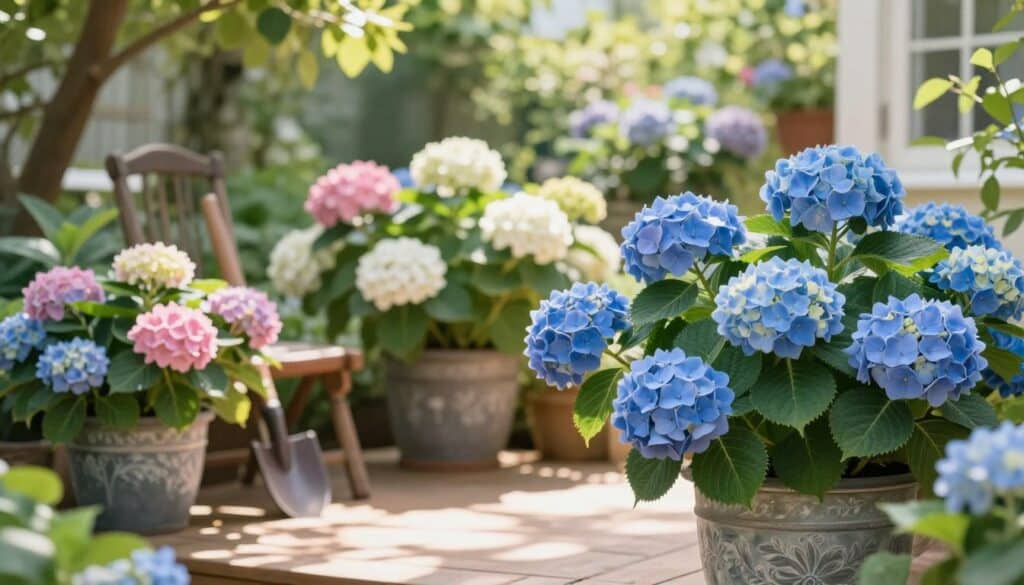
Gardening can take many forms, from urban rooftops to spacious backyards. Not every gardener has sprawling beds or ideal conditions, yet hydrangeas can thrive in containers and challenging environments. With the right knowledge and creativity, these stunning plants can flourish in any space.
Container gardening allows flexibility, making it accessible for apartment dwellers and urban gardeners. Certain cultivars, such as smooth, panicle, and bigleaf, perform particularly well in pots. The key is choosing the right size container. A roomy pot ensures enough space for roots to grow, water, and nutrients. If the container is too small, roots can hit the sides, limiting growth.
Container Size and Soil Mix Recommendations
When selecting a pot, aim for one that is at least two inches larger in diameter than the nursery container. This gives roots ample room to expand. Additionally, ensure the pot has adequate drainage holes to prevent waterlogged soil.
For soil, opt for a premium mix like Miracle-Gro® Moisture Control® Potting Mix. Garden soil is often too heavy and dense for containers. A quality soilless mix provides the right balance of drainage, moisture retention, and aeration that containerized roots need to thrive.
Watering and Fertilizing for Container Hydrangeas
Container hydrangeas have unique watering demands. Pots dry out faster than garden beds, especially in summer heat and wind. Daily moisture checks are essential. Water slowly and thoroughly until it runs freely from the drainage holes. If water rushes straight through, the soil may be hydrophobic and needs gentle rehydration.
Fertilizing container plants is also crucial. They rely entirely on the gardener for nutrients. Use a slow-release granular fertilizer in spring and refresh it mid-summer. Supplement with water-soluble feedings every two to four weeks during active growth. Watch for yellow-green leaves, which can indicate a nutrient deficiency.
Adapting Care for Different Outdoor Conditions and Varieties
In the South, plant hydrangeas where they receive morning sunlight and afternoon shade to prevent leaf scorch. In northern regions, many hydrangeas can handle all-day sun. Coastal areas benefit from salt-tolerant panicle varieties, while arid climates require consistent irrigation and heavy mulching.
For gardeners with limited light, oakleaf and climbing hydrangeas are excellent choices for deeply shaded spots. In contrast, panicle hydrangeas are the most heat-tolerant option, thriving in full sun while still producing abundant blooms.
Container-grown hydrangeas are versatile. They can frame entryways, define outdoor living spaces, and create movable privacy screens on patios. Their placement can be rearranged throughout the season to follow the sun or showcase peak blooms where they’ll be most enjoyed.
Ultimately, there’s a hydrangea for every situation. The extra attention that container plants require is repaid many times over in the joy of nurturing a thriving shrub just steps from your kitchen door or living room window.
| Hydrangea Variety | Best Container Size | Sun/Shade Preference |
|---|---|---|
| Smooth | 12-16 inches | Partial Shade |
| Panicle | 16-20 inches | Full Sun |
| Bigleaf | 14-18 inches | Partial Shade |
| Climbing | 10-14 inches | Partial Shade |
| Oakleaf | 12-16 inches | Partial Shade |
Conclusion
Imagine a garden where every bloom tells a story, where colors dance and memories flourish. As you embark on your journey with hydrangeas, envision them as living privacy hedges or stunning focal points that grace your outdoor space. These flowers are versatile, thriving in various settings, from mixed borders to containers that welcome guests at your door.
Hydrangeas also bring beauty indoors, with fresh blooms perfect for vases and special occasions. Consider the timeless tradition of drying these flowers; let them age naturally on the plant, then harvest them at the perfect stage for wreaths and arrangements that brighten winter months.
Remember, gardening is a practice filled with learning opportunities. Start with what you have, whether a sunny balcony or a lush garden. Know your hydrangea type, plant it in rich soil, and watch it thrive with consistent watering and timely pruning. Each season will reward you with spectacular blooms, making every summer a celebration of nature’s beauty.
So, step outside, dig in the dirt, and nurture these remarkable plants. This journey is not just about flowers; it’s about connecting with the natural world and creating something beautiful in your own space.