

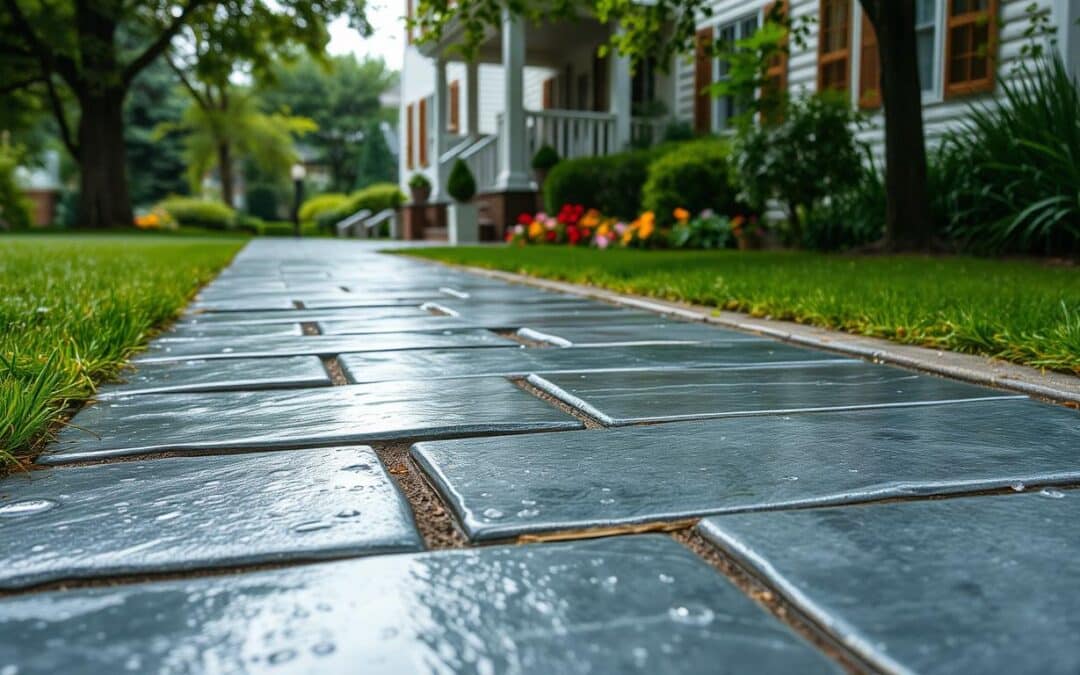
Bluestone is the strongest candidate for the longest-lasting New England walkway when it is laid on a stable, well-drained base and suited to the site. Its natural stone can endure for decades, while pavers offer easier spot repairs and stamped concrete can show cracks. Installation quality and drainage can outweigh material choice.
A control joint is a planned groove or cut that encourages shrinkage cracks to occur along a predictable line.
Could a walkway that looks solid today become hard to fix after a few harsh winters? In Concord, Massachusetts, homeowners face that choice when they plan a new path beside a house, garden, or driveway. Concrete driveway installation also brings related questions about soil conditions, weather, water, and drainage.
Each material has strengths, but no surface can make up for poor site work. The comparisons below begin with how pavers, bluestone, and stamped concrete respond to freeze and thaw.
Key Takeaways
- Bluestone can last for decades on a stable, well-drained base.
- Pavers allow individual units to be reset or replaced.
- Stamped concrete gives a continuous patterned surface, but cracks need repair.
- Soil, slope, and drainage affect how each material performs.
- Choose a surface that suits both daily use and the site.
How each one handles freeze and thaw
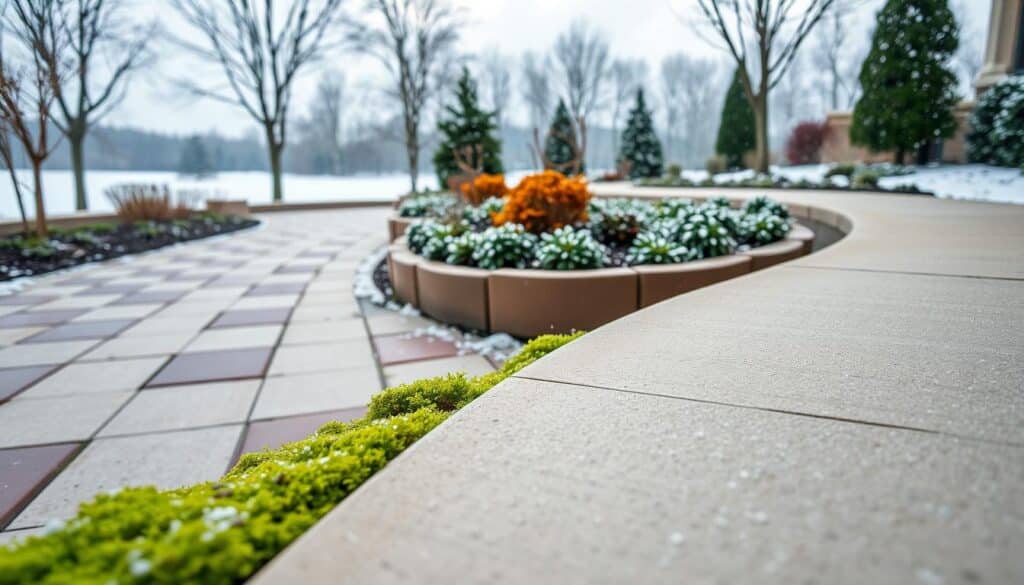
A walkway that sheds water faces less risk than one that lets water sit beneath its surface. Good drainage, a stable base, and correct installation help all three materials handle New England weather.
Water trapped under or within a poorly drained surface can raise freeze-thaw damage risk. No material is guaranteed not to crack or shift, but some surfaces are easier to repair after movement.
Pavers through winter and spring
Pavers are individual paving units, so a section that shifts can often be reset. A damaged unit can usually be replaced without removing the rest of the walkway.
The base still matters. If soil conditions are soft or uneven, or water collects below the pavers, units can sink, lift, or spread at the edges.
Bluestone through winter and spring
Bluestone is natural stone, and a well-laid path can endure for decades. Its performance depends on sound support beneath each slab and a layout that lets water drain away.
Loose or poorly supported slabs can shift or crack. Correct installation helps limit movement, but it cannot promise that stone will never be damaged.
Stamped concrete through winter and spring
Stamped concrete is a patterned poured concrete surface. It has no separate units to lift out, so a crack or damaged area requires repair within one continuous surface.
A stable base and good drainage help reduce stress on the concrete. Still, concrete can crack, and a decorative finish does not make it immune to weather.
| Material | Freeze-thaw response | Repair approach | Main vulnerability |
|---|---|---|---|
| Pavers | Individual units can shift | Reset or replace units | Water below a weak base |
| Bluestone | Stone can last for decades | Reset or replace a slab | Poor support or drainage |
| Stamped concrete | One continuous surface may crack | Repair the cracked area | Water and weak base support |
A repairable surface is not the same as a surface that cannot crack. Seasonal performance is only part of the choice; next, consider the work each material needs over time.
Maintenance over ten years
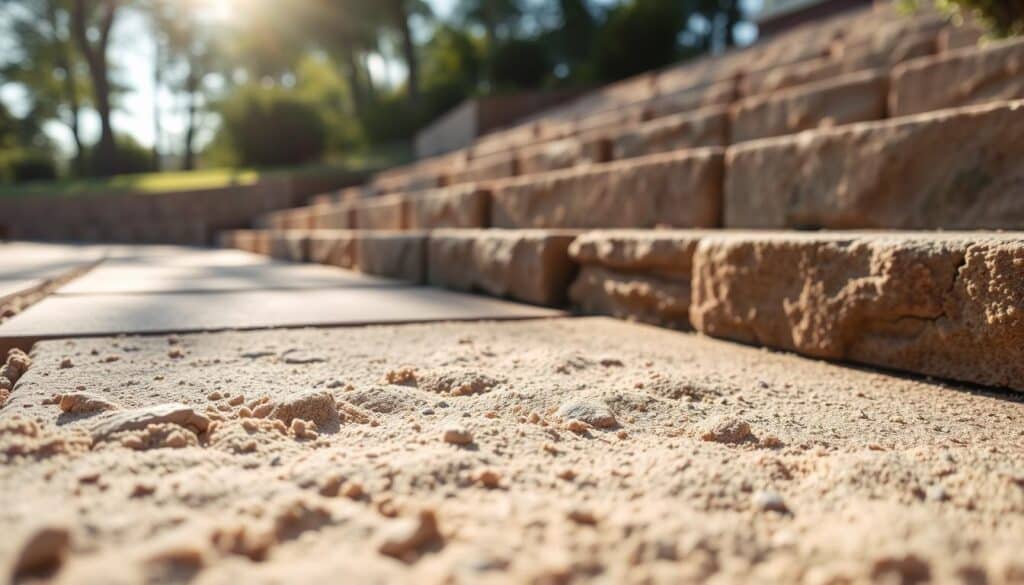
Keeping joints or surface finishes in good condition is the recurring task most likely to surprise a homeowner. Over ten years, pavers may need fresh joint sand, while stone and concrete care depends on the finish.
Regular cleaning helps remove dirt and plant debris before they build up. Use care instructions suited to the exact material, rather than assuming every surface needs the same treatment.
Routine cleaning and joint care
Paver joints may need sand replenished as it wears away or washes out. Check the joints during routine cleaning, especially where runoff crosses the path.
Bluestone care depends on the stone and its finish. Follow the product guidance for cleaning, and do not assume that every stone needs sealer.
Repairs, sealing and replacement
Stamped concrete also needs care suited to its surface finish. Resealing may be appropriate for some finishes, but the right product and schedule depend on the concrete.
A damaged paver can generally be replaced on its own. A crack in stamped concrete is a repair to a continuous slab, so matching the surrounding color and pattern can take care.
| Material | Routine care | Likely repair approach |
|---|---|---|
| Pavers | Clean surface; replenish joint sand | Replace an individual unit |
| Bluestone | Clean as stone guidance directs | Repair or replace a damaged slab |
| Stamped concrete | Clean; seal when finish guidance calls for it | Repair a crack in the continuous surface |
Care needs vary with material, years of use, and finishing choices. With upkeep in mind, the next choice is a look that suits the house.
Matching the walkway to the house
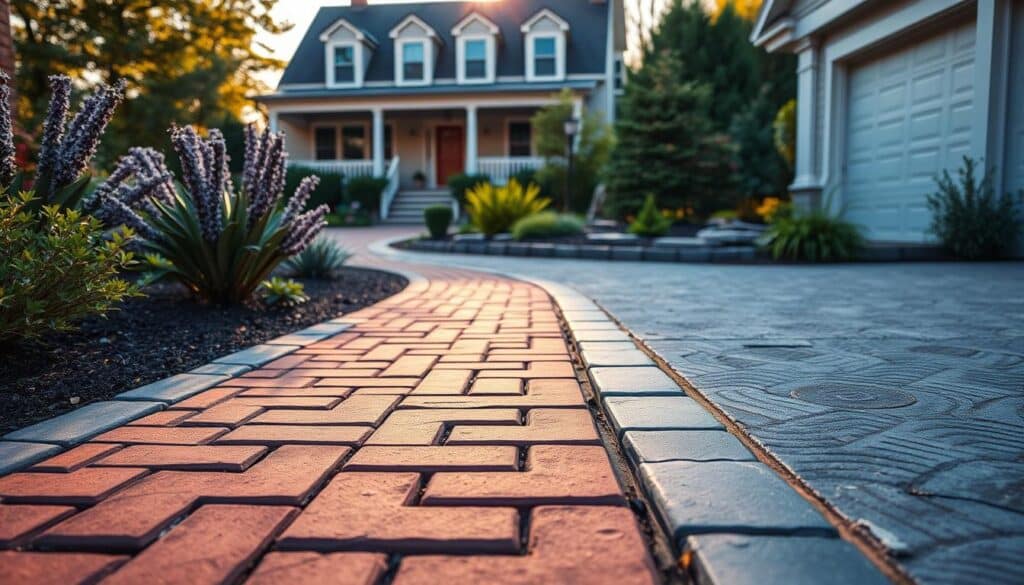
A red-brick home with cream trim can guide a walkway palette toward warm pavers or stone with soft gray tones. Let the home’s existing brick, trim, and masonry shape the design, rather than choosing a material by color alone.
Architecture, landscape style, and walkway shape all affect how a surface fits the area. A straight path may suit a formal entry, while a curved line can work with a relaxed garden.
Concrete driveway ideas that complement a walkway
Concrete driveway ideas can link the driveway and walkway through a shared border, color, or pattern. A simple concrete edge beside pavers can create a clear transition without using stamped concrete everywhere.
Consider where the driveway approach meets the path. The material and pattern should make that connection look planned, while keeping the walking route easy to follow.
Color, pattern and edge choices
A textured surface can echo stonework, while a restrained border can pick up a trim color. Keep the number of patterns modest so the home remains the focus.
The named photo, New England Walkway Materials and Home Exterior, shows paver, bluestone, and stamped-concrete walkway surfaces beside a New England home.
Edges help define the path and separate it from lawn or planting beds. Once the look feels right, weigh site conditions and everyday use before choosing a material.
Which walkway material fits the site and daily use?
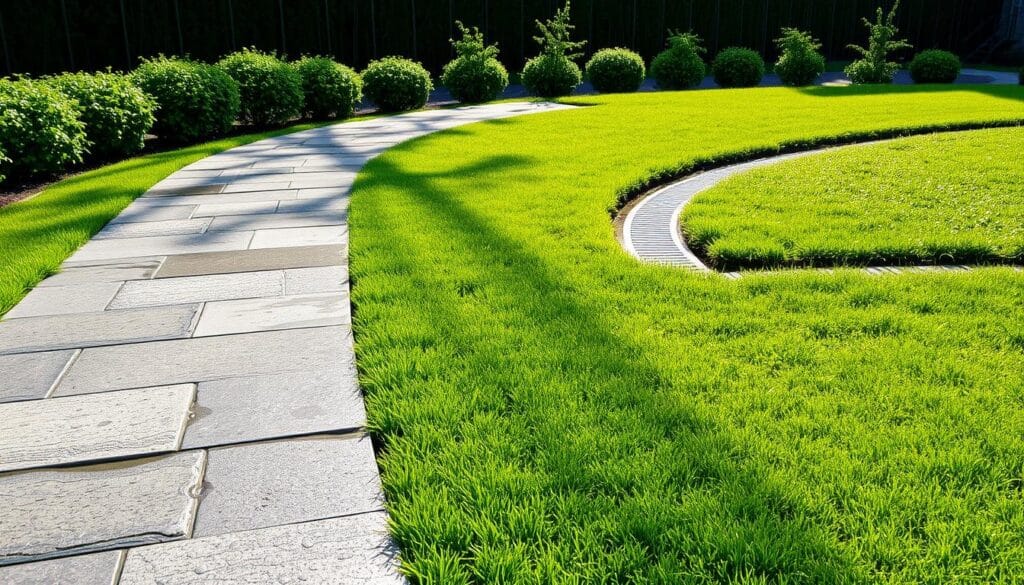
A path across a wet, uneven patch of yard needs a plan for water and support before you choose its surface. Soil conditions, slope, and foot traffic can change what works on the same property.
Soft or uneven soil may need more careful base planning to keep the walkway level. A steep grade needs attention to water flow and safe footing, while a high-traffic route needs a surface that suits repeated use.
If the walkway meets a driveway, check whether the chosen material can handle vehicle loads in that area. A material suited to foot traffic should not simply continue into a vehicle-use area without confirming its intended use.
“Cement driveway” is a common but imprecise phrase for a concrete driveway. Cement is an ingredient in concrete, not the finished surface.
For more ideas on how hardscape materials fit a property, review hardscape design and installation options. A sound material choice starts with the site, then leads to separate construction decisions for a poured concrete driveway.
How Does the Concrete Driveway Installation Process Work?
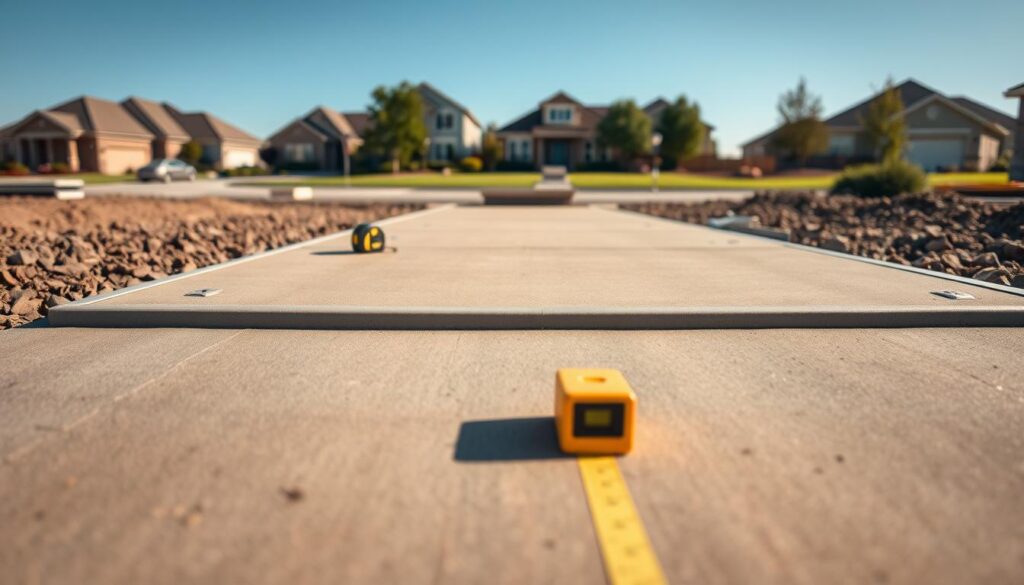
A contractor starts with a site visit and measured layout, before any concrete work begins. This visit helps set the driveway shape, the work area, and the plan for access and drainage.
Concrete driveway installation follows a set sequence, but the design and site can affect the details. Before work starts, make sure the contractor has checked the layout and key site needs.
How to build a concrete driveway step by step
The process includes site assessment and layout, excavation and base preparation, forming and reinforcement, pouring, finishing, jointing, and curing. Each stage supports the next, so a rushed handoff can affect the finished surface.
Forms hold fresh concrete in the planned shape. Their edges set the driveway’s outline and help keep the surface within the agreed dimensions.
How to frame a driveway for concrete
Contractors set forms along the planned edges and check their position before the pour. The layout should account for the driveway approach and how water will move away from the house.
Truck access also shapes the work plan. The crew needs a way to bring concrete to the forms without blocking the pour or damaging nearby areas.
Pouring a concrete driveway in sections
A large driveway may be poured in sections when the site or work plan calls for it. The contractor must plan the sequence and construction joints so the finished surface works as intended.
Sections cannot be divided arbitrarily without affecting the surface. Ask how the planned joints fit the layout and where each pour will begin and end.
Before the pour, confirm these five points with the contractor:
- Layout and dimensions match the agreed plan.
- Utility locations are marked and understood.
- Required permits have been addressed.
- Truck access and the pour route are clear.
- Drainage direction moves water away from buildings.
Once the layout and pour plan are clear, the ground preparation becomes the next key part of the work.
How to prepare the ground for a concrete driveway
Fresh concrete placed over loose, organic, or uneven ground can settle or crack as its support changes. Ground preparation gives the driveway a more even base and helps manage drainage.
How to prepare the ground for a concrete driveway: remove organic and loose material, correct soft spots with suitable fill, shape the grade for drainage, and compact the soil and base evenly.
Stabilizing soil and correcting soft spots
Remove vegetation and organic matter because it can break down beneath the base. Check for soft spots and correct them with suitable fill before building up the base layer.
About 5 inches of compacted road base is a common reference point, not a universal specification. Weak or variable soil may call for a different base depth or material.
Turning a gravel driveway into concrete
Replacing a gravel driveway means checking the existing gravel’s depth, stability, and compaction. Do not assume the old surface can support concrete, or pour directly over it without assessing its condition.
Use this ground-preparation checklist before work moves ahead:
- Remove vegetation and organic material.
- Address soft spots with suitable fill.
- Grade the area to direct water away.
- Compact the soil and base evenly.
Even compaction matters across the whole area, not just near the edges. With ground support planned, turn to the slab and reinforcement choices.
How thick should a concrete driveway slab be?
A 4-inch concrete driveway slab is a common minimum, but it is not right for every site. Local soil, weather, and heavier vehicles can call for a different specification.
Increasing slab thickness from 4 to 5 inches is associated with about 20% more concrete cost and nearly 50% greater load-carrying capacity. That is an approximate general comparison, not a project quote.
Choosing a driveway concrete mix
Specify a driveway concrete mix for the vehicle loads and local exposure the surface will face. A walkway mix and a driveway mix do not serve the same job by default.
Ask the contractor to name the intended use when describing the mix. The right choice depends on the site and expected loads, not just the word “concrete.”
Matching reinforcement to slab thickness
Wire mesh is used for 4- to 5-inch slabs. For slabs 5 inches or thicker, #4 rebar is a recommendation, with bars spaced about 12 inches apart.
Reinforcement should sit within the concrete, not rest on the base. It helps hold cracks together, but it does not prevent cracking.
| Slab thickness | Reinforcement guidance | Load consideration |
|---|---|---|
| 4 inches | Wire mesh may be used | Common minimum for residential use |
| 5 inches | Wire mesh or #4 rebar guidance | Nearly 50% more capacity than 4 inches, as a general comparison |
| Thicker than 5 inches | #4 rebar recommendation, about 12 inches apart | Consider for heavier vehicle loads or site needs |
Thickness and reinforcement affect the project scope and the concrete driveway installation cost. Those details lead to the questions that shape a driveway estimate.
What Affects Concrete Driveway Installation Cost?
Two driveways with the same area can need very different amounts of demolition or site work. A 20-by-20-foot driveway covers 400 square feet, while a 20-by-40-foot driveway covers 800 square feet.
Area matters, but it does not set the final price on its own. A useful estimate spells out the work and shows which site conditions may change the scope.
Common estimate variables include:
- Removal of an old surface.
- Excavation and soil correction.
- Drainage and base work.
- Slab thickness and reinforcement.
- Finish and site access.
Local labor and the project design also affect the total. A tight work area or difficult truck access can add work even when the driveway footprint is small.
Ask for a written estimate that identifies included work and any site-dependent allowances. Compare those details, not just the total, before moving from the estimate to the installation details that protect the finished surface.
How should a concrete driveway be finished and cured?
A concrete surface can look finished before it is ready for vehicle traffic. A broom finish adds texture for traction, while sound jointing and curing help the slab perform as intended.
A control joint is a planned groove or cut that encourages shrinkage cracks to occur along a predictable line. The joint guides where a crack is more likely, but it does not eliminate cracking.
For a 4-inch driveway slab, control joints are commonly spaced no more than 10 feet apart and cut to one-quarter of the slab thickness. The plan should fit the driveway layout.
Drainage also matters after finishing. The driveway should slope at least 1/8 inch per foot away from the house or garage, so water does not collect beside the building.
Curing keeps moisture in fresh concrete while it gains strength. A curing compound may help retain moisture when used as part of the curing plan.
Protect the new concrete through curing for at least a week before driving on it. Ask the contractor how the surface will be protected, then check the proposed scope and installation details.
What should you check before hiring a driveway contractor?
Two proposals can both say “new driveway” while describing very different work. Compare the details that affect the design, base, slab, water flow, and finish.
Use this five-item bid checklist:
- Written dimensions and layout.
- Excavation and base specifications.
- Slab thickness and reinforcement.
- Drainage and joint plan.
- Finish and curing instructions.
Ask the contractor to state what the estimate includes and how site changes will be handled. Permit requirements vary by town, so check local rules and any applicable homeowners association requirements before construction.
Confirm the written scope before work begins. You can also review walkway and driveway options while you compare the plan with your property.
Conclusion
If lifespan is your main goal, bluestone is the strongest candidate for a New England walkway when the base is stable and drainage is sound. Your site and upkeep preferences still matter.
Before choosing a material, write down how water will drain, what base the installer will use, and how repairs would work. Those details help you judge whether the surface suits the property.
Compare the site requirements with your preferred material before requesting a written project scope.