

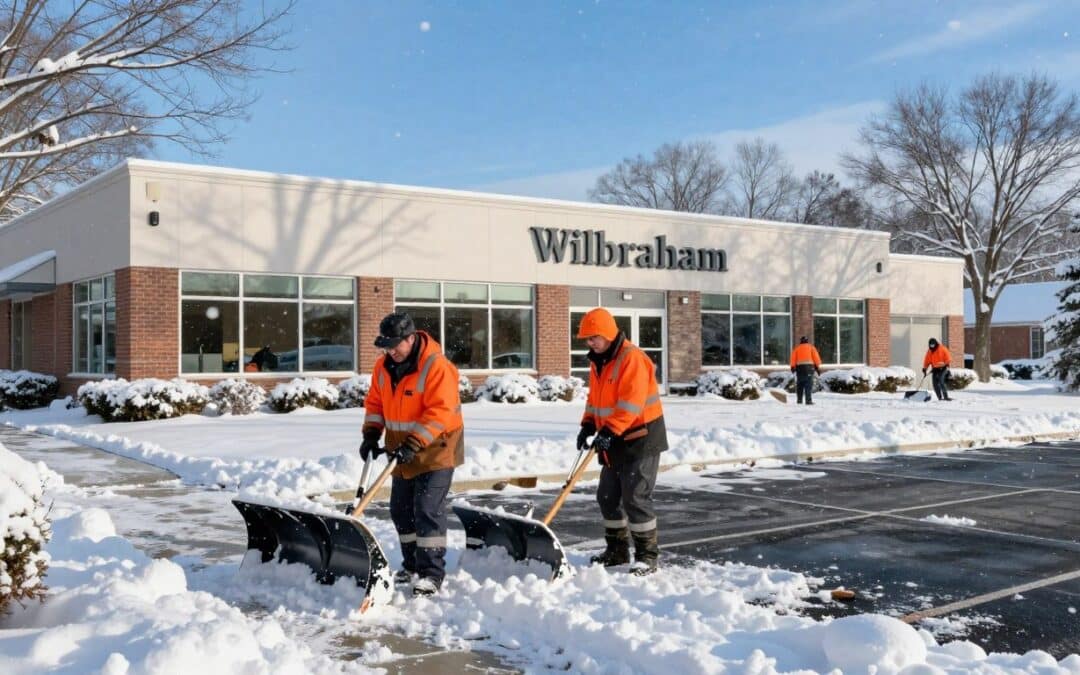
Commercial snow removal clears business properties, protects access, and lowers winter slip-and-fall risks in Wilbraham, Massachusetts. Because local freeze-thaw cycles can weaken pavement and turn packed snow into ice, timely clearing and careful placement support lasting safety.
Last winter, a Wilbraham shop owner watched vehicles compress fresh snow near the entrance. By morning, the surface had hardened, and customers had to step around a slick path. This common problem can affect employees, deliveries, and daily operations.
A reliable service responds to temperature, moisture, pavement conditions, and storm timing—not just a fixed depth. Coverage may include parking areas, walkways, fire lanes, accessible spaces, loading zones, drainage paths, and storage areas.
With more than 40 years of family-owned experience, our team follows a “Committed to Excellence” quality promise. Explore professional winter care and local Wilbraham service options, including seasonal contracts, per-event rates, and hourly billing.
Key Takeaways
- Freeze-thaw weather demands prompt surface care.
- Packed areas may become hazardous under vehicle traffic.
- Plans should cover access points and emergency routes.
- Response timing should match pavement and forecast conditions.
- Businesses can compare flexible pricing models.
Commercial Snow Removal for Safer Wilbraham, MA Properties
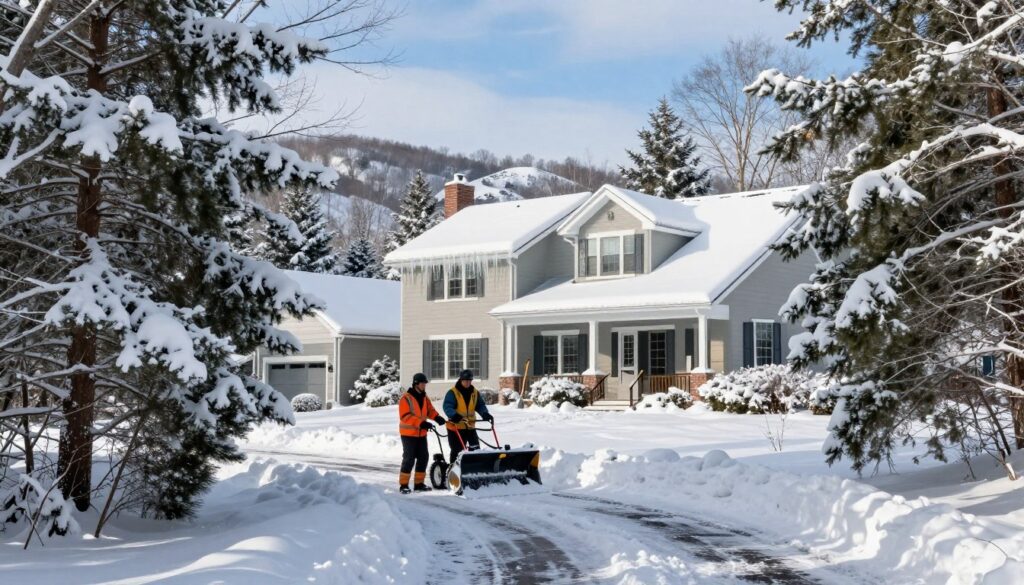
Safe access starts with a plan for changing pavement and traffic conditions. In Wilbraham, freeze-thaw cycles can turn a clear walkway into a slick route within hours.
Why Snow and Ice Create Business Risks
Repeated vehicles pack snow in a parking lot. Pressure and moisture then form ice, raising fall risks for customers, employees, and staff. An uncleared entrance may also send customers to a competitor.
Timely paver protection services help limit surface wear. Good maintenance also keeps drive aisles, doors, and emergency routes usable.
How Local Winter Weather Affects Pavement Safety
Near 32°F, water can freeze and bond to pavement. Wilbraham storms may shift from wet precipitation to hard ice, so waiting for the storm to end can make later removal harder. Poor placement may block drainage and add spring repair costs.
- Monitor forecasts, temperature, and surface moisture.
- Clear busy areas before peak arrival times.
- Coordinate access needs with office management and building staff.
- Keep emergency lanes and accessible spaces open.
A dependable company uses clear procedures, trained workers, and quality checks for each property.
Reliable Snow and Ice Services for Commercial Properties
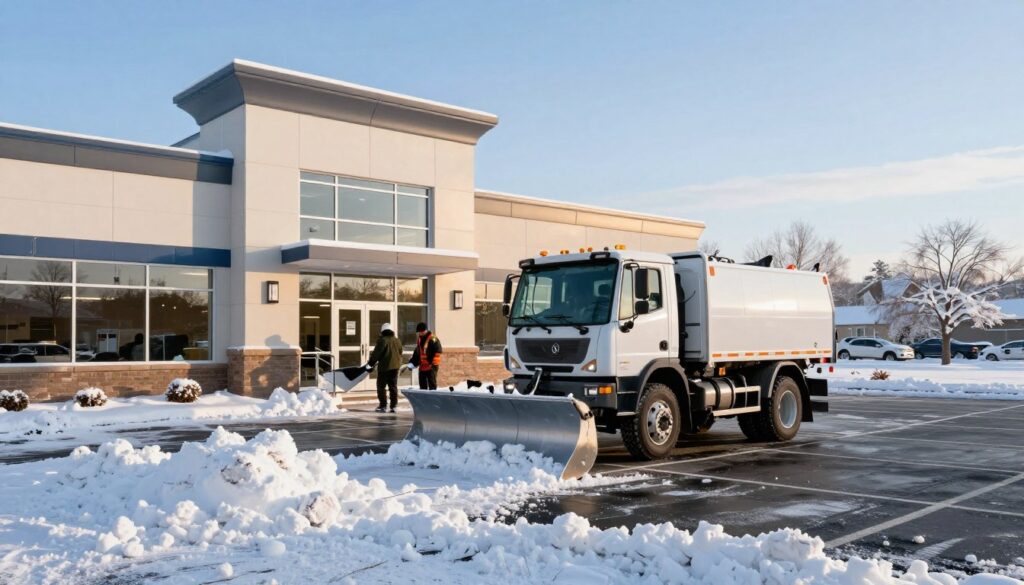
Well-planned winter care keeps Wilbraham businesses open and easier to reach. Crews map traffic flow, mark hazards, and match equipment to each property before work begins.
Parking Lots, Driveways, and Access Roads
Plows clear parking spaces, drive aisles, driveways, and access roads in a planned pattern. Multiple vehicles can reduce clearing hours at large office, retail, and industrial sites. This helps customers, staff, delivery drivers, and emergency vehicles move safely.
Walkways, Entrances, and High-Traffic Areas
Walkways and doors need close attention because repeated foot traffic packs snow and ice into slick surfaces. Crews apply pavement-safe de-icing materials based on surface type, drainage, nearby plants, and local soil conditions.
Fire Lanes, Accessible Spaces, and Loading Zones
Priority routes include fire lanes, curb ramps, accessible parking, and loading docks. Property managers can mark utilities, curbs, and obstacles to limit equipment damage. Documented routes also help crews treat edges, corners, and office entrances during each removal service.
- Protect drainage paths and pavement.
- Keep delivery access open.
- Support safer property management.
Proactive Storm Monitoring and Emergency Response
Reliable winter planning begins before precipitation reaches the ground. A trained team watches forecasts, pavement readings, and site priorities so each property receives the right response at the right time.
Weather-Based Service Timing
Air temperature, ground temperature, moisture, precipitation type, and storm timing guide service decisions. Pavement can become dangerous near 32°F when moisture remains present. Heavy, wet snow needs earlier attention than light powder because traffic quickly packs it into ice.
A storm plan may include repeated checks as conditions change. A commercial snow and ice management guide can help clients compare response thresholds and treatment choices.
Overnight, Weekend, and Active-Storm Coverage
Crews can work overnight, on weekends, and through active storms. Pre-opening service prepares parking areas before customers, staff, and deliveries arrive. High-traffic sites, such as hospitals, may need zero-accumulation coverage to keep pavement clear throughout the event.
Contracts should define priority areas, communication steps, response hours, and emergency escalation. Clear terms reduce delays when weather changes quickly.
| Condition | Recommended timing | Primary goal |
|---|---|---|
| Heavy, wet precipitation | Early and repeated visits | Limit packing and ice |
| Refreeze near 32°F | Monitor during and after storms | Reduce slip hazards |
| Hospital access routes | Continuous coverage | Maintain bare pavement |
Equipment and Techniques That Protect Your Property

Equipment choice shapes how well a winter site stays open and intact. A skilled team matches each machine to the lot size, surface layout, depth, and project needs. This approach supports efficient commercial snow service while limiting avoidable damage.
Right-Sized Plows and Specialized Equipment
Plows, loaders, blowers, and hand tools each serve a clear purpose. Smaller units work well near entrances, tight lanes, and parking spaces. Larger machines handle broad areas and deep accumulation. Operators adjust speed and blade angle to avoid gouging asphalt, cracking concrete, or worsening potholes during freeze-thaw cycles.
Careful Clearing Around Curbs and Hardscapes
Before work begins, crews locate utility covers, signs, bollards, retaining walls, loading structures, and decorative hardscapes. They also select stacking areas that protect sight lines, walkways, and drainage inlets. When a property lacks storage, hauling restores usable parking areas and limits late-season pile growth.
These methods support quality care, longer pavement life, and lower maintenance costs for Wilbraham properties. Professional removal services also protect important features throughout each commercial property.
- Match equipment capacity to site conditions.
- Use slower passes near fixed features.
- Haul excess material when storage is limited.
| Equipment | Best Use | Protection Benefit |
|---|---|---|
| Compact plow | Narrow lanes | Limits curb contact |
| Loader | Large piles | Restores parking areas |
| Hand tools | Entrances and edges | Protects hardscapes |
Drainage, Snow Storage, and Spring Property Protection</H3>
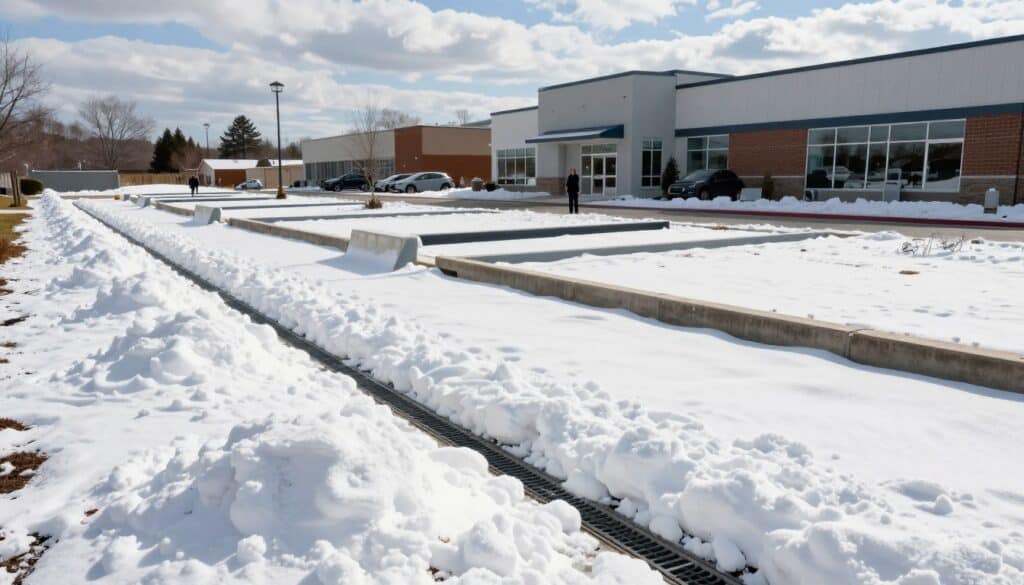
Drainage paths, not pile height, often determine whether a site enters spring in good shape. In Wilbraham, crews should review soil drainage, pavement slope, catch basins, and meltwater routes before choosing a storage area.
Place snow away from walls, foundations, entrances, drainage inlets, accessible routes, and intersections. This plan protects sight lines without taking vital parking spaces or narrowing winter access areas. When space runs short, hauling offers a practical removal service.
Strategic Snow Placement for Clear Sight Lines
Low, well-positioned piles help drivers and pedestrians see one another. Keep them clear of curb ramps, signs, downspouts, and walkways. For added pavement care, review this paver protection guidance.
Preventing Refreeze, Ice Dams, and Water Damage
- Keep piles away from structures to limit meltwater, ice dams, and foundation moisture.
- Inspect shaded areas, curb lines, downspouts, and low points after storms.
- Use water protection guidance when planning drainage routes.
Near 32°F, wet conditions can refreeze quickly. Post-storm checks support safer spring transitions, protect pavement durability, and reduce costly repairs after repeated winter weather.
Commercial Snow Removal Plans for Property Managers

A clear winter agreement gives property managers control before storms affect daily operations. First, request a site review that covers parking, entrances, loading docks, fire lanes, accessible spaces, storage areas, and emergency routes.
Seasonal Contracts and Per-Event Service
Seasonal contracts cover agreed storms without repeated calls from office staff or retail managers. Per-event rates suit clients who want flexible spending, while hourly billing may fit smaller projects or unusual site needs. Compare storm frequency, lot size, budget, and expected response.
Service Levels for Offices, Retail Sites, and Industrial Properties
Define service levels for offices, retail sites, industrial properties, medical facilities, and parking areas. Pre-opening visits help staff arrive safely, customers find usable spaces, and deliveries reach docks before business hours.
Before signing, review equipment capacity, insurance records, communication steps, site inspections, and storage plans. One accountable team can coordinate crews, emergency response, quality checks, and maintenance throughout the Wilbraham winter.
| Contract Type | Best-Fit Property | Response Planning | Billing Method | Management Advantage |
|---|---|---|---|---|
| Seasonal | Large office parks | Pre-set storm coverage | Fixed seasonal rate | Predictable planning |
| Per-event | Retail locations | Scheduled by forecast | Rate per storm | Flexible spending |
| Hourly | Small or unusual sites | Requested as needed | Time and equipment | Pay for actual work |
Why Choose a Family-Owned Team Committed to Excellence
A family-owned team brings more than 40 years of local landscaping experience to commercial properties. That history supports steady planning, clear communication, and practical care for each business site.
Experience That Supports Consistent Property Care
Our “Committed to Excellence” promise guides every service. Professional crews and trained operators understand pavement, drainage, landscaping, structures, and hardscapes. They can adjust snow removal work around customers, deliveries, and office hours.
Clients also gain one accountable company for the full winter season. This simplifies property management and reduces the need to coordinate separate operators after each storm. Staff can document site conditions, protect entrances, and report concerns before they grow.
- Dependable service for recurring projects
- Careful work near buildings and walkways
- Responsive support for seasonal maintenance
This family-owned approach helps protect properties while keeping business routines on track. It also gives customers and property managers a trusted team for planned work and urgent needs.
Conclusion
For Wilbraham businesses, commercial snow removal supports safer access, lowers ice exposure, protects pavement, and keeps winter operations moving. A complete plan covers parking, walkways, fire lanes, accessible spaces, loading zones, storage, drainage, and refreeze checks.
Weather monitoring and right-sized equipment help an experienced team protect customers, staff, and each commercial property. A family-owned company with more than 40 years of care follows a “Committed to Excellence” standard for quality project planning, practical management, meltwater control, and spring readiness during winter weather.
FAQS
What is commercial snow removal?
It clears business areas for vehicles and pedestrians. De-icing treats pavement to limit ice formation, and many sites use both services.
When should a business schedule winter service?
Start when moisture, pavement temperatures, or weather threaten safe access.
What is the difference between clearing and de-icing?
Clearing moves accumulation, while de-icing helps reduce ice formation.
Do seasonal contracts provide overnight and weekend coverage?
Many include both, with terms for overnight, weekend, and emergency response.