

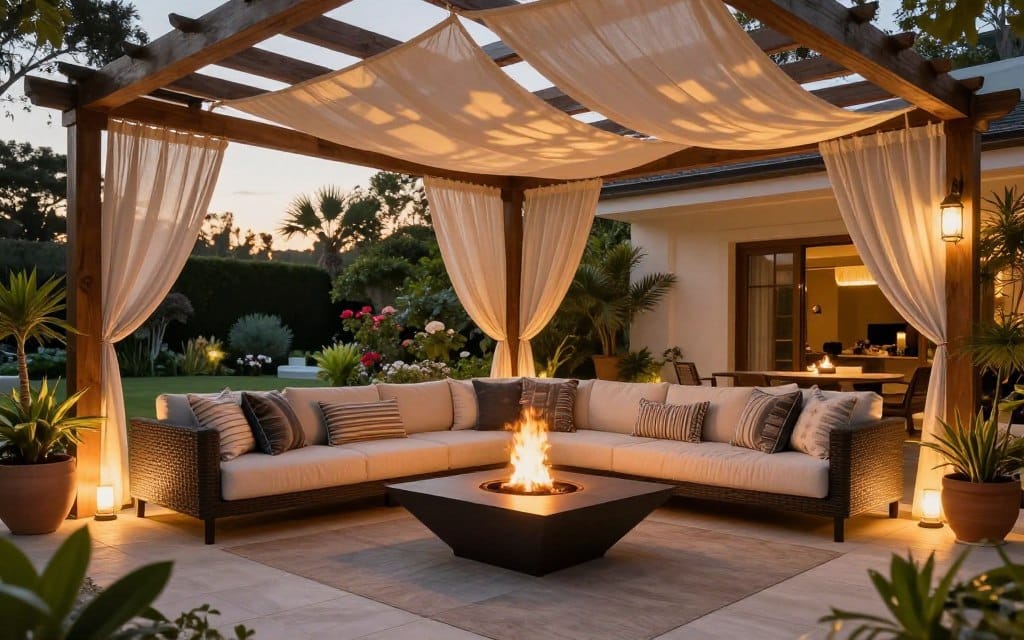
Patio luxury outdoor living spaces — can a single upgrade make your home feel like a year-round retreat? Many U.S. builders, including Toll Brothers, show how thoughtful design turns simple yards into rooms that perform like interiors while still feeling like a getaway.
Across communities from Scottsdale to Palm Beach Gardens and Charleston, award-winning projects reveal key features: resort-style pools, outdoor kitchens, fire features, layered lighting, and smart landscaping. These elements boost usable square footage and create a seamless flow for gatherings.
This article previews curated ideas and practical guidance. Expect clear tips on layouts, materials, features, and lighting to plan a cohesive look that suits your home’s architecture. The decision lens here is comfort, durability, circulation, and a cohesive aesthetic that works in real U.S. projects.
Key Takeaways
- “Patio luxury outdoor living spaces” means rooms that blend comfort with a getaway feel.
- Upgrades add usable square footage and improve entertaining flow.
- Design categories include pools, kitchens, fire features, lighting, and privacy.
- Plan with comfort, durability, and circulation in mind.
- Ideas come from award-winning builders and real U.S. projects for practical inspiration.
What Defines a Luxury Outdoor Living Space in Today’s Backyard Design
A modern yard becomes genuinely useful when design prioritizes how people use it every day. Thoughtful plans support routines—weeknight dinners, slow mornings, and group gatherings—so the area is used, not just admired.
Comfort-first functionality
A solid outdoor living space starts with comfort. Deep, weather-ready seating, targeted shade, and easy access to food and drink keep people comfortable season after season.
Resort cues and signature features
Resort cues read immediately: water features, a bar, layered lounge zones, and a strong focal element such as a fire pit. These features create a retreat-like feel and invite longer stays.
Destination-style seating that changes behavior
Group-ready seating and chaise clusters near water change how people use the yard. Conversation clusters and varied heights encourage lingering and social flow.
| Baseline Element | Purpose | Example |
|---|---|---|
| Built-in seating | Daily comfort and durable use | Bench with cushions and storage |
| Water feature | Focal point and calm ambience | Small fountain or reflecting pool |
| Matching finishes | Indoor-outdoor continuity | Same tile or paint palette |
Before you buy or build, run a quick checklist: comfort, circulation, utilities, and cohesion with the home’s architecture. These priorities ensure the space fits real life and enhances everyday living.
Patio Luxury Outdoor Living Spaces That Feel Like a Private Resort
A Scottsdale-inspired yard can read like a private resort when design ties the view, water, and seating into a single experience.
Infinity-edge pool vibes and panoramic views
An infinity-edge pool creates a visual extension of the landscape. Clean lines and view-facing seating reduce clutter so the horizon feels part of the design.
Place loungers and low seating facing the view. Keep pool edges simple to preserve those eastern mountain panoramas that define the Scottsdale aesthetic.
Layered entertainment zones with bar service and conversation areas
Plan a sequence: swim → towel and lounge → sip at the bar → gather by the fire pit. That flow encourages guests to move naturally through the space.
Put the bar near the house for utilities, but orient it toward the pool so hosts stay connected to guests. Ensure clear sightlines between the bar, seating, and fire for easy hosting and self-service.
| Zone | Primary Feature | Placement Tip |
|---|---|---|
| Bar zone | Standing counter, fridge, sink | Close to house, facing pool for service and sightlines |
| Conversation zone | Deep seating, coffee table | Near pool but slightly raised or offset for dry comfort |
| Gathering/fire | Fire pit or built-in hearth | At evening focal point, opposite pool to balance warm and cool elements |
High-End Patio Materials That Instantly Upgrade Style and Longevity
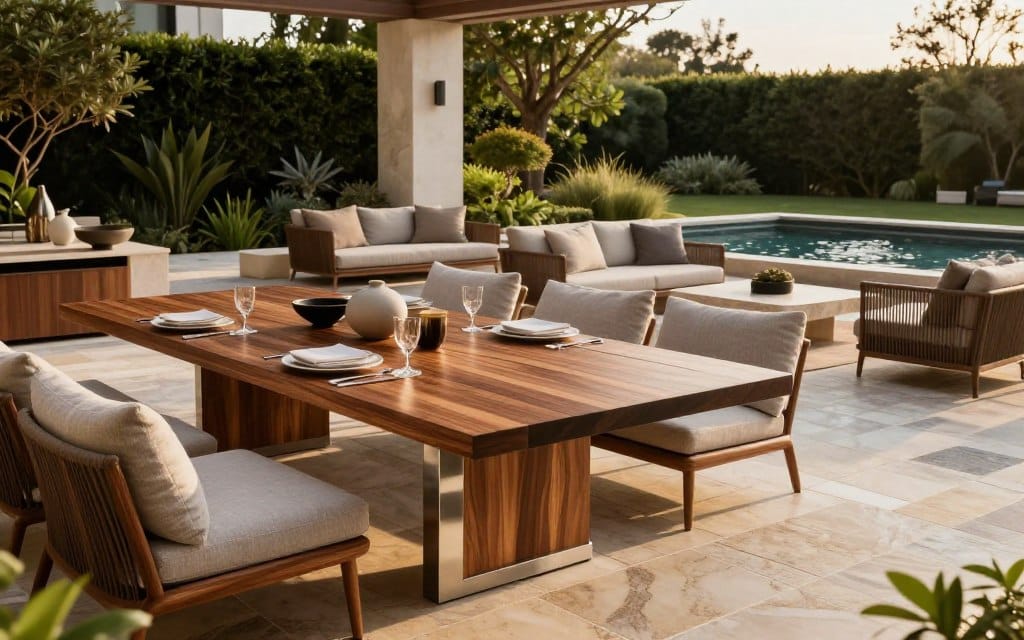
Materials set the tone: the wrong surface can undo great design, while the right one makes every element look intentional.
Natural stone, teak, and composite decking form a premium foundation. Natural stone reads as timeless and photographs well, but it can be cool underfoot and needs sealing. Teak warms up seating areas and resists rot with periodic oiling. Composite decking offers low maintenance and splinter-free edges for heavy use.
Wood-look tile shines around pools and raised sunken seating. It gives seamless, modern finish with better slip resistance than raw wood. The Grand’s use of a single tile family around deck and pool creates continuity that ties the yard together.
Mix textures with restraint: pick two or three core materials, then add woven rattan, cast concrete, or metal accents sparingly. Prioritize comfort and safety—choose slip-resistant finishes and surfaces that handle water features and frequent foot traffic.
| Material | Durability | Maintenance | Best Use |
|---|---|---|---|
| Natural stone | Very high | Sealing occasionally | Entry terraces, formal zones |
| Teak | High | Oiling annually | Furniture, warm decking |
| Composite decking | High | Low—wash only | High-traffic decks |
| Wood-look tile | High | Grout care | Pool surrounds, continuous decking |
Large Patio Layouts With Distinct Areas for Dining, Lounging, and Play
When a broad area is divided into purposeful rooms, the whole space performs better for gatherings and daily use. Edit the plan so each zone has a clear role: dining, lounge, active play, or a quiet corner.
Zone planning with rugs, planters, and low walls
Use outdoor rugs to read as rugs-in-rooms and anchor furniture. Planters soften edges and keep views open. Low walls give structure without blocking sightlines, helping the space feel cohesive.
Terraced decks and multi-tier areas
Terraced deck designs add depth and solve slope issues. View-first terraces, like the Las Vegas dining concept, make each level a destination and capture sightlines.
Multifunctional seating for small groups and big gatherings
Choose modular sectionals, benches, and loose lounge chairs so pieces shift from family nights to larger parties. Balance deep seating with movable chairs to keep flexibility.
Circulation paths that link pool, garden, and deck
Map common routes—kitchen → dining, pool → towel storage, garden → grill—and keep those walkways clear. This simple flow helps guests move naturally and reduces congestion.
| Zone | Defining Tool | Best Seating | Placement Tip |
|---|---|---|---|
| Dining | Outdoor rug, pergola | Extendable table + benches | Close to kitchen door for service |
| Lounge | Planters, low wall | Modular sectional + chairs | Slightly raised to protect from splash |
| Play/Game | Open turf or gravel | Stackable chairs for quick clearance | Keep adjacent to lounge so adults supervise |
| View Terrace | Terraced deck level | Chaise + small side tables | Orient toward the best panorama |
Small Patio, Big Impact: Luxury Design Moves for Compact Outdoor Spaces
A small footprint becomes memorable when design focuses on clear functions and crafted details. Precision beats excess: built-ins, screens, and designated zones give each inch purpose.
Public versus private micro-zones
Create public and private corners so a single area works for guests and quiet time. Place a social seat by a fire pit or heater for conversation.
Opposite that, tuck a wellness nook—hot tub or reading chair—behind a curved cedar screen for solitude.
Built-in bench seating and wood-clad accents
Fixed benches increase capacity without clutter. A wood-clad concrete bench reads architectural and feels custom.
Choose fixed seating when circulation paths are narrow. It defines the room and adds storage beneath cushions.
| Micro-Zone | Feature | Benefit |
|---|---|---|
| Social | Fire pit + bench | Maximizes seating and focus |
| Private | Curved cedar screen | Offers privacy without bulk |
| Wellness | Hot tub or chaise | Creates a retreat within the home |
Cozy cues—warm materials, layered lighting, and close conversation distances—make a coompact outdoor patio feel intentional and inviting. Match one interior finish outdoors to tie the area back to the home and strengthen visual continuity.
Indoor-Outdoor Patio Design for Seamless Flow From Home to Outdoors
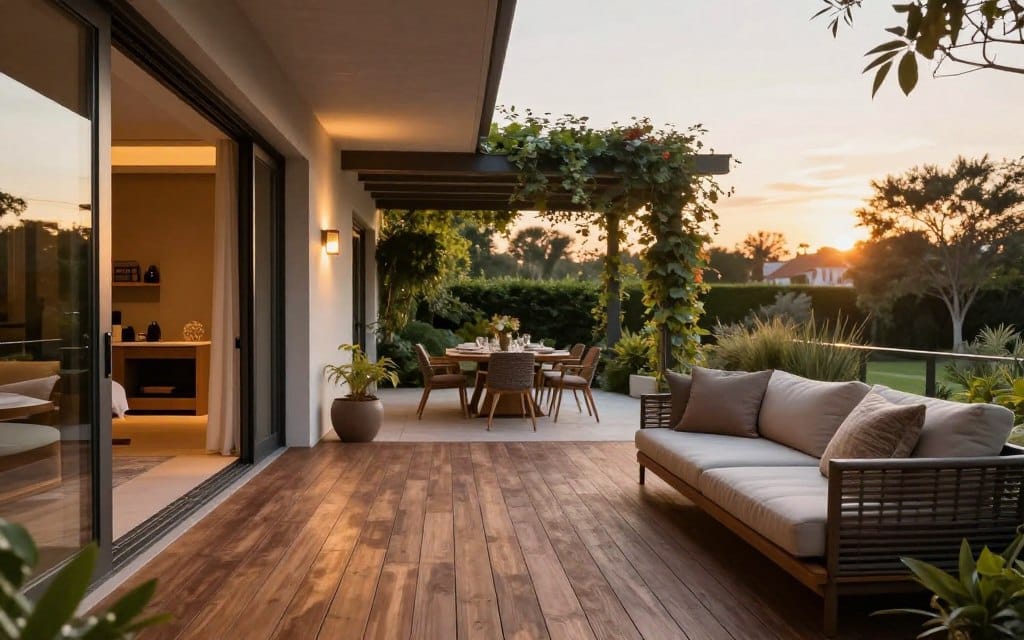
Sliding glass walls and matched materials let the interior and outdoors act as one continuous living area. The core goal is simple: remove the hard stop at the back door so daily living space expands into the yard and feels natural to use.
Sliding and folding glass doors that blur boundaries
Large sliding or folding doors open wide for unobstructed sightlines and extra daylight. Wider openings improve airflow, give better views, and make moving between home and garden effortless.
These doors also signal modern design: when closed they preserve comfort and light; when open they create a true fusion of rooms.
Matching finishes and color palettes
Repeat flooring tones, cabinet colors, or metal hardware outdoors so the palette feels intentional. Using the same tile or a coordinated tone prevents a visual break and makes the living space read as one.
Extend interior style with ceiling and architectural elements
Carry interior details outside—wood beams, deco-tile, or tongue-and-groove ceilings—to anchor the outdoor room as built architecture, not an afterthought.
The Hastings example shows Spanish-inspired deco-tile and exposed wood beams that continue interior character into the alfresco area for cohesive design.
| Element | Why it matters | Practical tip |
|---|---|---|
| Doors | Connects sightlines and traffic | Choose multi-panel sliders or bi-folds with slim frames |
| Finishes | Ensures visual continuity | Match floor tones and metal finishes across thresholds |
| Overhead details | Makes the area feel built-in | Use beams, covered ceilings, or integrated lighting |
| Comfort | Supports use year-round | Plan shade, glare control, and furniture layout for flow |
Outdoor Dining Spaces Made for Alfresco Meals and Entertaining
A well-planned dining terrace invites regular meals and effortless entertaining. Dining is the heartbeat of outdoor living because it is repeatable and needs little staging to delight guests.
Shaded dining terraces that stay comfortable in sun and heat
Use pergolas, umbrellas, or a roof extension to block peak sun and reduce heat. Add a fan or mist system for warm afternoons to keep the table usable through summer.
Weather-ready dining furniture that looks elevated season after season
Choose weather-proof materials and easy-clean surfaces. Prioritize chair comfort and table proportions so meals last longer and guests stay comfortable.
| Strategy | Benefit | Practical Tip |
|---|---|---|
| Shade Structure | Cooler dining area | Pergola with adjustable slats or large umbrella |
| Durable Furniture | Low maintenance | Aluminum frames, teak-look tops, wipe-clean fabrics |
| Atmosphere Upgrades | More inviting atmosphere | Layered lighting, linens, nearby planting |
Place the dining area near the kitchen door or outdoor cooking zone for easy service. Use clear paths for servers and a small staging cart for refills. For inspiration, the Long Island shaded terrace by Hollander Design shows how a pool-adjacent dining spot can feel serene and purposeful.
Outdoor Kitchens and Backyard Bars That Rival the Indoors
When the cook has every tool at hand, gatherings flow without the shuttle-run to the house. A true indoor-level kitchen on the terrace supports prep, cook, serve, and clean so hosts can stay with their guests and keep the party moving.
Essential appliance checklist
Include a high-quality grill, a sink for quick washes, a refrigerator for chilled ingredients and drinks, and generous prep counters. Each item cuts traffic to the interior: the grill cooks, the sink cleans, the fridge stores, and the counters stage plating and service.
Statement features that elevate the place
Pizza ovens, wok stations, and built-in bar seating transform a basic cooking line into a showpiece. Built-in seating keeps guests close to the action and invites casual dining and conversation at the counter.
Serving flow and practical layout
Position counters where guests naturally gather—near the bar or dining area. Put a dedicated drink station away from the main cookline so servers and guests don’t cross paths with hot work.
Include a visible trash and recycling pullout at the end of the prep run. This small detail keeps the area tidy and speeds cleanup during entertainment.
| Appliance / Feature | Primary Benefit | Placement Tip |
|---|---|---|
| Grill | Main cooking; high heat for searing | Keep with 3–4 ft clearance from combustibles and wind breaks |
| Sink & Prep Counter | Safe prep and quick cleanup | Central to cookline between fridge and grill for workflow |
| Refrigerator & Drink Station | Cold storage and self-serve beverages | Separate station near bar or dining to reduce cross-traffic |
Comfort and safety: plan heat clearances, add ventilation near high-output cookers, and install task lighting over prep and service counters. These details make evening cooking and dining easy and safe for everyone enjoying the outdoor living area.
Fire Features That Create a Cozy Focal Point on Any Patio
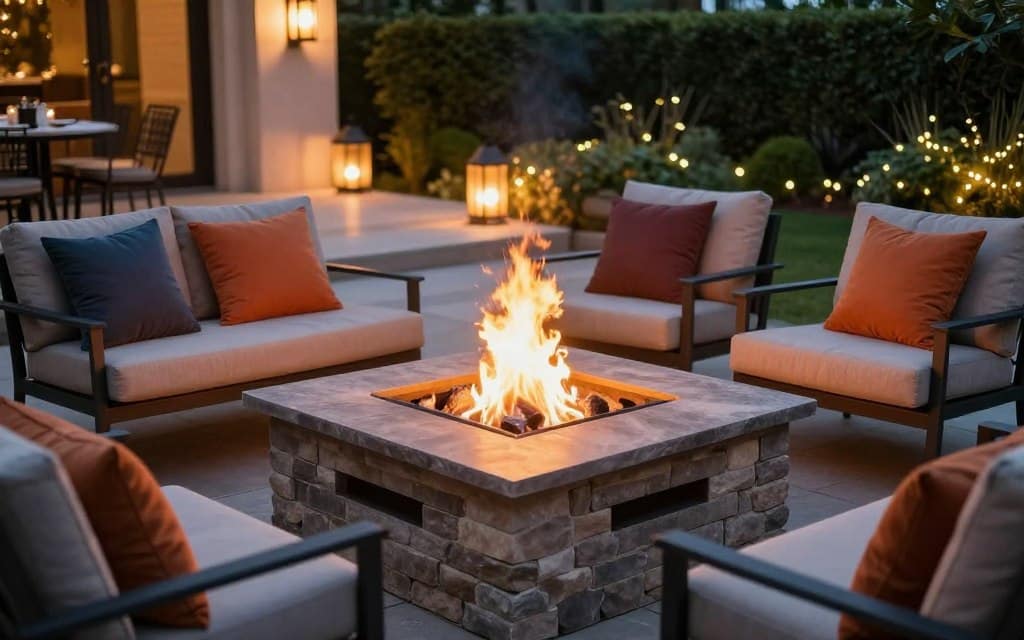
A thoughtfully placed flame can reshuffle how people gather and stay after dusk. Fire acts as a season extender, anchors seating arrangements, and gives a clear focal point for day or night use.
Fire pits, fireplaces, and fire tables: which to pick?
Choose a fire pit for social circles and casual chat. A pit invites faces-inward seating and feels communal.
Pick a built fireplace when you want an architectural statement and warmth that reads from across a living space. Use a fire table for flexible, coffee-table-style gatherings that blend with lounge furniture.
Double-sided fireplaces that split rooms without closing them
A double-sided fireplace can divide dining and living areas while sharing heat and sightlines. The Winthrop, Washington project by Prentiss Balance Wickline Architects proves one feature can elegantly organize two zones and act as a true focal point.
Sunken pit seating for intimacy and wind protection
Sunken fire pit arrangements feel custom and intimate. Built-in benches and lower elevation shelter the flame from wind, making warmth more reliable.
Concepts like The Noir show how a lowered pit also adds privacy for guests who want to linger away from a pool or main terrace.
| Feature | Best For | Design Impact |
|---|---|---|
| Fire pit | Group conversation | Anchors seating; creates cozy focal point |
| Fireplace | Architectural statement | Organizes rooms; visible from multiple angles |
| Fire table | Flexible lounge areas | Casual warmth; works with coffee tables |
Water Features and Poolside Patios That Add Calm and Luxury Outdoor Appeal
Water elements quietly change how a yard feels, adding motion, sound, and a sense of calm.
How water elevates the backyard
Moving water provides soothing sound and reflective surfaces that extend daylight into evening. Light on water creates a richer night ambiance and helps smaller areas feel larger.
Popular feature types
Water walls offer modern privacy and sound masking. Fountains give rhythmic movement and a classic focal point. Minimalist pools keep lines clean and emphasize architecture.
| Feature | Primary Benefit | Best Use | Design Note |
|---|---|---|---|
| Water wall | Privacy + sound masking | Near cabanas or seating | The Noir uses a black wall for seclusion |
| Fountain | Visual rhythm | Courtyards and entries | Works well with layered lighting |
| Minimalist pool | Architectural clarity | Pool-forward yards | Pairs with clean decking and lighting |
| Baja shelf | In-pool lounging | Family-friendly zones | Great for sunbathing and shallow play |
Design and planning notes
Treat the area like a small resort: plan shade, towel storage, and service access. Use slip-resistant surfacing and clear paths between pool, dining, and fire features to keep circulation smooth and safe.
Lighting Design That Makes Outdoor Spaces Feel Inviting After Dark
A well-planned light scheme extends hours and gives each area a clear role after dark. Good lighting makes the yard feel intentional and safe, so people use it later and more often.
Layered lighting: ambient, task, and accent
Layered lighting creates depth and function. Ambient light provides an even glow for general use.
Task lighting focuses on work zones like grills and dining tables. Accent lighting highlights textures, water, and architecture.
String lights to elongate dining and game areas
String lights work well over dining terraces and play courts. They add a soft overhead plane and visually lengthen narrow yards.
The Reserves at Story Rock uses string lighting above a fire table and bocce court to accent the area and create perceived depth.
Lanterns and gas‑lantern looks for timeless curb appeal
T.S. Adams Studio and other Florida projects show how large gas lantern looks give an upscale, classic feel. Use lanterns near entries and seating to add warmth and formal charm.
Pathway lighting to guide movement and show landscape design
Pathway fixtures help guests move safely between pool, deck, and garden. Space lights every 6–10 feet for even guidance and use shielded fixtures to reduce glare.
Low LEDs highlight plantings and steps while keeping the view toward key features. Good placement both frames the landscape design and prevents tripping hazards.
| Type | Primary Role | Best Placement | Design Tip |
|---|---|---|---|
| Ambient | Overall glow for comfort | Cantilevers, soffits, low poles | Keep color warm (2700–3000K) for an inviting atmosphere |
| Task | Work and service areas | Grill, prep counters, dining | Use focused downlights or under‑cabinet LEDs for clarity |
| Accent | Highlight features | Water, trees, façades | Two‑foot candles max; aim fixtures to avoid shining in eyes |
| String/Lantern | Ambience and elongation | Dining terraces, bocce lanes, entries | Hang low enough to feel intimate but high enough for clearance |
Landscaping That Frames the Patio and Elevates the Entire Outdoor Living Area
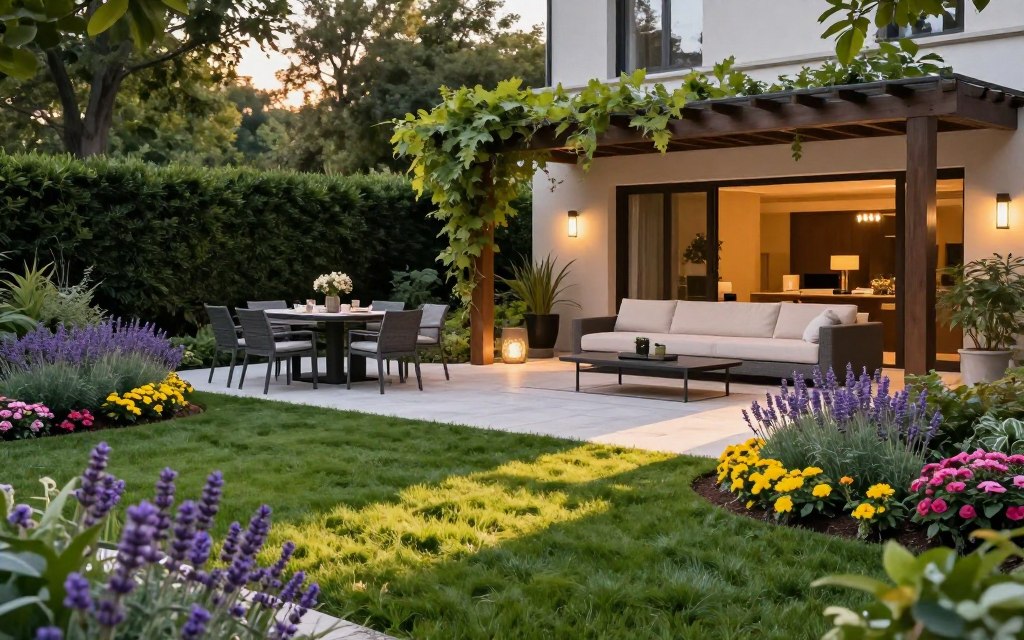
Thoughtful planting and well-placed paths give a backyard its final, curated identity. Landscaping frames views, softens hardscape lines, and makes an outdoor living area feel established rather than newly placed.
Fresh, simple planting that complements modern furnishings
Use a restrained plant palette and clean edges to let furniture and architecture breathe. Intentionally placed shade trees—like the oaks beside an Austin pool—add canopy, cool the space, and make modern seating feel more inviting.
Layered pathways that guide movement
Mix reclaimed brick, gravel, and flowering trees to create rhythm and discovery. A Long Island allée with gravel and brick walkways guides guests along the pool and connects zones with a practiced, designed feel.
Productive borders and fragrant edges
Plant strawberries and thyme near dining areas for garnish at arm’s reach. Lavender by a fireside dining spot gives scent and texture that lift alfresco meals and make small moments feel curated.
| Element | Benefit | Design Tip |
|---|---|---|
| Shade trees | Comfort, scale | Place to block midday sun and frame views |
| Layered paths | Movement, discovery | Combine gravel, reclaimed brick, and trees in sequence |
| Fragrant borders | Sensory dining | Use thyme, lavender, and edible groundcovers near tables |
Privacy, Shade, and Comfort Features for All-Season Outdoor Living
Well-placed covers and screens make an outdoor room feel private, calm, and ready all season. Privacy and shade aren’t extras — they are the features that let people use a yard regularly.
Pergolas, gazebos, lanais, and pavilions
Pergolas filter light and work with climbing vines. Gazebos form a true enclosed room feel. Lanais blur the border with the house, while pavilions make a strong architectural statement.
Cabanas and adjustable shades
Cabanas with roll shades, like The Noir concept, give poolside users seclusion and a spa-like retreat. Adjustable screens let a family shift between social and private modes quickly.
Climate planning and placement
Add infrared heaters, wind screens, and strategic furniture layouts to create cozy pockets without sealing the whole yard. Place covered rooms near dining and conversation areas to extend season use.
| Structure | Best Benefit | When to use |
|---|---|---|
| Pergola | Filtered sun; dappled shade | Patio dining or lounge with plants |
| Gazebo/Lanai | Defined room feel; weather cover | Rainy climates or close to the house |
| Pavilion/Cabana | Architectural presence; privacy | Poolside retreats and long-season use |
Luxury Patio Style Ideas Inspired by Award-Winning Outdoor Living Spaces Across the U.S.
Look to coastal, desert, and mountain examples to clarify a cohesive aesthetic for your yard. Use these references to choose materials, furniture, and layout that match your climate and home.
Coastal veranda palettes and woven textures
Design West’s Naples veranda pairs whites, light blues, and warm wood. Layered rattan and cast concrete add tactile contrast and relaxed elegance.
Desert-modern approach that spotlights views
The Las Vegas example by Daniel Joseph Chenin emphasizes clean lines, terraced decks, and framed canyon views. Let the landscape lead the plan.
Mountain and nature-forward design
Denver projects favor wisteria-cloaked pavilions and exposed beams. Winthrop, WA shows how log columns, steel beams, and a cantilevered pavilion feel like an extension of the home.
Builder-grade to bespoke: upgrading basics
Toll Brothers’ premier communities show how to move from builder-grade to bespoke: better finishes, integrated lighting, built-ins, and thoughtful zoning transform a simple deck into a showpiece.
| Style | Key Materials | Design Goal |
|---|---|---|
| Coastal veranda | Rattan, warm wood, sleek tile | Relaxed, breezy comfort |
| Desert-modern | Clean concrete, terraced decking, native planting | Frame views; minimal interference |
| Mountain/nature | Log columns, steel beams, stone | Grounded architecture; sculptural accents |
Conclusion
The best transformations begin by mapping routines—meals, play, and quiet moments—and designing around them. This keeps outdoor living centered on use, not showy one-offs.
Big takeaways: comfort, durable materials, clear zones, and cohesive finishes beat a single expensive item. A well-planned patio supports how your household actually spends time and hosts guests.
High-impact upgrades include premium hardscapes, indoor‑outdoor continuity, layered lighting, and a strong focal feature such as fire or water. Prioritize structure and utilities first; add furniture and styling later in phases.
Next step: pick 2–3 photos that inspire you, list must-have features, and sketch main circulation paths. That brief will clarify scope before shopping or hiring help.
With a clear plan, the right patio luxury outdoor living space becomes more usable, more confident for hosting, and more rewarding day to day.
Ready to move forward? Start your plan today—gather your inspiration, define your must-haves, and take the first step toward creating a space you’ll love.