
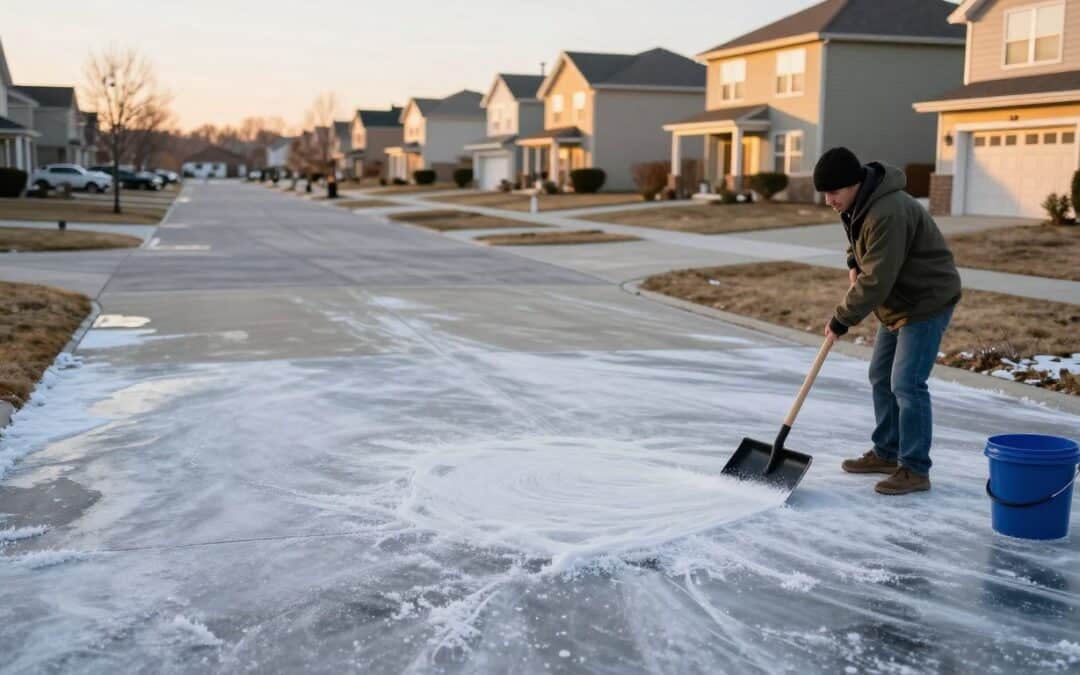

Is your current winter routine silently destroying your property’s value? Learning how to melt ice on driveway surfaces safely is the smartest way for protecting your home from seasonal wear.
Sudden changes in weather often catch families unprepared when local hardware stores run out of supplies. You can remove ice using environmentally responsible methods that protect your snow-covered landscape investments and neighborhood soil during extreme weather events.
Many homeowners prefer alternatives instead of rock salt because it hurts pets or ruins delicate plants. Maintaining paver protection ensures your hardscaping survives the cycle of freezing and thawing without surface deterioration.
An ice driveway creates dangerous hazards that require quick, decisive action. Using professional tips to melt ice keeps your exterior surfaces intact while ensuring family safety.
You should melt ice carefully for preventing permanent concrete cracks or scaling. A clear ice driveway is possible without using toxic chemicals that pollute local waterways.
These techniques ensure the ice vanishes before it bonds to the substrate. Dealing with thick ice or stubborn ice requires the right tools for maximum effectiveness. Proper ice management keeps your paths walkable and safe all season long.
Your driveway deserves specialized care during the coldest months to prevent structural damage. A clean driveway adds significant value and curb appeal to your property. Protect your driveway from the elements by choosing the right products today.
Key Takeaways
- Protect hardscape surfaces from chemical pitting and deterioration.
- Use pet-friendly alternatives to prevent paw irritation and illness.
- Meet legal snow removal deadlines for public walkways and sidewalks.
- Save landscaping investments from harmful salt runoff and soil pollution.
- Extend the lifespan of concrete and pavers with proper sealing.
- Implement traction-based solutions using common household items.
- Align winter maintenance with year-round property health goals.
Why Traditional Road Salt Damages Driveways and the Environment

Traditional chloride-based products are effective against ice but destructive toward the very surfaces they are meant to protect. Rock salt often penetrates the porous surface of concrete. This leads to internal expansion during freeze-thaw cycles, which creates cracks.
Sodium chloride and other common agents attack the protective sealant. Over time, rock salt causes pitting and spalling on residential driveways. These microscopic cracks eventually lead to total structural failure and property damage.
| Deicer Type | Main Chemical | Impact Level | Primary Risk |
|---|---|---|---|
| Standard Salt | Sodium Chloride | High | Sealant Corrosion |
| Premium Melt | Calcium Chloride | Moderate | Residue Buildup |
| Pet Safe | Magnesium Chloride | Low | Plant Toxicity |
Chloride accumulation in the soil also creates a hostile environment for your lawn. Salt runoff flows into storm drains and contaminates local waterways. This process harms aquatic life and can kill your ornamental plants.
Calcium chloride and magnesium chloride act as corrosive agents on metal. They can ruin your vehicle undercarriage or expensive irrigation system parts. Using rock salt frequently increases the financial liability of property maintenance.
Switching to safer alternatives protects your hardscaping investment. Magnesium chloride and calcium chloride still pose risks despite their speed. Sodium chloride remains the most common cause of long-term driveway damage.
Excessive salt use results in costly repairs. Calcium chloride and magnesium chloride often outperform other options but remain chemically aggressive. Professional landscapers recommend rinsing concrete and driveways to remove lingering chloride residue.
How to Melt Ice on Driveway Using DIY Solutions
Transforming everyday household supplies into powerful melting agents helps maintain a clear driveway without damaging the concrete. Maintaining a safe home entrance during winter doesn’t always require industrial chemicals or expensive professional services. You likely already have the necessary ingredients in your kitchen or bathroom cabinet to tackle frozen patches effectively.
Rubbing Alcohol and Dish Soap Method

This rubbing alcohol ice melt solution is a top choice for safety-conscious homeowners. Rubbing alcohol is a great tool for melting ice because it has a freezing point much lower than plain water. When you mix it with warm liquid, it acts fast to break down frozen layers before they bond to the pavement.
To create this mixture, combine a half-gallon of warm water with six drops of liquid dish soap. Add two ounces of 70% isopropyl alcohol to the container. Stir the liquid gently to ensure the soap blends well without creating too many bubbles.
Pour the solution onto frozen areas and watch for a quick reaction. The soap breaks the surface tension so the alcohol can sink deep into the frost. This makes the remaining slush easy to scrape away with a plastic shovel in just a few minutes.
Vinegar-Based Ice Melting Mixture
Vinegar is another common item that helps break down frozen layers quickly. It contains acetic acid, which effectively lowers the freezing point of water. This makes it a reliable backup if you run out of rubbing alcohol or other deicing supplies.
You can mix equal parts of white vinegar and warm water for the best results. Add a few drops of dish soap to help the liquid stay in place. This allows the mixture to work on the frozen glaze for a longer period without running off.
This solution is perfect for thin layers of frost or light glazing on walkways. Be careful when using it near your lawn or garden beds. The acidic nature of vinegar can sometimes affect sensitive plants if you apply it too heavily near the edges.
Hot Water Application Technique
Using hot water can rapidly melt ice. It works by directly transferring thermal energy to frozen patches. However, this method requires careful application to avoid creating larger problems when conditions stay below freezing.
Apply hot water to small sections rather than flooding the whole area. Excessive liquid can refreeze quickly in cold temperatures. This could create more extensive coverage than the original problem if the liquid is not managed properly.
This technique works best during marginal temperatures between 28 and 32 degrees Fahrenheit. Added heat can tip the balance toward melting. Subsequent sunshine then helps dry the surface before refreezing occurs during the night.
Combine this with physical removal for the best results. Use a shovel to clear the surface immediately after the hot water softens the frozen layer. Professional property managers suggest reserving this for spot treatments or emergency situations where you need immediate access.
Natural Methods for Melting and Managing Ice
Eco-conscious ice management relies on biological materials and physical grit instead of corrosive salts. These methods protect your landscaping while keeping your driveway safe for family and pets. You can maintain a clear path using common household items or sustainable organic products.
Coffee Grounds for Daytime Ice Removal
You can repurpose your morning waste to keep your walkway clear. Used coffee grounds contain nitrogen, which helps break down frozen surfaces. Their dark color acts as their greatest strength during a sunny winter day.
The grounds absorb solar energy and turn it into heat. This process slowly softens the frozen layer beneath your feet. Since the grounds are slightly acidic, they are safe for most nearby greenery.
They also provide a textured surface that prevents your boots from slipping. This eco-friendly hack is perfect for homeowners who want a zero-cost solution. It keeps your driveway functional while reducing your environmental footprint.
Sugar Beet Juice Ice Melt Products

Sugar beet juice is a powerful biological alternative to traditional chemical salts. This liquid byproduct lowers the freezing point of water to extreme levels. You can often find it sold as sugar beet juice ice melt pellets in local hardware stores.
These pellets are non-corrosive and safe for both concrete and metal surfaces. They do not irritate the paws of neighborhood pets or harm your garden soil. The sticky nature of the juice helps it stay on the driveway instead of washing away.
It provides a long-lasting barrier against new frost formation. This makes it a favorite for professional landscapers in the United States. It offers a sustainable way to handle heavy winter storms.
Sand for Traction and Heat Absorption

Professional hardscapers often recommend sand for immediate safety during the winter months. While sand does not melt ice chemically, it provides vital traction on frozen paths. The dark grains of sand also absorb solar heat to melt snow ice gradually.
This method remains effective even when temperatures drop too low for chemical salts to work. It is the best way to handle snow ice without causing any structural damage to your driveway. Sand creates a gritty layer that stays on top of thick ice for hours.
- Sand functions primarily as a traction enhancer rather than a true ice-melting agent, creating a gritty surface layer that dramatically improves walking and driving safety.
- Apply sand generously across ice surfaces when temperatures are too cold for chemical or natural melting methods to work effectively.
- The heat retention properties of sand provide secondary melting benefits during sunny conditions, as sand particles absorb and hold solar radiation.
- From an environmental and landscaping perspective, sand represents the most benign ice management material, causing no harm to waterways or soil chemistry.
- Sand remains effective across all temperature ranges and can be safely applied to driveways regardless of concrete age or condition.
Traction-Based Alternatives That Prevent Slipping
Traction methods provide immediate safety when the weather is too cold for traditional deicers. Adding grit to your ice driveway offers a solid footing without the wait. These materials provide a stable surface even when the frost stays solid.
Kitty Litter for Ice Management

Using non-clumping kitty litter ice traction is a smart way to remove ice slips. This material stays gritty and provides excellent grip for shoes and tires. Unlike salt, it will not irritate your pet’s sensitive paws during walks.
Always choose the non-clumping variety for your driveway. Clumping litter turns into a slippery, muddy mess as the frozen layer begins to thaw. The non-clumping type remains solid and keeps your path safe. This method works well even in the deepest freeze where deicers fail to work on ice.
When to Use Traction Methods vs. Melting Methods
Smart homeowners know that different ways to remove ice depend on the current temperatures. Use these strategic guidelines to stay safe on your ice driveway this winter. Your choice should match the weather and your specific needs.
- Choose traction-based methods like sand or kitty litter when temperatures drop below 15°F. Most melting solutions become significantly less effective in extreme cold and may simply refreeze after application.
- Implement melting methods using rubbing alcohol, vinegar, or hot water during moderate winter conditions (20-32°F). Ambient temperatures support the melting process and allow removed water to drain away safely.
- Consider traction approaches for long-duration ice events where surfaces will remain frozen for multiple days. One application of sand provides continuous safety without requiring the repeated treatments that melting methods demand.
- Select melting techniques when complete ice removal is necessary before an important event. This is also better when aesthetic concerns make sand or litter residue unacceptable for your driveway appearance.
- Combine both strategies for optimal results. Apply melting solutions first to break ice bonds with the driveway surface, then add traction materials to any remaining frozen areas while melted sections dry.
Best Practices and Safety Tips for Ice Removal

Effective winter maintenance relies on smart strategies that protect your property and loved ones from harsh seasonal elements. Keeping your driveway clear during a storm requires a thoughtful strategy and the right tools. These expert tips help you manage winter weather effectively while preserving your local landscape.
Optimal Timing for Applying Deicing Solutions
The best way to prevent a thick buildup is to apply treatments before the storm starts. This pre-treating method creates a barrier that prevents ice from bonding to the pavement. If you wait until after several inches have fallen, the bottom layer becomes hard and difficult to scrape.
Always clear away loose snow first before applying any alternative melter. This ensures the product reaches the surface directly. It works efficiently without being diluted by excess slush or heavy snow drifts. Proper timing saves both time and materials.
Protecting Concrete Surfaces and Plants
Harsh salt can erode concrete and leach into the soil, damaging delicate root systems. While rubbing alcohol and vinegar are acidic, they often pose less risk to dormant grass buried under snow. To minimize damage, use the smallest amount of product necessary to break the bond.
Focus on high-traffic areas rather than covering every square inch of the driveway. Choosing a chloride-free product protects your masonry from pitting. It also ensures your garden stays healthy when spring finally arrives. Responsible stewardship preserves the value of your home and the health of the earth.
Pet-Safe Treatment Considerations
Pets often lick their paws after walking outside, making chemical ingestion a major health concern. Avoid any salt containing chloride, as it causes painful burns and stomach issues. Instead, use sand or kitty litter to manage ice and provide traction.
These options are safer for animals and the environment. Communicate with your neighbors about these choices to encourage community adoption. Working together helps create a safe, chemical-free path for every pet in your local neighborhood. Test small amounts of DIY mixtures first to ensure they provide a secure footing for your furry friends.
| Treatment Method | Pet Safety Level | Environmental Impact |
|---|---|---|
| Traditional Road Salt | Low (Causes Paw Burns) | High (Soil Degradation) |
| Sugar Beet Juice | High (Non-Toxic) | Low (Biodegradable) |
| Sand or Kitty Litter | High (Safe for Paws) | Neutral (Provides Traction) |
| Vinegar Mixture | Medium (Avoid Ingestion) | Medium (Acidic if Overused) |
Conclusion
You can maintain a safe home entrance without using harsh chemicals that destroy your concrete and landscaping. Many homeowners now choose smarter ways to remove ice that do not involve traditional salt. Avoiding products with calcium chloride or magnesium chloride protects your structural investment and keeps your driveway looking new.
Excessive chloride use from magnesium chloride or calcium chloride leads to long-term property damage over time. Instead, use a mix mixed at home that lowers freezing points naturally. A common liquid solution lowers freezing temperatures effectively and clears your driveway through multiple ways.
For the best results, start with a shovel to clear away fresh snow. Then, use a targeted method to melt ice driveway surfaces efficiently. You can also apply sand to help melt ice during the day while providing traction on the slippery ground during the snow season.
Keeping magnesium chloride or calcium chloride substitutes at home ensures you are ready for the next winter storm. This proactive approach prevents the need to melt ice with harsh chemicals that harm the earth. You can now manage winter weather with confidence while protecting your overall property value.