

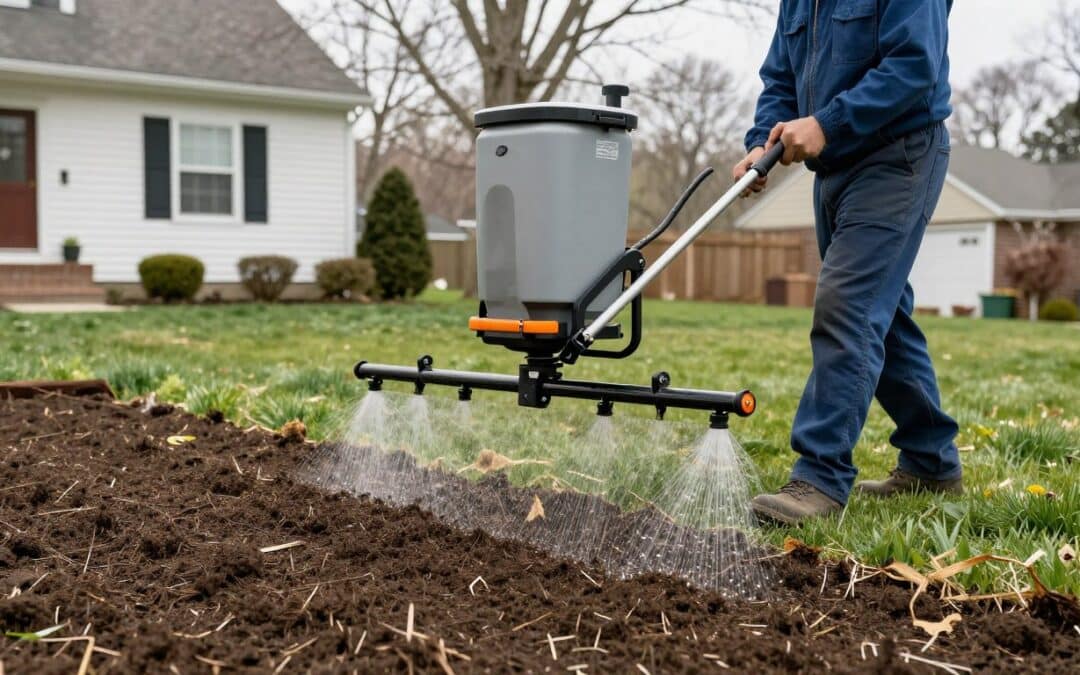
For readers asking when to overseed lawn Massachusetts, the best window is usually August 15 through September 15. St. Clair Landscaping & Irrigation in Ludlow, MA, has more than 40 years of experience. Call 413-566-8866 for service across Hampden and Hampshire County.
Could the calendar date matter more than the seed itself? During late summer, warm soil, mild days near 70–75°F, and rising fall rainfall help new grass establish before winter. Plan for about 30 days of steady care. Spring offers a shorter backup window, but summer heat, drought, and weed pressure can limit results.
This guide explains how soil preparation, grass seed quality, watering, and the existing lawn shape each outcome. Jonathan Green has specialized in seed and soil-care products since 1881, adding useful perspective for New England properties.
Explore this overseeding guidance for practical steps. The advice applies to homes in Ludlow, Wilbraham, Belchertown, East Longmeadow, Chicopee, Palmer, and nearby communities.
Key Takeaways
- Late summer is usually the best time for new grass growth.
- August 15 through September 15 supports strong establishment.
- Seedlings need roughly 30 days before cold weather arrives.
- Soil contact and steady moisture improve germination.
- Spring works as a backup, while summer brings added stress.
When to overseed lawn massachusetts: Find the Best Fall Window
UMass Extension names late summer and early fall as the best time for turf seeding in this region. The main window runs from August 15 through September 15. Warm soil supports germination, while cooler air limits heat stress.
Why late summer and early fall favor cool-season grasses
Daytime temperatures near 70–75°F, plus rising rainfall, help new seed stay moist. Cool-season grasses, including fescue, gain roughly two to three months for root growth before winter. This timing also limits competition from many annual weeds.
How soil and daytime temperatures affect germination
Healthy soil and steady moisture give grass seed a reliable start. Early summer brings heat and drought, which can weaken seedlings. Fall offers a steadier path toward establishment.
Why spring has a shorter establishment period
Spring seeding can work after soil temperatures hold near 55°F. However, seedlings face a shorter growth period before summer stress. Use the fall window for broad coverage; reserve spring work for thin areas or urgent bare-spot repairs.
| Period | Typical conditions | Best use |
|---|---|---|
| Aug. 15–Sept. 15 | Warm soil, mild air, more rain | Primary seeding |
| Spring | 55°F soil, shorter growth | Repair work |
| Early summer | Heat and drought risk | Avoid broad projects |
Assess Your Existing Lawn Before Adding New Seed
Start with a close inspection, not a blanket application. Mark thin turf, bare spots, weed clusters, and high-traffic areas. Note shade, standing water, shallow roots, and other conditions that may limit grass growth.
Identify Thin Turf, Bare Spots, Weeds, and Thatch
Map the property before choosing a plan. If at least 50% of the lawns contain weedy or undesirable grass, UMass Extension suggests full renovation instead of routine lawn care. Also measure thatch near the crown of the plants. A layer above about 1/3 inch may call for dethatching.
Test for Compacted Clay Soil and Drainage Problems
New England soil often becomes dense, especially in clay sites. Compaction blocks air, water, and root growth. It also weakens contact between the seedbed and new growth. Check for puddles, slow drainage, and hard soil during a site review.
Test soil on unfrozen ground, but avoid spots treated with fertilizer or lime. Results can guide corrections. Aeration may relieve compaction, while drainage work may address standing water. Complete aeration only after identifying the original cause of decline.
- Use the inspection findings to set priorities.
- Schedule aeration for compacted areas.
- Correct site problems before adding seed.
Prepare New England Soil for Strong Seed-to-Soil Contact
Clay-rich ground and foot traffic can seal New England soil. A compact base limits air, water, and root development. Better preparation gives the lawn a stronger start.
Relieve compaction with core aeration
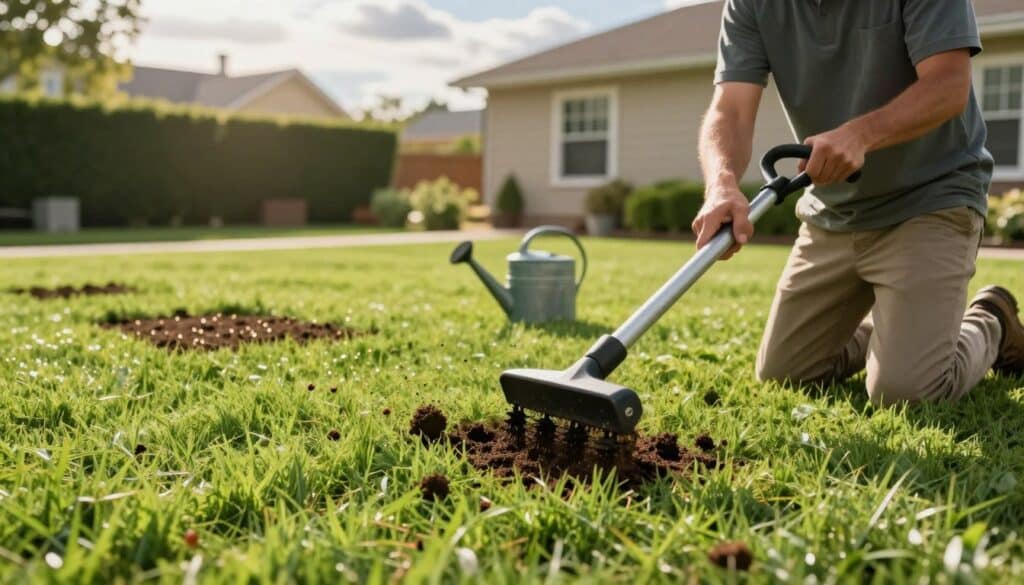
Core aeration opens dense soil and exposes about 1/4 inch of soil. Seed settles into these openings instead of resting on the surface. This step also improves contact across thin areas.
Use test results for pH and fertility
Test soil before adding lime or fertilizer. Jonathan Green lists a pH range of 6.2–7.0 as suitable for grass seed. Apply amendments only after reviewing the results. This approach supports healthy fall seeding and limits waste.
Plan for movement, slopes, and runoff
Freeze-thaw cycles can heave soil and reopen drainage issues. On slopes, mulch and careful grading help keep seed in place. Review stormwater flow under MassDEP Stormwater Standards, especially near hard surfaces. Retaining walls higher than 4 feet need a permit under 780 CMR. These conditions matter more than a quick cosmetic fix.
| Site issue | Helpful action | Key standard |
|---|---|---|
| Compaction | Core aeration | Expose 1/4 inch of soil |
| Unbalanced pH | Soil testing | Target pH 6.2–7.0 |
| Runoff or walls | Drainage review | MassDEP and 780 CMR |
Choose Grass Seed and Follow the Thirty-Day Establishment Window
Seed choice should match sunlight, traffic, drainage, and expected care. A fescue blend suits many cool-season sites, while mixed grasses handle changing conditions better than one cultivar. Price and color alone do not predict results.
UMass Extension suggests 3–4 pounds of grass seed per 1,000 square feet for moderate- or high-maintenance sunny areas. Use 4–6 pounds for low-maintenance sun or well-drained shade. Poor soil, runoff, compaction, or weak coverage may justify a rate about 50% higher.
Broadcast half the seed in one direction and the rest at a right angle. Rake lightly for even soil contact. Aeration opens small channels and supports root development. St. Clair Landscaping & Irrigation can coordinate aeration and irrigation planning.
- Black Beauty Ultra: about 14 days for germination.
- Black Beauty Fall Magic: about 10–14 days.
- Field survival may range from 50% to 95%.
Germination marks an early stage, not mature turf. The best time for fall seeding gives seedlings a thirty-day establishment period before winter. Spring remains useful for small areas, while summer heat can limit growth.
| Site condition | Suggested rate | Planning note |
|---|---|---|
| Sunny, managed lawn | 3–4 lb./1,000 sq. ft. | Moderate care |
| Shade or low care | 4–6 lb./1,000 sq. ft. | Well-drained soil |
| Poor conditions | About 50% more | Improve coverage |
Water, Mow, and Protect New Seedlings Through Fall
Care after planting shapes germination, root growth, and winter survival. Follow a simple routine that responds to rain, soil moisture, and changing temperatures.
Keep the seedbed damp without overwatering
During germination, use light irrigation two or three times each day. Aim for even moisture, not puddles. After roots develop, reduce frequency. UMass Extension advises irrigation once leaves begin folding or rolling during mild stress. Saturated ground can invite disease and shallow roots.
Adjust irrigation as fall conditions change
Perennial ryegrass often establishes fastest. Kentucky bluegrass may need three to four weeks. Check rainfall before each watering cycle. During drought or heat, add a short session. As temperatures decline, water less often and protect young grass from heavy foot traffic.
Mow only after seedlings stand firmly and tolerate cutting. Remove no more than one-third of the blade height. At about 2 inches tall, apply 1/2–1 pound of nitrogen per 1,000 square feet, based on soil needs. This fall seeding guide offers another practical reference.
| Condition | Recommended response | Main goal |
|---|---|---|
| Dry surface | Light irrigation | Support germination |
| Leaf fold or roll | Water during mild stress | Prevent decline |
| Cool, rainy fall | Reduce watering | Avoid saturation |
Common Overseeding Mistakes in Ludlow and Nearby Massachusetts Towns
Small planning errors can limit results across a local lawn. UMass Extension advises against early summer seeding because heat, drought, and limited root growth create added stress. Young grass may not gain enough strength before the next seasonal shift.
Why coverage and aeration matter
Skipping aeration leaves compacted New England soil with weak seed contact. Seed may dry out, attract birds, or move during rain. Spread grass seed in two directions for more even coverage. Do not focus only on the most visible bare areas.
Site differences call for a tailored plan
Road salt near driveways in Palmer and East Longmeadow can damage turf. Mature trees in Wilbraham create shade, while traffic in Belchertown adds wear. Chicopee and Ludlow properties may also face drainage or steep-grade issues. Standing water can move seed and encourage weeds.
Timing, spring weather, and site conditions all shape the result. St. Clair Landscaping & Irrigation can assess irrigation, drainage, waterproofing, maintenance, landscape design, or commercial irrigation needs. Explore front yard landscaping ideas for a stronger plan.
Conclusion
The best time for seeding in Massachusetts is generally August 15 through September 15. This fall window gives cool-season grass about thirty days for root growth before winter. Careful planning can support healthy results across the year.
Strong results begin with a soil check. Correct compaction, drainage, pH, and thatch before placing seed. Keep the surface moist, but avoid excess water.
FAQ: Can I overseed in spring? Yes. Spring seeding can repair thin lawns, but heat, drought, and weeds shorten the establishment period.
FAQ: Do I need aeration? Aeration helps compacted soil accept seed and improves seed-to-soil contact.
FAQ: How long do seedlings take? Some mixtures germinate in 10–14 days. Practical establishment often needs three to four weeks.
St. Clair Landscaping & Irrigation brings more than 40 years of experience across Hampden and Hampshire County. Explore lawn care services, call 413-566-8866, or request an estimate.