

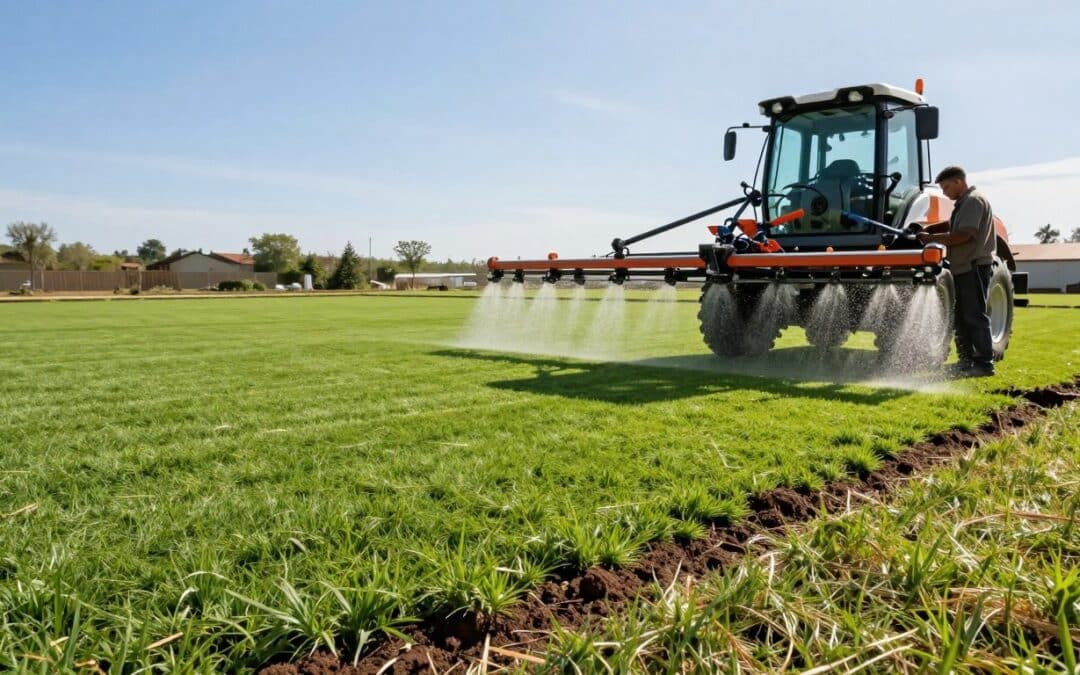
Hydroseeding is a lawn installation method that sprays a slurry of grass seed, mulch, water, fertilizer, and sometimes a tackifier over prepared soil. In Wilbraham’s changing seasons, this protective blend helps grass handle rain, temperature shifts, and regular yard use for lasting growth.
Picture a bare backyard after a new home build. One rainy week can wash dry seed downhill, while birds can remove much of it. A wet slurry bonds to the ground, holds moisture, and shields seed from wind and runoff. Under favorable conditions, sprouts may appear in 5–7 days. A strong lawn usually takes about 3–4 weeks to develop.
It also suits slopes and other areas where erosion creates concern. Compared with sod, this approach costs less but needs patience; sod offers immediate green coverage at a higher price. Traditional seeding can work well, though it may leave thin spots. Explore these lawn installation benefits before choosing a method.
More than 40 years of family-owned experience, guided by a “Committed to Excellence” standard, supports careful local planning and installation.
Key Takeaways
- The blend protects seed and supports even growth.
- Early sprouts can appear within one week.
- Full turf strength takes several weeks.
- Slopes may benefit from added tackifier.
- Sod looks finished sooner but often costs more.
What Is Hydroseeding?
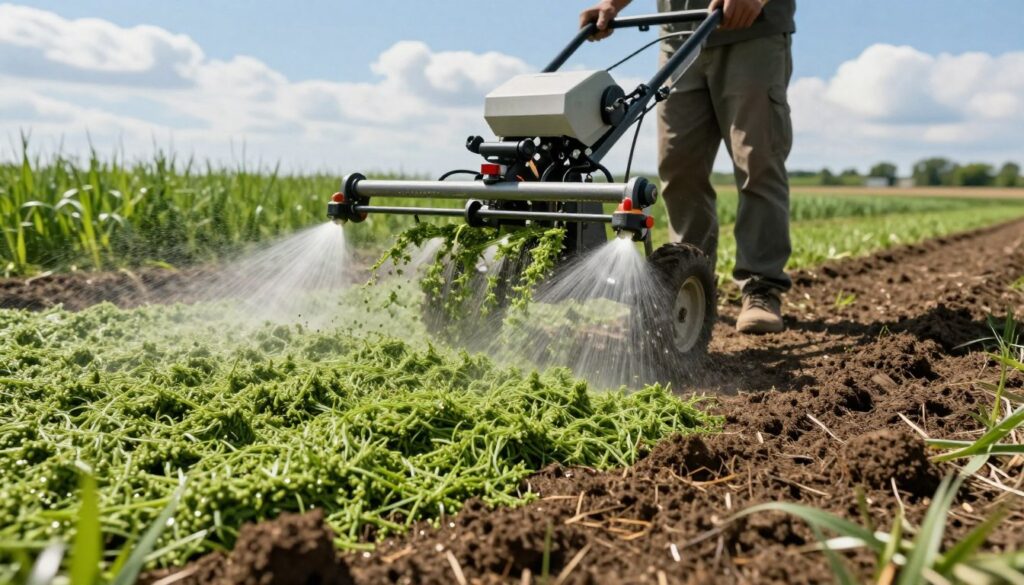
Hydroseeding uses a prepared slurry to place seed evenly across bare ground. Charles Finn developed the first HydroSeeder in the early 1930s. His design helped solve poor coverage and washout on large or uneven sites.
The mixture combines grass seed, mulch, fertilizer, and water. Mulch cushions each seed, holds moisture near the soil, and limits erosion. A binding agent may improve retention on slopes or exposed areas.
How the Seed, Mulch, Water, and Fertilizer Slurry Works
Wood, paper, and straw are common mulch types. Wood fiber offers stronger moisture retention than lightweight paper. The slurry also helps seed contact the soil, which supports steady sprouting when site conditions remain favorable.
Why This Method Fits Wilbraham’s Climate and Lawn Conditions
Wilbraham lawns face spring rain, summer drying, shifting temperatures, and open wind. A protective coating helps new grass manage these changes. Still, it does not create mature sod. Homeowners must water on schedule and select a seed blend for sunlight, shade, drainage, traffic, and seasonal use.
How the Hydroseeding Process Works
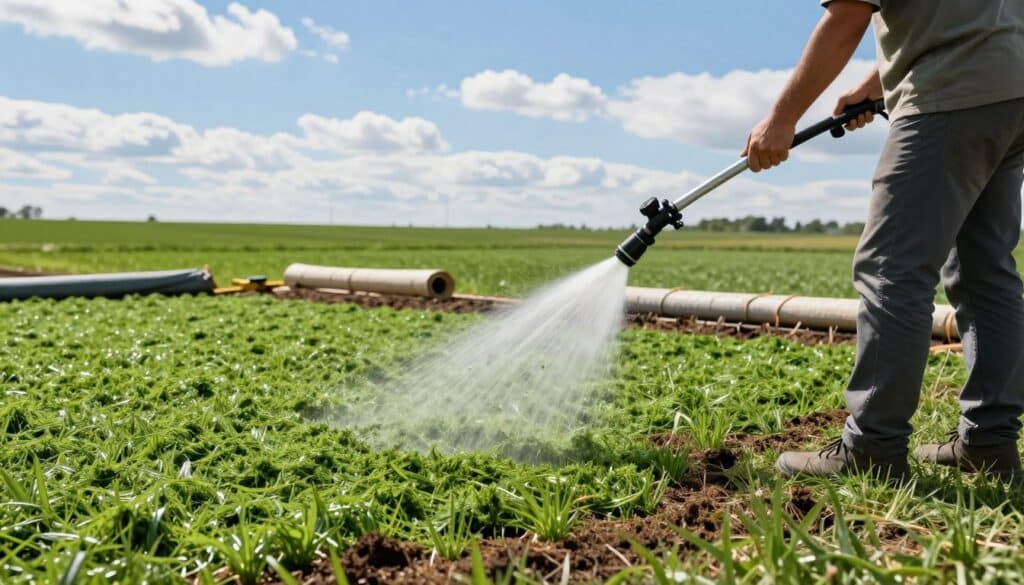
A successful lawn begins below the spray line. Crews first clear rocks, weeds, and debris, then smooth the ground and correct low spots. They loosen compacted soil to at least three inches, add compost when needed, and improve drainage before seeding begins.
Site Preparation, Grading, and Soil Contact
Proper grading keeps seed from collecting in pockets. It also supports even soil contact and helps limit erosion. These steps create better conditions for root growth and reliable establishment.
Custom Seed Mix Selection and Slurry Application
Professionals choose a grass-seed blend for Wilbraham’s sunlight, soil texture, slopes, traffic, and drought risk. A hydroseeder combines seeds, mulch, water, and fertilizer into a smooth slurry. Equipment ranges from 100 to 5,000 gallons, so operators can match capacity to the areas and project size.
Hoses or booms apply the mixture across the prepared ground. Even application reduces thin spots and supports erosion control. For dependable results, consider professional hydroseeding installation.
Germination and Early Lawn Establishment
With favorable conditions, germination may begin in 5–7 days. Full turf strength often develops within 3–4 weeks. Consistent moisture and limited foot traffic help young grass gain strength.
| Stage | Main Action | Typical Timing |
|---|---|---|
| Preparation | Clear, grade, and loosen soil | Before application |
| Application | Spray the custom slurry evenly | Installation day |
| Establishment | Maintain moisture and protect seedlings | 5–7 days to sprouting; 3–4 weeks to strength |
What Materials Go Into a Hydroseed Mixture?
Each lawn project needs a tailored blend. The right materials depend on soil, slope, weather exposure, seed type, and expected lawn use.
Grass Seed, Mulch, Fertilizer, and Water
Grass seed provides the living plant material. Fertilizer adds early nitrogen, phosphorus, and potassium for root and shoot growth. Water activates the slurry and keeps seeds hydrated during application.
Mulch protects the ground and holds moisture near the seed. Paper mulch costs less, while straw and wood fiber offer better erosion resistance. Wood fiber also retains moisture longer in warm or dry weather.
Tackifiers, Dye, and Specialized Erosion-Control Additives
Green or blue dye helps operators spot covered areas and avoid missed strips. A tackifier binds mulch and seeds to slopes exposed to wind, rain, and runoff.
Basic mixes suit level lawns. Demanding sites may need bonded fiber matrix products, reinforced fibers, or polymers. This specialized material supports stronger erosion control through professional hydroseeding equipment.
- Basic mix: paper mulch, seed, fertilizer, and water.
- Enhanced mix: wood fiber, dye, and tackifier.
- Specialized mix: bonded fibers for steep or exposed grades.
| Material | Primary Role | Best Use |
|---|---|---|
| Paper mulch | Affordable moisture cover | Level residential areas |
| Wood fiber | Moisture retention and erosion resistance | Slopes and dry sites |
| Tackifier | Binds seed and mulch | Wind or runoff exposure |
| Bonded fiber matrix | Advanced surface protection | Demanding erosion-control projects |
Preparing Wilbraham Soil for Durable Grass Growth
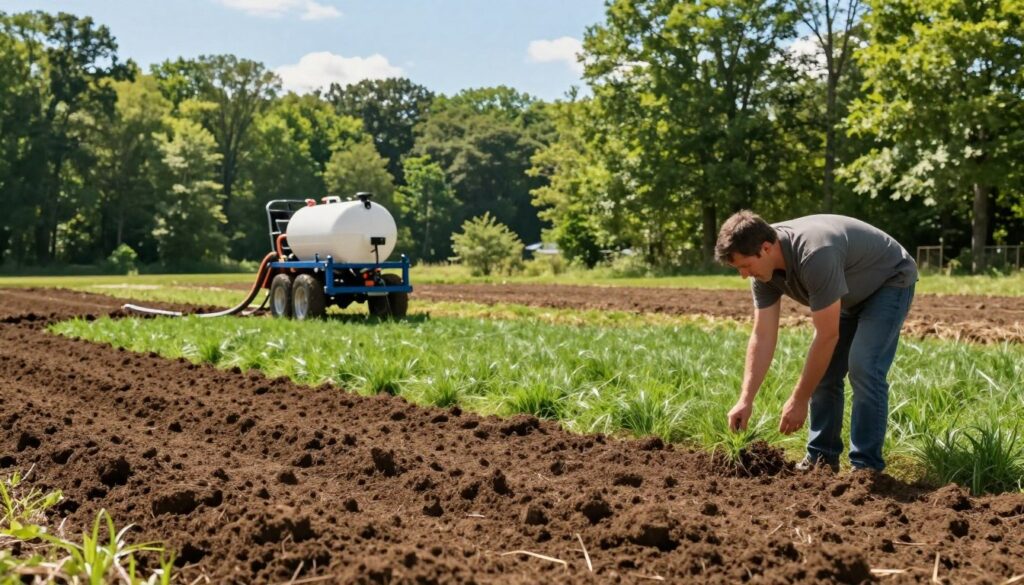
Long-term turf depends on the condition beneath the surface. Wilbraham properties may have compacted soil after construction, poor drainage, or clay that limits root growth. A careful plan helps new grass use water and nutrients efficiently.
Before hydroseeding, inspect the ground and correct major limits. Smooth soil supports even seeding, while added organic matter improves structure and moisture movement.
Testing pH, Compaction, and Organic Matter
A basic soil test can reveal pH and nutrient needs. Most grasses prefer a range from 5.8 to 7.2. Testing often costs $25–$50 and may take about two weeks, so schedule it early.
Construction traffic can harden the surface. Loosen soil to at least three inches, remove stones, and blend compost into weak areas. This work gives roots room to spread and helps fertilizer reach the root zone.
Improving Drainage in Clay Areas
Clay can hold water near the surface. Use grading, amended topsoil, aeration, or a drainage channel to improve flow. Avoid spraying seed until the area absorbs water without pooling.
- Grade low spots toward a safe outlet.
- Add compost or quality topsoil where needed.
- Protect slopes with erosion control measures.
| Condition | Preparation Step | Benefit |
|---|---|---|
| Low pH | Apply a soil amendment guided by testing | Supports healthy grass growth |
| Compaction | Loosen the top three inches | Improves root penetration |
| Clay drainage | Grade, aerate, or add amended topsoil | Reduces standing water |
When Is the Best Time to Hydroseed in Wilbraham?
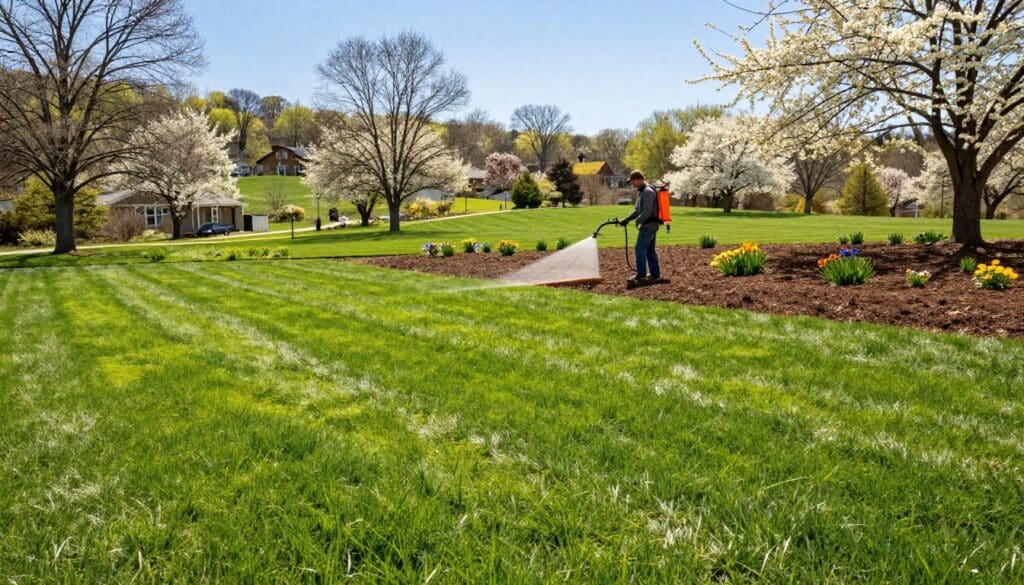
Seasonal timing can shape the success of a new lawn in Wilbraham. Early fall often offers the best balance of cool air, steady moisture, and mild soil temperatures. Grass seed can build roots before winter dormancy, then benefit from spring rainfall and warming temperatures.
Early spring also works after the last frost has passed. Germination may begin well, but rising summer heat can increase watering needs. Allow several weeks for establishment, and protect young growth from heavy traffic.
Summer seeding can demand frequent irrigation during heat or dry spells. Frozen soil, drought, severe storms, and strong wind can delay growth or cause erosion. Heavy rain soon after application may move the slurry downhill.
- Check soil temperature, sunlight, drainage, and irrigation access.
- Choose grass seed that fits shade, traffic, and seasonal weather.
- Plan before a light, predictable wet period, not before a major storm.
- Use site exposure and current conditions to guide the final time.
Late summer to early fall remains a practical choice for many properties. Compared with sod, this approach needs more patience but offers flexible scheduling.
Hydroseeding Benefits for Residential and Commercial Lawns
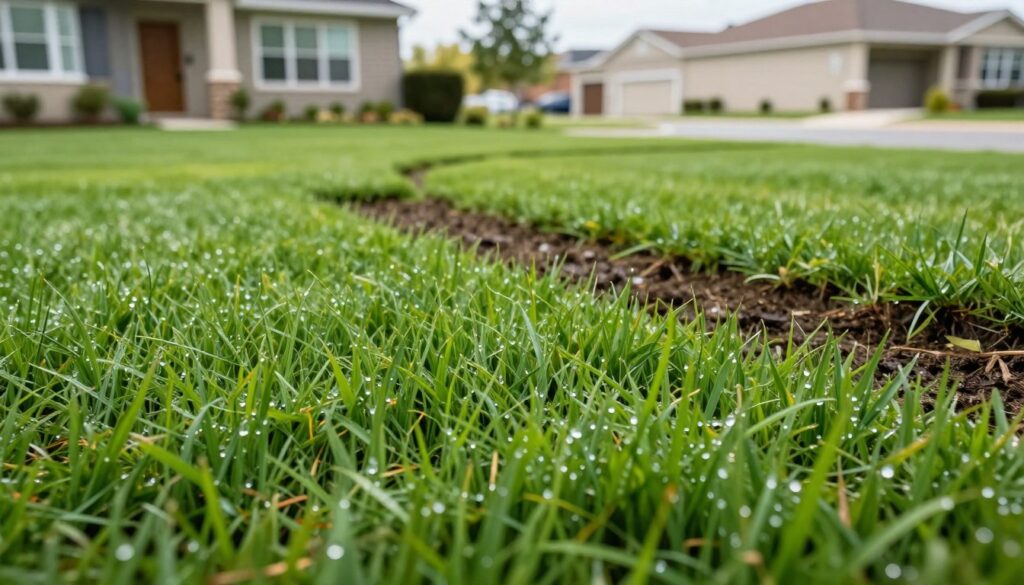
Property size, terrain, and project goals often guide the best lawn installation choice. Hydroseeding offers strong value for home renovations, business grounds, parking-lot islands, and hard-to-reach areas.
Faster Germination and Moisture Retention
The slurry places seed, mulch, water, and fertilizer together across prepared soil. Mulch shields seed from wind and sun while improving moisture retention. With steady watering, germination can progress more evenly during early establishment.
Newly treated areas may need two to three times more water than sod. Results also depend on weather, soil preparation, seed choice, and limited foot traffic. Strong roots can improve grass resilience over time.
Uniform Coverage Across Large or Irregular Areas
Spray application reaches curves, bumps, and moderate grades with less patchiness than traditional seeding. Custom blends can match shade, sunlight, drought risk, traffic, and desired appearance.
Professional equipment also covers broad commercial areas quickly. Compared with sod, this method often costs less, especially across large properties where manual methods require more labor and landscaping time.
| Benefit | Best Fit | Key Value |
|---|---|---|
| Moisture retention | New residential lawns | Supports even germination |
| Uniform application | Irregular ground | Reduces thin spots |
| Scalable installation | Commercial areas | Improves project efficiency |
Using Hydroseeding for Slopes and Erosion Control
Sloped ground needs more than seed alone. Rain can carry loose soil downhill, while wind can expose bare areas. A well-planned application helps hold the surface together and supports early grass growth.
How Mulch and Tackifiers Reduce Runoff
Mulch cushions rainfall, holds seed against soil, and slows runoff. It also helps preserve moisture during early growth. A tackifier increases adhesion, keeping the slurry in place on slopes exposed to wind and water.
Gentle grades may need a standard mix. Steep slopes require stronger materials, careful rates, and drainage planning. Redirecting concentrated flow improves erosion control and reduces washout risk. Learn more about slope erosion control options.
Choosing Bonded Fiber Matrix and Reinforced Mulches
Bonded Fiber Matrix combines dense fibers with water-resistant bonding agents. This durable material protects seeds and ground during storms. Reinforced mulch may include straw, coconut fiber, or synthetic fibers for added stability.
Professional equipment reaches difficult sites. Hoses can extend about 300 feet, while large booms may spray nearly 370 feet. These systems serve homes, roadsides, riverbanks, parks, golf courses, mine reclamation, and construction sites.
| Site Condition | Recommended Material | Primary Control Benefit |
|---|---|---|
| Gentle slope | Standard mulch mix | Slows runoff |
| Steep slope | Bonded Fiber Matrix | Resists storm washout |
| High-risk area | Reinforced mulch | Improves slope stability |
Hydroseeding vs. Traditional Seeding vs. Sod
Choosing a turf method starts with the finish line, not the spray truck. For Wilbraham properties, budget, slope, lawn size, and desired time frame all matter. This hydroseeding vs. sod comparison shows the main trade-offs.
Traditional seeding has the lowest starting cost, but wind, birds, and rain may create thin areas. Hydroseeding costs more than dry seeding yet combines seed, mulch, fertilizer, and water in one application. It suits slopes and broad spaces, with roots growing directly into prepared soil.
Sod creates an immediate green surface and needs less early patience. However, it costs more and offers fewer custom grass blend choices. Learn more about front yard landscaping when planning the finished space.
| Factor | Traditional Seeding | Hydroseeding | Sod |
|---|---|---|---|
| Upfront cost | Lowest | $0.05–$0.20 per sq. ft. | $0.30–$0.83 per sq. ft. |
| Establishment speed | 3–6 weeks | A few weeks | Immediate appearance |
| Coverage and roots | Patch risk; deep roots | Even coverage; deep roots | Uniform surface; transplanted roots |
| Maintenance and fit | More reseeding; level sites | Watering needed; slopes and large areas | Early watering; fast-finish projects |
Hydroseeding Costs in Wilbraham, MA
Local pricing depends on square footage, site conditions, and the service plan. A broad source-based range for hydroseeding runs from $0.05 to $0.20 per square foot. This range does not guarantee a quote for a Wilbraham property.
Factors That Influence Installation Pricing
The final cost may change with seed selection, mulch, fertilizer, tackifier, slope, drainage, access, and grading. Site work can include clearing, soil testing, decompaction, compost, pH correction, topsoil, and erosion control.
Equipment capacity also affects labor and travel time. Units range from 100 to 5,000 gallons. Narrow access may require hoses, extra loads, or careful work around structures.
Comparing Material, Labor, and Long-Term Value
Source pricing places hydroseeding near $2,000–$4,000 per acre. Traditional seeding may run about $0.02 per square foot, while sod often ranges from $0.30 to $0.83. Sod offers a faster visual finish, but installation usually costs more.
- Review root growth and coverage quality.
- Match grass selection to site conditions.
- Request a property-specific landscaping assessment.
Hydroseeding Aftercare for Strong Lawn Establishment
Good care during the first month protects the application and improves final results. Follow the schedule closely, since young grass has shallow roots and limited moisture retention.
Watering, Moisture Monitoring, and Weather Protection
Apply water in short, gentle cycles. Keep the mulch and upper soil moist, but stop before runoff or puddles form. During the first one to two weeks, check moisture each morning and evening. Warm, dry weather may require two to three times more water than sod.
Sprouts often appear in 5–7 days under favorable conditions. Shield the area from pets, traffic, equipment, and heavy storms. A tackifier can help hold the slurry on slopes and reduce erosion during rainfall.
Mowing, Foot Traffic, and First-Year Maintenance
Wait to mow until grass reaches a suitable height and the ground supports equipment, often within 3–6 weeks. Use a sharp blade and remove no more than one-third of the height. Follow-up fertilizer should match soil-test results and product directions.
Delay herbicides until establishment is strong. During the first year, adjust irrigation, watch for weeds, repair thin areas, and limit repeated use. These steps support steady growth across developing lawn areas.
| Care Stage | Recommended Action | Typical Timing |
|---|---|---|
| Early care | Maintain gentle moisture and limit traffic | Days 1–14 |
| Initial growth | Check sprouts and protect coverage | Weeks 1–3 |
| Mowing | Use a sharp blade on firm ground | Weeks 3–6 |
| Long-term care | Adjust irrigation and repair thin spots | First year |
Conclusion
For Wilbraham properties, hydroseeding offers a practical balance of cost, customization, and reliable coverage. It combines seed, mulch, fertilizer, and water to protect exposed soil and reduce early erosion.
Homeowners should confirm drainage, choose the right grass blend, and maintain steady watering. Early spring after the final frost or early fall usually provides better germination than hot, dry summer weather.
Compared with sod, this option often costs less and fits large or uneven spaces. More than 40 years of family-owned landscaping experience and a “Committed to Excellence” standard support careful planning and accountable installation.
FAQ
How does this method work?
Hydroseeding sprays a prepared mixture across graded ground.
How long does growth take?
Sprouts may appear in 5–7 days, with stronger turf forming in 3–4 weeks.
Does it cost less than sod?
Usually, with typical pricing near $0.05–$0.20 per square foot.
Can it protect a slope?
Tackifiers help hold coverage in place during rain and runoff.