


Lawn renovation restores thin, damaged turf by improving soil, removing thatch, and adding seed suited to Wilbraham, Massachusetts. Mild fall weather offers the best time for cool-season grass, while early spring after thaw can also support strong roots and lasting results.
Last fall, a Wilbraham homeowner noticed bare spots near the driveway and worn paths by the patio. Mowing only trimmed the problem. A careful inspection showed compacted ground, weak drainage, and heavy foot traffic. After proper preparation and new seed, the yard began to recover.
This process works better than routine mowing because it addresses age, pet damage, pests, weeds, and thin areas at the source. Seed may germinate in five to 30 days, but a full, green appearance can take six months to two years.
This guide explains each step, from testing the soil and preparing the surface to watering, protection, and ongoing care. It also shows how local weather, drainage, and professional services shape durable results.
Key Takeaways
- Fall is usually the ideal season for cool-season turf.
- Early spring can work after the ground thaws.
- Proper preparation supports better germination.
- Visible improvement takes patience and steady care.
- Local drainage and weather affect long-term success.
When Your Wilbraham Lawn Needs Renovation
Thin turf needs more than regular mowing when 30–50% of the surface looks yellow or brown. A thatch layer over one-half inch, compacted soil, weeds, pet damage, grubs, and heavy foot traffic can block seeds from reaching the ground. Extensive bare patches also signal a need for action. Use this local lawn renovation guidance to plan the right step.
Signs of Thatch, Compaction, Weeds, and Bare Patches
Check the surface after mowing. If water runs off, roots feel shallow, or weeds spread quickly, the existing lawn may need deeper care. Fall is the best time for cool-season grass in Wilbraham. Warm-season types respond better from late spring through early summer. Grass seed can germinate in five to 30 days.
Choosing Between Overseeding, Aeration, and Power Seeding
| Option | Best fit | Timing and effort | Durability |
|---|---|---|---|
| Aeration plus overseeding | Decent turf with thin areas | Fall; low disruption | Good with steady care |
| Power seeding | Thinning turf or bare patches | Fall; cuts rows into soil | Strong coverage |
| Full power seeding | Severely damaged lawns | Fall; more equipment and time | Best long-term recovery |
Core aeration removes small plugs and improves seed-to-soil contact. Power seeding, also called slit seeding, works better than light seeding across serious damage.
Prepare the Soil for Healthier Grass
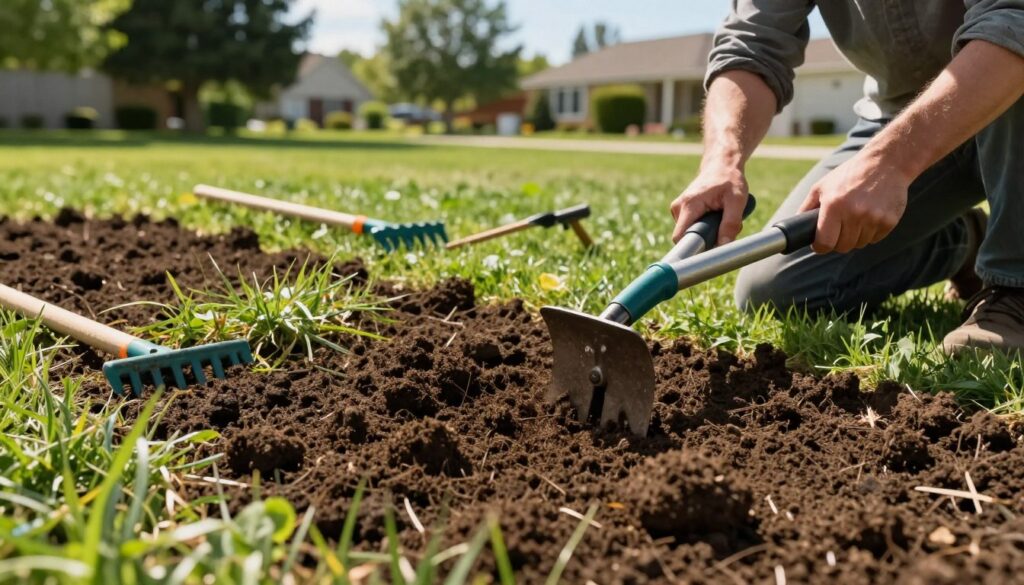
Healthy turf starts below the surface. This step in the renovation process improves drainage, root growth, and seed-to-soil contact. Test a small soil sample at home before adding products. Results show whether phosphorus or potassium is needed, so nutrients match actual conditions.
Testing Soil, Correcting Nutrients, and Improving Drainage
Look for standing water, low spots, and hard areas after rain. Compaction can keep oxygen and water from reaching roots. Water the soil until moisture reaches six to eight inches, then let the surface dry. Use core aeration to pull out cores and create channels through the root zone.
Add compost where soil lacks organic matter. Use topsoil for shallow areas, and correct grading when water collects. A thin layer of dry topsoil, about 0.2 to 0.25 inches, can cover seed without blocking germination.
Accounting for Wilbraham Soil and Seasonal Conditions
Wilbraham weather favors cool-season grass in fall, when mild air and moist ground support seeds. Early spring also works after the soil thaws and becomes workable. Avoid frozen or muddy ground. Good lawn care after this process helps roots establish and keeps the renovation durable.
Complete the Lawn Renovation Process
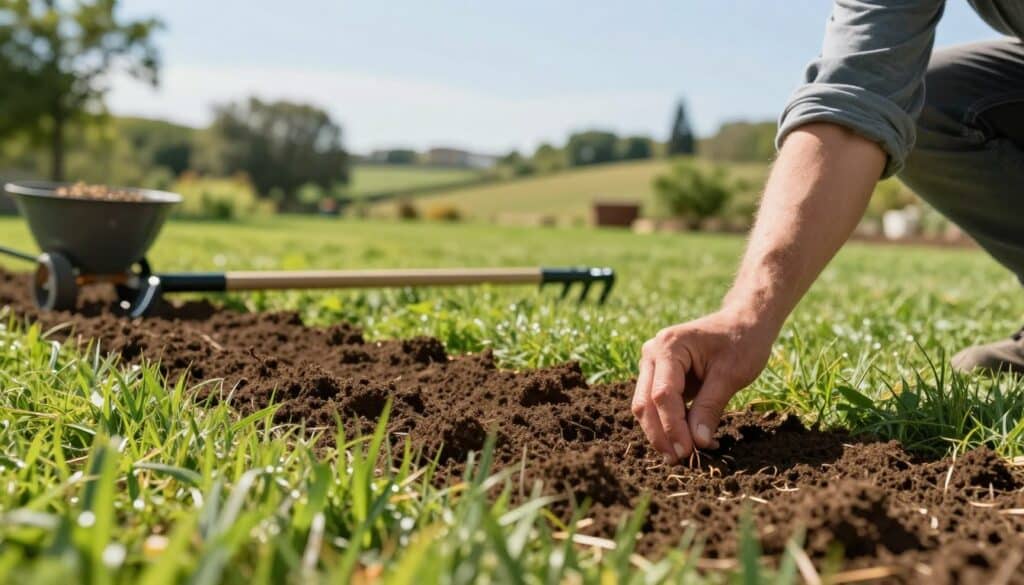
Follow each step in order to protect new growth. Clear drainage paths first, then prepare the surface for strong seed contact. For added guidance, review this old-turf guide before starting.
Control Weeds and Mow the Existing Lawn
Control broadleaf weeds, then mow the existing lawn to about one inch. This height exposes thatch and soil. Remove clippings from bare patches so seed can reach the ground.
Remove Thatch and Relieve Soil Compaction
Use a scarifier or aggressive dethatcher to break thick thatch. Rake away debris. Next, use core aeration to pull small cores from compacted areas. The openings improve water, oxygen, and root access.
Apply Seed, Topsoil, and Recommended Amendments
Let soil test results guide phosphorus and potassium use. Skip initial nitrogen, which may favor old grass over seedlings. Spread seed with a drop spreader in two to four directions. Add dry topsoil or compost at 0.2–0.25 inches, then use a leveling rake or light roller for contact. This approach supports a complete lawn and fits broader front-yard landscaping ideas. Contact a professional if drainage or equipment needs exceed your skill.
| Step | Material or tool | Target result |
|---|---|---|
| Surface cleanup | Mower, scarifier, rake | Open soil and clear thatch |
| Root-zone preparation | Core aerator | Relieve compaction and improve drainage |
| Seeding finish | Drop spreader, topsoil, roller | Even coverage and firm seed contact |
Choose Grass Seed for Massachusetts Durability
Wilbraham’s changing seasons make seed choice a key part of durable turf care. Cool-season blends handle cold winters, mild falls, and moderate summer heat better than warm-season options. Select a mix that fits your existing lawn, light levels, drainage, and foot traffic.
Selecting Cool-Season Grass Blends for Wilbraham
Kentucky bluegrass adds strong recovery and wear tolerance, but grass seed may need two to three weeks to germinate. Fine fescues suit shaded areas and lean soil. Perennial ryegrass offers quick cover and helps protect open spots during establishment.
Use a compatible blend to maintain even color, texture, mowing needs, and seasonal growth. Fall seeding usually gives the best results because cool air and moist soil support root growth. Early spring works after thaw, but steady moisture and weed control require more attention.
- High traffic: Choose Kentucky bluegrass with perennial ryegrass.
- Shade: Add fine fescues for better low-light tolerance.
- Warm areas: Reserve warm-season types for late spring or early summer.
| Grass type | Best use | Establishment note |
|---|---|---|
| Kentucky bluegrass | Traffic and recovery | Germinates in two to three weeks |
| Fine fescue | Shade and lean soil | Needs less frequent mowing |
| Perennial ryegrass | Fast cover | Supports quick spring seeding |
Water and Care for New Grass
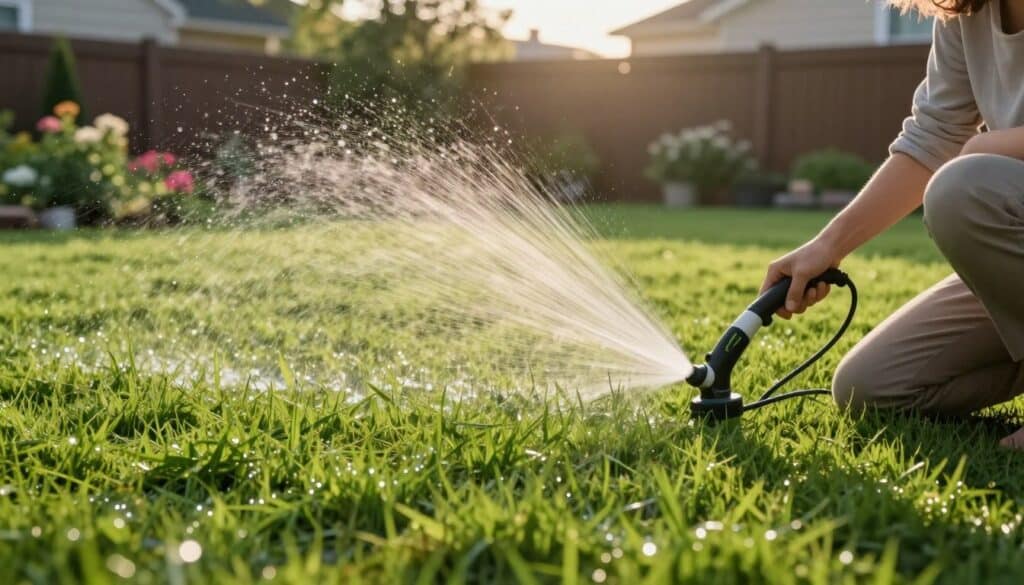
Steady moisture now helps each seed build a strong root system. Keep the soil damp, not soggy, during the first 10 to 21 days. Water with a gentle spray to prevent puddles and washout.
Maintaining Moisture During Germination
Fall seeding often needs water every two days, unless Wilbraham temperatures rise. Spring or early-summer seeding may need light watering twice daily. Kentucky bluegrass can take two to three weeks to show growth, so continue this care after the first sprouts appear.
Mowing, Foot Traffic, Leaves, and Pet Protection
Keep people, pets, and fertilizer away for four weeks. Use a temporary barrier, and consider a floating row cover to deter birds. Remove leaves quickly; a heavy layer can block light and airflow.
Wait until the new grass reaches nearly three inches before mowing. Remove only the top third of each blade. Later, follow normal lawn care practices and add compost only when the developing roots can support it.
| Care task | Recommended timing | Key rule |
|---|---|---|
| Watering | Days 1–21 | Keep soil damp without puddles |
| Protection | First four weeks | Block pets, walking, and fertilizer |
| Mowing | Near three inches tall | Cut no more than one-third |
Professional Lawn Renovation for Lasting Results
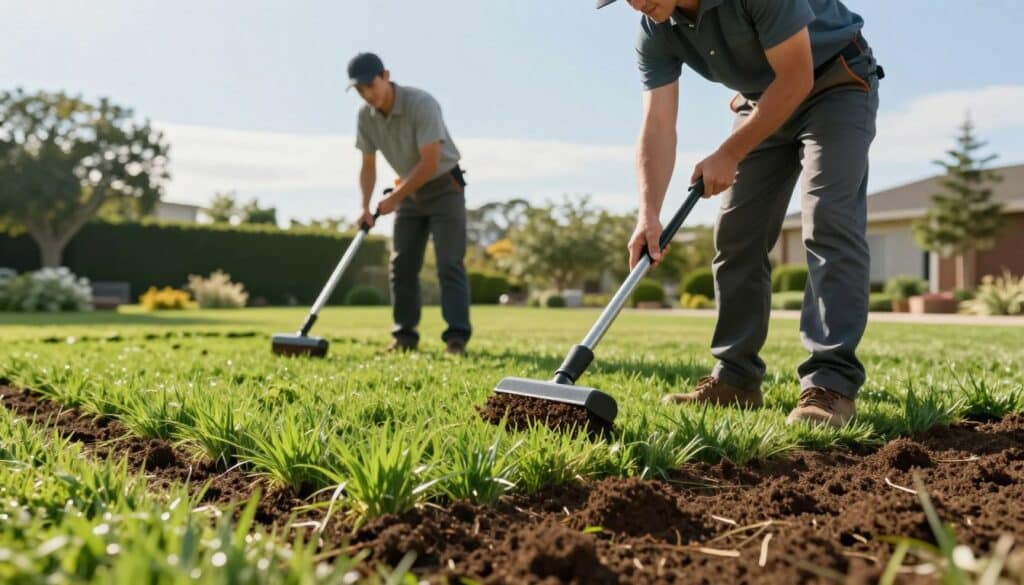
Some properties need more than routine care. Severe compaction, drainage failure, steep slopes, pest damage, or large bare areas can make this work unsafe and difficult. A professional review can connect soil findings, grass type, seasonal timing, access, and aftercare. See this complete yard renovation guide for added planning support.
When Equipment, Drainage Issues, or Damage Require Expert Help
Rental equipment may include an aerator, scarifier, spreader, truck, or trailer. Poor use can harm turf or create risks on hills. Power seeding cuts rows into the soil and suits widespread bare areas. It may cost about twice the price of aeration and overseeding, but it can produce stronger results.
- Choose expert help for major drainage problems or steep ground.
- Compare price, preparation, equipment, and warranty terms.
- Ask how follow-up care protects new growth.
What to Expect From a Family-Owned Local Landscaping Team
A local team with more than 40 years of family-owned experience should explain each step clearly. Its “Committed to Excellence” standard should include careful preparation, dependable service, and practical guidance. This approach can reduce repeat repairs and improve long-term results.
| Service choice | Best fit | Typical cost relationship |
|---|---|---|
| Aeration and overseeding | Light thinning | Lower price |
| Power seeding | Large bare areas | About twice the price |
| Full professional service | Complex property issues | Based on scope and results |
Conclusion
Successful lawn renovation combines a clear diagnosis, tested soil, thatch removal, aeration, quality seed, topdressing, and careful watering. This step-by-step method builds stronger grass instead of temporary color.
Wilbraham homeowners should target mild fall weather or early spring after thaw. Germination may begin within five to 30 days, while a complete lawn can need six months to two years. Summer work requires close moisture control. For difficult sites, explore local landscaping services for tailored support and lasting results.
When is the best time to renovate a lawn in Wilbraham, MA?
Fall is best for cool-season grass. Early spring works after the soil thaws.
How long does recovery take?
Seed may germinate in 5–30 days, but full coverage can take up to two years.
Should I aerate or power seed?
Aeration suits thin turf. Power seeding fits large bare areas.
How often should I water?
Keep soil damp for 10–21 days with light, frequent watering.